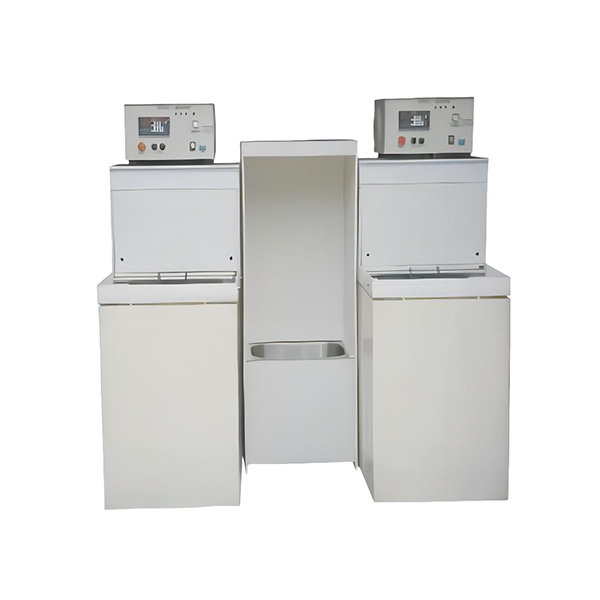
Zhdzc-300 Hologram Electroforming System
The ZHDZC–300 holographic electrocuting system can provide two models: soft slot and hard slot.
Hologram electroforming is an important process in the production of precision metal masters used for holographic embossing and replication. By depositing metal onto a suitable master plate, manufacturers can create intermediate masters and working plates for subsequent production processes. The quality and consistency of this process depend on several factors, including electroforming equipment, bath chemistry, temperature control, filtration, and electrical parameters.
An intelligent hologram electroforming system integrates these functions into a coordinated production setup. For manufacturers working with holographic plates, a well-configured system can help improve process control, simplify operation, and support repeatable plate production.
What Is a Hologram Electroforming System?
A hologram electroforming system is specialized equipment designed to form metal plates from prepared holographic masters through an electrochemical deposition process. The resulting metal plates can be used at different stages of hologram replication, depending on the production workflow.
The process commonly involves two types of tooling: soft masters and hard working plates. Although terminology can vary between manufacturers, these generally serve different purposes within the production chain.
-
Soft master plates: These are intermediate masters created from prepared photoresist or suitable plastic-based originals after an appropriate conductive layer has been applied.
-
Hard working plates: These are durable production plates used for embossing or replicating holographic patterns.
The exact sequence depends on the master material, metallization method, electroforming metal, and final application. Electroless silvering or electroless nickel plating may be used to establish a conductive surface before electroforming, provided the process is compatible with the selected substrate.
Key Features of an Intelligent Electroforming System
1. Integrated Electroforming and Process Control
An intelligent electroforming system combines the electroforming tank with supporting electrical and process-control equipment. Depending on the configuration, the system may include a rectifier, circulation pump, filtration unit, heating elements, temperature sensors, and a centralized control cabinet.
These components work together to support stable operating conditions. The rectifier supplies the electrical current required for metal deposition, while the circulation and filtration systems help maintain the condition of the plating solution. Temperature control helps operators keep the bath within the required process range.
The effectiveness of these functions depends on appropriate parameter settings, equipment maintenance, and the characteristics of the plating solution.
2. Touchscreen Operation
Modern intelligent electroforming systems may use a human-machine interface (HMI) to organize operating information and control functions on a color touchscreen.
Depending on the installed configuration, the interface can provide access to:
-
Main operating and equipment-status information
-
Temperature and circulation pump controls
-
Rectifier power and current settings
-
Process-setting instructions
-
Product and process information
-
Electrical principles and maintenance guidance
A touchscreen interface can make operating procedures easier to follow and help technicians locate relevant settings without relying exclusively on separate printed instructions.
For production teams, the practical value of an HMI lies in clear parameter management, consistent operating procedures, and convenient access to equipment information.
3. Rectifier and Electrical Parameter Management
Electrical current is a critical variable in electroforming because it influences the rate of metal deposition and the resulting deposit characteristics. The appropriate current and voltage depend on the plating solution, exposed surface area, bath temperature, and required plate properties.
One listed configuration uses a centralized rectifier rated at 12 V and 400 A, with a three-phase-input high-frequency switching power supply. Its control cabinet includes a programmable logic controller (PLC), touchscreen HMI, and temperature-control components.
These specifications describe a particular equipment configuration rather than a universal requirement for every hologram electroforming system. Buyers should confirm the actual rectifier rating and usable operating range against their production needs.
4. Temperature Control and Solution Circulation
Bath temperature and solution condition are important to consistent electroforming. If temperature varies beyond the process requirements, deposition behavior and plate quality may also change.
A system equipped with heating elements, temperature sensors, circulation pumps, and filtration can help operators manage these variables. For example, a listed double-sided system configuration includes titanium heating elements rated at 3 kW, a circulation pump, and a polypropylene filter cartridge system.
The required heating capacity, circulation rate, and filtration specification should be selected according to the tank volume, solution chemistry, production load, and operating environment.
Filtration and circulation do not eliminate the need for regular solution monitoring. Operators should follow the plating chemical supplier's recommendations for bath analysis, replenishment, contamination control, and maintenance.
Example Specifications of a Double-Sided Electroforming System
The following specifications illustrate one listed configuration of a practical double-sided electroforming system.
| Item | Listed specification |
|---|---|
| Equipment type | 1100-type practical double-sided electroforming system |
| Electroforming tank dimensions | 1400 × 600 × 1100 mm (L × W × H) |
| Rectifier rating | 12 V, 400 A |
| Control interface | MCGS TPC1061Ti, 10-inch color touchscreen |
| PLC | Mitsubishi FX3U-16MR/ES-A |
| Temperature controller | Mitsubishi FX2N-2LC with PT100 temperature probe |
| Heating system | Titanium heating elements, 3 kW |
| Filter cartridge material | Polypropylene (PP) |
| Listed filtration flow rate | 92 L/min |
| Electroforming jig material | Stainless steel |
| Effective working-face size | 1100 × 800 mm |
| Listed plate thickness variation | No more than 0.015 mm for the specified 1100 × 800 × 0.05 mm working plate |
| Listed production efficiency | 8 pieces per hour, subject to confirmation of the stated operating conditions |
These figures should be treated as configuration-specific reference data. The stated production rate, filtration capacity, and thickness tolerance should be verified with the equipment supplier, including the applicable workpiece type, measurement method, and production conditions.
Understanding the Electroforming Production Process
A typical hologram electroforming workflow involves several coordinated stages.
Step 1: Prepare the master.
The original holographic pattern is prepared on a suitable substrate. Surface condition and pattern integrity are important because defects in the original may affect subsequent replication.
Step 2: Apply a conductive layer.
If the master substrate is nonconductive, a compatible metallization process may be required before electroforming. Electroless silvering or electroless nickel plating are possible approaches, depending on the material and established process.
Step 3: Set up the electroforming tank.
The master is mounted using suitable fixtures and connected according to the equipment's electrical and process requirements. The plating solution, temperature, circulation, and rectifier settings are checked before operation.
Step 4: Deposit the metal layer.
Metal is deposited onto the conductive surface under controlled electrochemical conditions. Deposition time, current density, bath chemistry, temperature, and surface preparation all influence the final result.
Step 5: Separate and inspect the plate.
After electroforming, the metal plate is separated using the appropriate procedure and inspected for thickness, flatness, surface defects, and pattern integrity.
Step 6: Prepare the plate for its next production stage.
Depending on the workflow, the resulting plate may serve as an intermediate master or be processed into a working plate for holographic embossing.
The actual process sequence and operating parameters should follow the equipment manufacturer's instructions and the requirements of the selected plating chemistry.
Why Accuracy Matters in Hologram Electroforming
Holographic replication relies on preserving fine surface structures. Variations in deposition thickness, surface contamination, fixture alignment, or substrate preparation can affect plate quality and downstream embossing performance.
For this reason, manufacturers should pay particular attention to:
-
Uniform metal deposition across the effective working area
-
Thickness consistency and flatness
-
Cleanliness of the master and plating solution
-
Stable temperature and electrical settings
-
Reliable fixture design and electrical connections
-
Inspection procedures and process records
A specified thickness tolerance is meaningful only when the measurement method, sampling positions, and acceptance criteria are clearly defined. For precision applications, buyers should request inspection data and confirm that the equipment can meet their actual product requirements.
How to Choose the Right Hologram Electroforming Equipment
Before selecting an electroforming system, manufacturers should evaluate several practical considerations.
Working plate size: Confirm that the tank and fixtures accommodate the required plate dimensions and effective working area.
Production capacity: Compare the required hourly output with the supplier's verified production data. Actual throughput may vary with deposition time, plate thickness, setup, and handling.
Rectifier capacity: Check the current and voltage ranges against the required current density and plating area.
Temperature and filtration control: Review heating capacity, sensor accuracy, circulation rate, filtration design, and ease of maintenance.
Control system: Assess whether the touchscreen, PLC, alarms, and operating instructions suit the production team's workflow.
Chemical compatibility: Confirm that the tank, piping, filters, fixtures, and other wetted components are compatible with the selected plating solution.
Technical support: Ask about installation, commissioning, operator training, spare parts, maintenance procedures, and process troubleshooting.
These checks help ensure that the selected system fits the production process rather than relying on equipment specifications alone.
Conclusion
An intelligent hologram electroforming system combines electrochemical deposition equipment with electrical control, temperature management, filtration, and operator interfaces. These functions support the production of intermediate masters and working plates used in holographic replication.
When evaluating a system, manufacturers should look beyond the rectifier rating or nominal output. Working-area dimensions, bath chemistry, deposition uniformity, thickness tolerance, control functions, and verified production capacity are all important to long-term performance.
By matching equipment configuration to the required plate size, production workflow, and quality criteria, manufacturers can make a more informed investment in hologram electroforming technology and establish a more consistent production process.
Related products
-
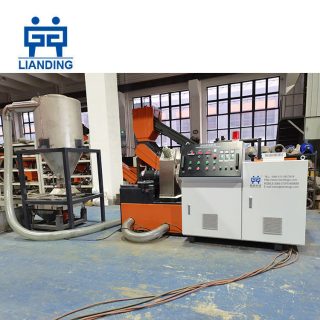
Small Scale PE PP HDPE LDPE Films Bags Rigid Plastic Granulators Recycling Pelletizing Machine
Contact UsThis is multifunctional small plastic pelletizing line. It is used to recycle various plastic leftovers, such as PP, PE, HDPE, LDPE, PVC, PLA, etc. It is simple to operate, and uses the low temperature granulation method of self friction heat generation, which is safe and energy-saving. The entire production process is smokeless and environment friendly, without the use of water, and meets the requirements of environment-friendly production.
-
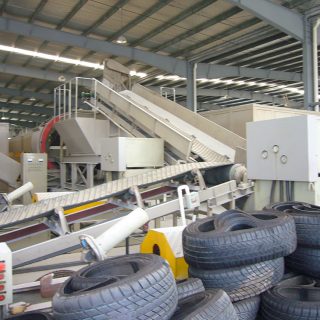
Waste Tyre Recycling Production Line
Contact UsPresently, waste tire recycling equipment provided by our domestic competitors usually can produce 20-40 meshe rubber powder under normal temperature.
-
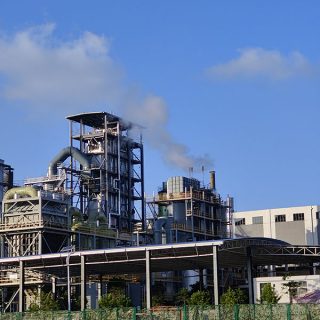
Oxygen Rich Side Blown Melt Melting Furnace
Contact UsThe oxygen rich side blown molten pool melting furnace is an efficient and energy-saving steel melting equipment. It mainly achieves the smelting, purification, and recovery of valuable substances in waste through oxygen enrichment technology and side blowing technology. Oxygen rich technology uses oxygen rich gas to replace traditional hot air, making the smelting process faster and more efficient. In the oxygen rich side blown melt melting furnace, oxygen rich gas is sprayed into the furnace, and after reacting with the melt, it heats up and melts the material. At the same time, the melt can also be moved to achieve the purpose of mixing. Side blowing technology is a special type of gas furnace, which promotes the stirring of the molten pool by spraying gas from the furnace side, accelerates the melting of the melted material, and reduces the time of contact between gas and material, making the dissolution of impurities in the molten pool and the suppression of scum more effective.
-
UT 1.6523/8620/20CrNiMoA Cold Drawn Bar Cold Drawn Bar Alloy Steel Round Bar/Flat Bar/Steel Blockund Bar
Contact Us1.6523 Cold Drawn Bar Cold Drawn Bar Alloy Steel Round Bar/Flat Bar/Steel Block/Round Bar
Reviews
There are no reviews yet.