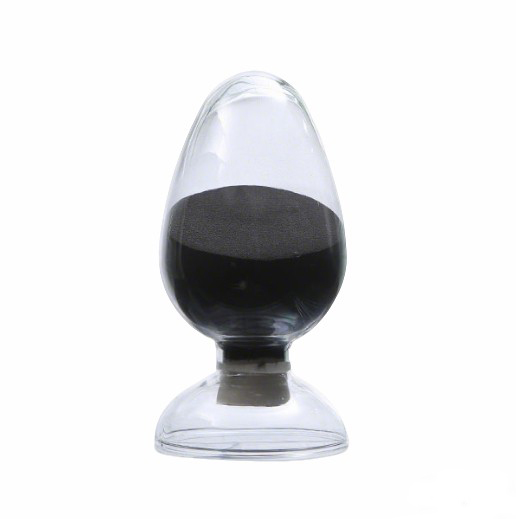
High Permeability Ferrite Material
High Permeability Ferrite Material Property
In magnetic component manufacturing, selecting the right material is critical to achieving stable magnetic performance, efficient signal transmission, and reliable operation. Different applications may require different combinations of permeability, saturation flux density, remanence, coercivity, temperature stability, and magnetic loss characteristics.
The RH5K, RH7K, RH10K, and RH12K material series provides several high-permeability options for engineers and component manufacturers. Although these materials share similar basic characteristics, their magnetic parameters differ enough to make material selection an important part of component design.
Understanding Initial Permeability
Initial permeability is one of the most important parameters when evaluating soft magnetic materials.
It describes the material's response to a relatively small applied magnetic field. In practical applications, higher initial permeability generally means the material can achieve stronger magnetic response under low excitation conditions.
At 25°C, the RH series provides the following nominal initial permeability values:
| Material | Initial Permeability at 25°C |
|---|---|
| RH5K | 5,000 ±25% |
| RH7K | 7,000 ±25% |
| RH10K | 10,000 ±25% |
| RH12K | 12,000 ±25% |
RH12K therefore provides the highest nominal initial permeability in this group, while RH5K offers the lowest.
This range allows designers to select a material according to the magnetic requirements of the application rather than relying on a single material grade.
Saturation Magnetic Flux Density
Permeability alone does not determine whether a magnetic material is suitable for a particular application.
Saturation magnetic flux density is equally important. Once a magnetic material approaches saturation, increasing the applied magnetic field produces a much smaller increase in magnetic flux.
The RH series is tested at an applied field of H = 1194 A/m, with saturation flux density values specified at 25°C and 100°C.
| Material | Saturation Flux Density at 25°C / 100°C |
|---|---|
| RH5K | 450 / 300 mT |
| RH7K | 440 / 290 mT |
| RH10K | 410 / 200 mT |
| RH12K | 400 / 190 mT |
An important design consideration can be seen from these figures: higher initial permeability does not necessarily mean higher saturation flux density.
For example, RH12K has the highest initial permeability, but RH5K has the highest specified saturation magnetic flux density.
This illustrates why engineers should evaluate the complete magnetic property profile instead of selecting a material based on one parameter.
Remanence and Coercivity
Remanence refers to the magnetic flux density remaining in the material after the external magnetic field is removed.
At 25°C, the RH series provides:
-
RH5K: 80 mT
-
RH7K: 90 mT
-
RH10K: 100 mT
-
RH12K: 100 mT
RH10K and RH12K therefore have the highest specified remanence among the four grades.
Another important parameter is coercivity. It indicates the reverse magnetic field required to reduce the residual magnetization toward zero.
All four RH materials have a specified coercivity of approximately 6 A/m at 25°C.
The relatively low coercivity is an important characteristic for soft magnetic material applications where efficient magnetization and demagnetization are required.
Relative Loss Factor
Magnetic losses can become an important consideration in components operating under alternating magnetic fields.
The RH series provides relative loss factor data measured at 10 kHz and 25°C:
| Material | Relative Loss Factor |
|---|---|
| RH5K | 2.0 × 10⁻⁶/°C |
| RH7K | 2.5 × 10⁻⁶/°C |
| RH10K | 1.5 × 10⁻⁶/°C |
| RH12K | 1.5 × 10⁻⁶/°C |
RH10K and RH12K show the lowest specified relative loss factor in this comparison.
For high-frequency magnetic components, engineers should consider this parameter together with operating frequency, magnetic flux density, temperature, core geometry, and the complete circuit design.
Curie Temperature and Thermal Stability
Temperature can significantly affect magnetic properties.
The Curie temperature represents the point at which a magnetic material loses its ferromagnetic behavior and undergoes a fundamental change in magnetic characteristics.
The specified Curie temperatures are:
| Material | Curie Temperature |
|---|---|
| RH5K | >140°C |
| RH7K | >130°C |
| RH10K | >120°C |
| RH12K | >110°C |
RH5K has the highest specified Curie temperature among these grades, while RH12K has the lowest.
This does not mean RH12K cannot be used in elevated-temperature environments. Instead, engineers should evaluate the complete operating temperature range and the actual magnetic performance required at the intended working temperature.
The saturation flux density data at both 25°C and 100°C can also provide useful information when evaluating temperature-related performance changes.
Consistent Density Across the Series
All four RH materials have a specified density of approximately:
4.9 × 10³ kg/m³
The similar density across the series can simplify certain mechanical and manufacturing considerations when comparing different grades.
However, final component weight will still depend on the magnetic core geometry, dimensions, machining allowance, and overall component design.
How Should Engineers Select Between RH5K and RH12K?
There is no universally "best" material among RH5K, RH7K, RH10K, and RH12K.
Instead, selection should begin with the actual application requirements.
RH5K
RH5K provides the lowest nominal initial permeability in this group but the highest specified saturation magnetic flux density and Curie temperature.
It may therefore be considered when designers need a combination of moderate permeability, higher saturation flux density, and stronger thermal margin.
RH7K
RH7K provides an intermediate permeability level of approximately 7,000.
It can serve as a balanced option when the application does not require the highest permeability but needs performance between the RH5K and RH10K grades.
RH10K
RH10K increases the nominal initial permeability to approximately 10,000 while providing a specified saturation flux density of 410 mT at 25°C.
Its relative loss factor is also specified at 1.5 × 10⁻⁶/°C, making it an option worth evaluating for applications where both permeability and magnetic loss characteristics are important.
RH12K
RH12K provides the highest initial permeability in the series at approximately 12,000 ±25%.
It can be considered when high magnetic response under relatively low excitation is a priority.
However, its specified saturation flux density and Curie temperature are lower than those of RH5K, so the complete operating conditions should be considered before selection.
Why Material Selection Should Be Application-Based
A common mistake in magnetic component design is to assume that a higher permeability value automatically represents better material performance.
In reality, magnetic components operate under multiple conditions.
Engineers may need to consider:
-
Initial permeability
-
Saturation magnetic flux density
-
Remanence
-
Coercivity
-
Magnetic loss
-
Operating frequency
-
Operating temperature
-
Curie temperature
-
Core dimensions
-
Applied magnetic field
-
Required magnetic response
-
Thermal management
-
Mechanical requirements
For example, an application requiring high permeability under low excitation may favor a different material from an application where saturation resistance is more important.
Similarly, a high-temperature application may place greater emphasis on thermal stability than maximum initial permeability.
Comparing the RH Series at a Glance
The main characteristics can be summarized as follows:
| Property | RH5K | RH7K | RH10K | RH12K |
|---|---|---|---|---|
| Initial permeability | 5,000 | 7,000 | 10,000 | 12,000 |
| Saturation flux density at 25°C | 450 mT | 440 mT | 410 mT | 400 mT |
| Saturation flux density at 100°C | 300 mT | 290 mT | 200 mT | 190 mT |
| Remanence | 80 mT | 90 mT | 100 mT | 100 mT |
| Coercivity | 6 A/m | 6 A/m | 6 A/m | 6 A/m |
| Relative loss factor | 2.0 | 2.5 | 1.5 | 1.5 |
| Curie temperature | >140°C | >130°C | >120°C | >110°C |
| Density | 4.9 × 10³ kg/m³ | 4.9 × 10³ kg/m³ | 4.9 × 10³ kg/m³ | 4.9 × 10³ kg/m³ |
Values are based on the supplied technical specifications. Actual material performance should be confirmed according to the applicable product specification and test conditions.
Consider the Complete Magnetic System
The material is only one part of the final magnetic component.
Core shape, magnetic path length, cross-sectional area, winding design, operating frequency, excitation level, temperature, and assembly conditions can all influence final performance.
For this reason, material selection should ideally be carried out together with magnetic circuit design.
Instead of simply asking which material has the highest permeability, engineers should ask:
What magnetic performance does the component need under actual operating conditions?
This approach can help avoid overspecification while ensuring sufficient performance and reliability.
Conclusion
RH5K, RH7K, RH10K, and RH12K provide a range of magnetic performance characteristics for engineers and manufacturers developing magnetic components.
The series covers initial permeability from approximately 5,000 to 12,000, while the specified saturation magnetic flux density at 25°C ranges from 400 to 450 mT. The materials also feature low coercivity of approximately 6 A/m and a consistent density of approximately 4.9 × 10³ kg/m³.
The key difference is that increasing permeability involves trade-offs in other parameters. RH12K provides the highest initial permeability, while RH5K offers the highest specified saturation flux density and Curie temperature. RH10K and RH12K provide the lowest specified relative loss factor among the four grades.
For magnetic component manufacturers, the most suitable choice should therefore be based on the complete combination of permeability, saturation behavior, magnetic loss, temperature requirements, operating frequency, and application conditions.
By matching the material grade to the actual magnetic circuit and working environment, manufacturers can achieve a more balanced combination of magnetic performance, stability, and component reliability.
Related products
-
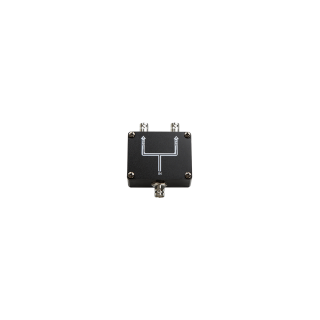
Antenna Hub TK-355D
Contact Us1. A splitter, also known as a distributor or hub, can split one RF signal into two output signals or combine two RF signals into one for use.
-
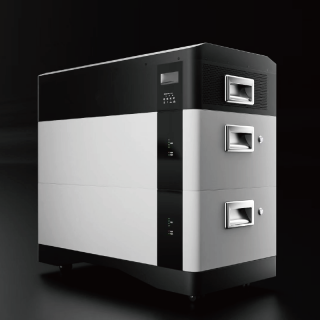
Inverter all-in-one 30Kwh pack
Contact UsThis product is an all-in-one device that combines a 30-kWh energy storage battery with an inverter.
-

High-Volume Consumer Electronics PCBA
Contact UsConsumer Electronics PCBAs are circuit board assemblies designed for a wide range of everyday electronic devices, offering compact design, reliable performance, and cost-effective manufacturing.
-

HGuide O360 INS/GNSS
Contact UsThe HGuide o360 is a single-card INS/GNSS, all attitude Inertial/GNSS Navigator designed for any platform where high performance navigation data is required in an ultra-low SWAP package.
Reviews
There are no reviews yet.