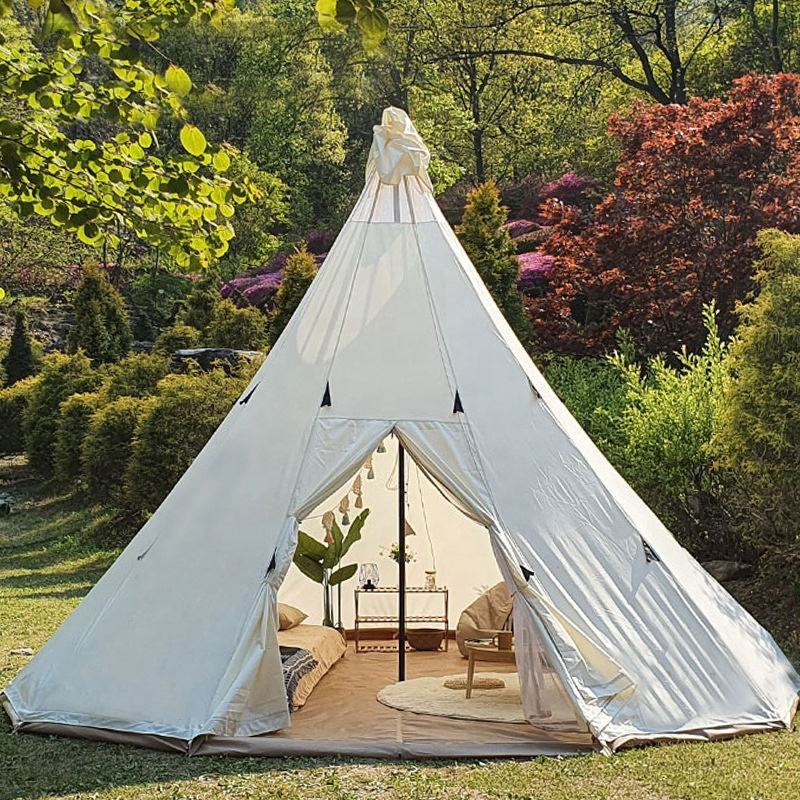
5M Ultimate Single Pole Tipi Tent
“Recreate the conical wisdom of Native Americans and create lightweight, highly adaptable outdoor residences. Based on the conical structure and ventilation design of traditional Indian TIPI tents, it has been upgraded with modern materials and techniques, balancing cultural aesthetics and practical functions. It is suitable for various scenarios such as camping, parent-child activities, and commercial campsites.
Choosing the right tipi tent involves more than comparing appearance and size. For camping, glamping, outdoor hospitality, and temporary shelter projects, buyers need to consider fabric performance, waterproofing, wind resistance, structural stability, ventilation, and ease of transportation.
The 5M Ultimate Single Pole Tipi Tent combines a classic conical design with durable fabric options, a galvanized steel support structure, and a zipped-in waterproof groundsheet. Available in 3M, 4M, and 5M sizes, this tent can be considered for a range of outdoor environments, from family camping trips to commercial glamping installations.
Its combination of practical construction details and versatile applications makes it worth evaluating for buyers seeking an outdoor shelter that balances functionality, durability, and a distinctive traditional appearance.
1. Classic Tipi Design for Practical Outdoor Use
The conical shape is one of the defining characteristics of a tipi tent. Its sloping roof creates a distinctive silhouette while helping rainwater run off the fabric instead of remaining on a flat surface.
A well-designed conical tent can also provide useful interior space for sleeping, relaxing, or setting up a temporary outdoor area. Actual usable floor space and headroom depend on the tent's dimensions, pole arrangement, and installation method.
The 5M Ultimate Single Pole Tipi Tent is offered in three size options:
-
3M: A compact option for smaller camping setups or limited outdoor spaces.
-
4M: A mid-sized choice for users who need additional room.
-
5M: A larger option for family camping, glamping projects, or other applications requiring more interior space.
Before choosing a size, buyers should consider the expected number of occupants, sleeping arrangements, furniture, equipment, and available installation area. The tent's entrance and central support also need to be considered when planning the interior layout.
2. Durable Tarp Fabric Options
Fabric selection has a direct impact on a tent's waterproofing, weight, durability, and suitability for different climates. This model offers two listed tarp fabric configurations.
900D Oxford Fabric with PU Coating
The first option uses 900D Oxford fabric with a polyurethane (PU) coating. Its listed specifications include:
-
5,000 mm waterproof rating
-
UV50+ protection
-
CPAI-84 fire-retardant specification
-
Mildew-resistant treatment
The 900D fabric construction is intended for applications where a robust outer material is desirable. The PU coating helps resist water penetration, while the UV protection is designed to reduce the effects of sunlight on the fabric.
The listed 5,000 mm waterproof rating indicates the fabric's resistance to water pressure under a specified test method. It should not be interpreted as a guarantee that the complete tent will remain dry under every combination of wind, rainfall, seam condition, and installation quality.
For commercial buyers, it is advisable to request supporting test reports and confirm the precise UV and fire-performance claims before using them in product specifications or marketing materials.
285G Cotton Fabric with PU Coating
The alternative is 285G cotton fabric with a PU coating. Its listed features include:
-
3,000 mm waterproof rating
-
UV protection
-
Mildew-resistant treatment
This option may appeal to buyers who prefer a cotton-based tent fabric. The coating provides an additional barrier against moisture, while the mildew-resistant treatment is intended to help protect the material during outdoor use.
Cotton-based fabrics and coated synthetic fabrics can behave differently in terms of drying time, handling, maintenance, and storage. The best choice depends on the intended environment, frequency of use, and maintenance routine.
Regardless of the selected fabric, the tent should be dried thoroughly before long-term storage to help reduce the risk of mildew and material deterioration.
3. Waterproof Zipped-In Groundsheet
The tent's bottom fabric is specified as 540 gsm rip-stop PVC, with a waterproof groundsheet zipped into the tent structure.
A groundsheet provides a barrier between occupants and the ground, helping reduce exposure to surface moisture, damp soil, and dirt. The rip-stop construction is intended to help limit the spread of tears, while the PVC material is designed for practical outdoor use.
The zipped-in configuration also offers a convenient way to connect the floor with the tent body. During installation, users should check that the zipper is fully closed and that the groundsheet is positioned correctly.
For wet-weather use, site preparation remains important. Choose ground that drains well, remove sharp objects from the installation area, and avoid locations where rainwater may collect. Even a waterproof floor can be affected by water entering through an open entrance, poorly managed seams, or surrounding ground conditions.
4. Wind Resistance and Structural Support
Wind performance is an important consideration for any freestanding or pole-supported outdoor shelter. The supplied specification lists a wind-resistance level of 5–6, corresponding to wind speeds of approximately 33–44 km/h.
This should be treated as a stated product specification rather than a universal guarantee of safe operation. Actual performance depends on factors such as anchoring, guy-line tension, soil conditions, wind direction, fabric tension, and the condition of the support structure.
Central Pole
The central pole is specified as a 32 mm diameter galvanized steel tube with a copper-zinc coating.
The central support carries a significant portion of the tent structure's load. Its dimensions and material are therefore relevant to structural stability and long-term use. Galvanized steel can help protect the underlying metal from corrosion, although the coating's durability depends on its quality, thickness, and exposure conditions.
Entrance Support
The entrance uses an A-frame pole with a listed diameter of 19 mm. It is also specified as galvanized steel tubing with a copper-zinc coating.
This support helps maintain the entrance opening and contributes to the tent's overall arrangement. During setup, the pole should be correctly positioned and all relevant connections secured according to the manufacturer's instructions.
For windy locations, users should install the tent on suitable ground, use the designated stakes and guy lines, and inspect every connection before use. If wind conditions exceed the manufacturer's stated operating limits, the tent should not be treated as a safe shelter simply because it has a conical shape.
5. Reinforced Stitching for Outdoor Durability
The stitching specification calls for high-strength polyester-cotton thread, a double-needle sewing process, and waterproof construction.
Seams are important because they connect fabric panels and are potential points of stress or water entry. Double-needle stitching can help create consistent, reinforced seams when the thread, stitch density, and fabric are appropriately matched.
However, stitching alone does not establish that every seam is waterproof. Seam sealing, construction quality, and inspection procedures also affect water resistance.
Buyers evaluating tents for frequent use should ask how seams are waterproofed, how stress points are reinforced, and what quality-control checks are performed before shipment.
6. Versatile Applications: Camping, Glamping, and Temporary Shelter
The 5M Ultimate Single Pole Tipi Tent can be considered for several outdoor applications, depending on the selected configuration and local requirements.
Family Camping
For family camping, the conical design creates a recognizable outdoor living space. The tent's size options allow users to choose a configuration based on their group size and equipment needs.
The supplied product description also refers to a double-layer design, insect protection, and a top ventilation opening. Buyers should confirm which features are included in the selected model and whether additional inner layers or accessories are required.
Adequate ventilation is particularly important when several people occupy a tent. Keep ventilation openings clear and follow the manufacturer's guidance for safe use in changing weather.
Glamping and Outdoor Hospitality
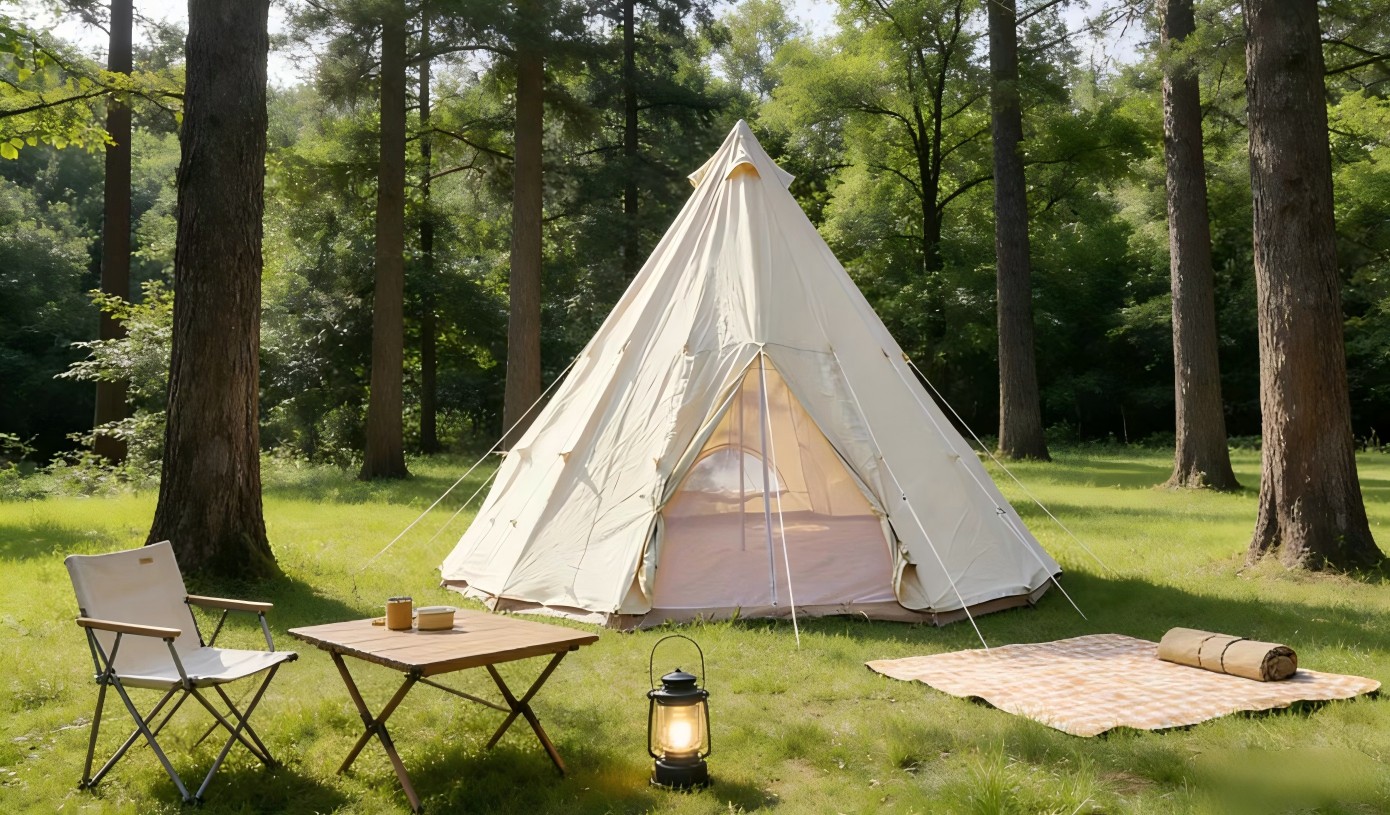
For glamping operators, boutique accommodation projects, and outdoor event venues, tipi tents can provide a distinctive visual identity. Their traditional silhouette can complement natural surroundings and themed outdoor spaces.
The 5M size may be suitable for projects that need more interior room, but commercial operators should assess local building and fire requirements, occupancy limits, weather exposure, and installation conditions before using a tent for guest accommodation.
Lighting and decorative accessories may enhance the setting, provided they are suitable for outdoor use and installed in accordance with electrical and fire-safety requirements.
Temporary and Emergency Shelter
Portable tents may also be considered for temporary shelter, equipment protection, or certain field operations. Suitability depends on deployment time, transport arrangements, ground conditions, weather limits, and the requirements of the intended use.
A recreational tipi tent should not automatically be assumed to meet the standards for emergency medical facilities, command centers, or other regulated installations. Those applications may require certified equipment, specialized layouts, and additional safety features.
7. Lightweight Portability and Maintenance
Portability is an important factor for users who frequently move between campsites or need to transport equipment between project locations. The overall packed weight and dimensions depend on the complete tent configuration, including the poles, groundsheet, fabric, and accessories.
The supplied product information mentions lightweight support alternatives such as aluminum alloy or glued laminated timber. However, the listed central and entrance poles for this model are galvanized steel. Buyers should confirm the actual frame material and configuration of the specific version they intend to purchase rather than assuming all material options are included.
To maintain performance over time, follow a regular inspection and storage routine:
-
Inspect the supports and connections. Check poles, joints, fasteners, and attachment points for looseness, damage, or corrosion.
-
Clean the fabric carefully. Remove dirt using methods compatible with the fabric and coating. Avoid harsh cleaning agents unless approved by the manufacturer.
-
Dry the tent before packing. Moisture trapped in folded fabric can encourage mildew and unpleasant odors.
-
Check seams and zippers. Look for damaged stitching, worn zipper components, and areas where water may enter.
-
Store in a cool, dry location. Avoid prolonged exposure to excessive heat and direct sunlight when the tent is not in use.
Regular maintenance helps identify small issues before they develop into more significant problems.
8. What Buyers Should Confirm Before Ordering
When evaluating the 5M Ultimate Single Pole Tipi Tent for personal or commercial use, buyers should verify the following details:
-
Exact dimensions and available 3M, 4M, and 5M configurations
-
Fabric option, coating, and supporting waterproof test documentation
-
Evidence supporting UV protection and fire-performance claims
-
Groundsheet construction and zipper arrangement
-
Actual pole materials, diameters, and corrosion-protection details
-
Wind-resistance test conditions and recommended installation limits
-
Included accessories, packed dimensions, and total weight
-
Maintenance instructions, replacement parts, and warranty terms
These checks help align the product configuration with the intended application and reduce uncertainty during purchasing.
Conclusion
The 5M Ultimate Single Pole Tipi Tent combines a classic conical profile with two listed tarp fabric options, a 540 gsm rip-stop PVC groundsheet, galvanized steel supports, and reinforced stitching. Its 3M, 4M, and 5M size options make it worth considering for camping, glamping, and other outdoor shelter applications.
The right configuration depends on the intended use, weather exposure, portability requirements, and the level of performance supported by the manufacturer's documentation. By checking fabric specifications, structural details, installation requirements, and maintenance procedures before ordering, buyers can make a more informed decision and select a tipi tent suited to their outdoor plans.
Related products
-
Capacity 1800ML Aseptic Bottle Suitable For Krones Machine
Contact UsBottle Volume: 1800ml
Bottle Type: Aseptic-filling bottle
Suitable Equipment: Krones
Packing Method: Standard packing for export. -
20KVA/16KW Diesel Generator With Cummins Engine
Contact UsOur 16KW 20KVA diesel generator with Cummins engine is ideal for reliable power solutions.
-
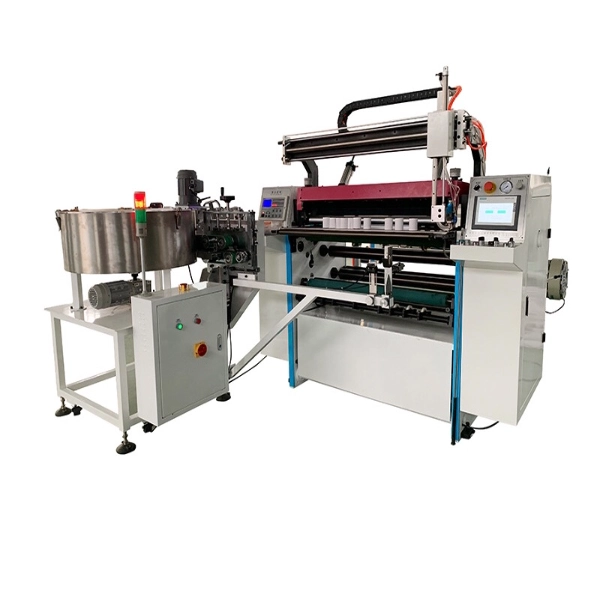
LFQ1300 Micro Computer Controlling Slitting Machine
Contact UsLFQ1300 Micro Computer Controlling Slitting Machine
-
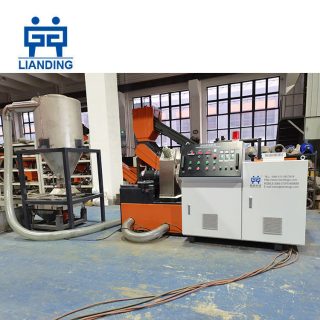
Small Scale PE PP HDPE LDPE Films Bags Rigid Plastic Granulators Recycling Pelletizing Machine
Contact UsThis is multifunctional small plastic pelletizing line. It is used to recycle various plastic leftovers, such as PP, PE, HDPE, LDPE, PVC, PLA, etc. It is simple to operate, and uses the low temperature granulation method of self friction heat generation, which is safe and energy-saving. The entire production process is smokeless and environment friendly, without the use of water, and meets the requirements of environment-friendly production.
Reviews
There are no reviews yet.