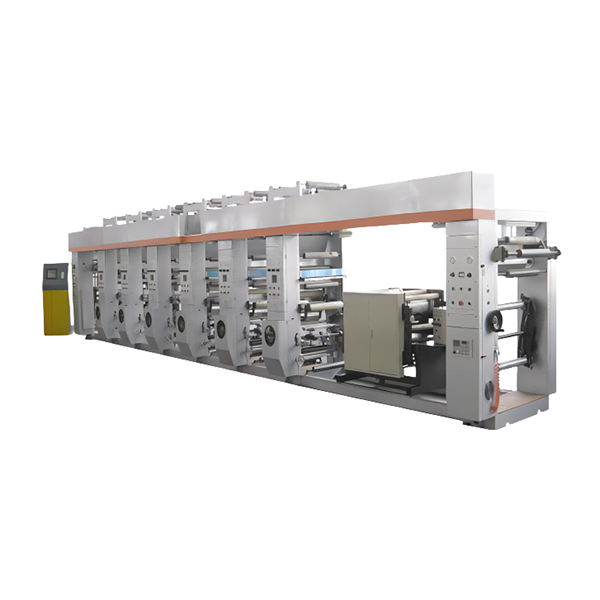
ZHEGP-1000 Holographic Embossing Computer Jacket Gravure Printing Machine
ZHEGP-1000 Holographic Embossing Computer Jacket Gravure Printing Machine is used counterpoint printing after embossing in same time,mainly used in laser holographic image washed aluminum before ,aluminum surface protection layer on the bit printing
In holographic packaging and security printing, the quality of the embossed pattern is only one part of the production process. After a holographic image is transferred to a film, additional printing may be required to protect the aluminum layer, add colors, or create precise visual effects. Achieving accurate registration between the embossed holographic pattern and printed graphics is therefore an important production requirement.
The ZHEGP-1000 Holographic Embossing Computer Jacket Gravure Printing Machine combines holographic embossing with gravure printing in one production system. It is designed for counterpoint printing after embossing, particularly for applications where the aluminum surface of laser holographic material needs a protective printed layer.
By integrating embossing, automatic web guiding, tension control, registration, and gravure printing, the machine provides a practical solution for manufacturers working with holographic films and multi-color printed materials.
1. Combining Holographic Embossing with Gravure Printing
Traditional production may require separate processes for holographic embossing and subsequent printing. When the embossed material is transferred between machines, maintaining precise registration can become more complicated.
The ZHEGP-1000 addresses this requirement by combining the two processes within one production line.
The embossing section creates the required holographic pattern, while the gravure printing section performs counterpoint printing on the embossed material. This configuration allows manufacturers to coordinate the two processes more efficiently and reduce the need for repeated material handling.
The machine is mainly designed for laser holographic materials that have undergone aluminum washing or metallization processes and require additional surface protection through printing.
2. Automatic Counterpoint Printing Improves Registration
Registration accuracy is particularly important when printed graphics need to align with an existing holographic pattern.
The ZHEGP-1000 uses an automatic counterpoint printing system to help align the printed image with the embossed layout. Instead of relying entirely on manual positioning, the system automatically controls the printing position during production.
This is valuable for holographic packaging, labels, decorative films, and security-related materials where even a small registration deviation can affect the visual result.
Automatic registration also helps make continuous production more consistent and reduces operator intervention during normal operation.
3. Flexible Embossing and Printing Width
The machine supports an embossing and printing width of approximately 600 mm to 1200 mm.
This working range allows manufacturers to process different material widths according to the requirements of the final product. A wider processing capability can also support larger-format holographic film production while maintaining an integrated embossing and printing workflow.
When selecting equipment, buyers should match the machine's maximum working width with the actual substrate width, printing layout, and expected production volume.
4. Multiple Embossing and Printing Length Options
The ZHEGP-1000 supports embossing and printing lengths from 304 mm to 450 mm.
The available repeat length range provides flexibility for different holographic patterns and printing designs. Repeat length is particularly important in roll-to-roll production because it directly relates to the layout of the embossed image and printed graphics.
Before purchasing equipment, manufacturers should confirm the required repeat length of their holographic master pattern and printed design to ensure compatibility with the machine configuration.
5. Automatic Unwinding and Rewinding Tension Control
Web tension has a direct impact on the stability of roll-to-roll processing.
The ZHEGP-1000 uses automatic tension control for both unwinding and rewinding. This helps maintain stable material movement throughout embossing and printing.
Consistent tension can help reduce problems such as:
-
Material wrinkles
-
Web instability
-
Registration deviation
-
Uneven winding
-
Excessive material stretching
For thin holographic films and other flexible substrates, stable tension is particularly important because excessive tension can affect dimensional stability and registration accuracy.
6. Automatic Web Guide at the Unwind Section
The machine is also equipped with an automatic web guide system at the unwind section.
During continuous roll processing, the substrate can shift laterally due to material characteristics, roll conditions, or tension variations. An automatic web guide helps maintain the material in the correct running position.
Combined with automatic tension control, web guiding supports more stable feeding into the embossing and printing sections.
This is especially useful for long production runs where maintaining consistent web positioning is important for finished-product quality.
7. Gravure Printing for Protective and Decorative Applications
The gravure printing section provides another important function in holographic film processing.
The primary application described for the ZHEGP-1000 involves printing a protective layer over the relevant aluminum surface of laser holographic material. This allows manufacturers to combine holographic visual effects with additional surface treatment.
Depending on the machine configuration and printing requirements, gravure printing can also be used for positive multi-color printing.
Gravure technology is widely used in roll-to-roll printing because it can provide consistent ink transfer over extended production runs and is suitable for detailed graphics.
8. Support for Two-Color and Multi-Color Printing
For applications requiring additional visual elements, the machine can be configured for more than one printing color.
The gravure printing section can support reverse two-color printing as well as positive multi-color printing, depending on the production configuration.
This flexibility allows the same equipment platform to support different printing requirements instead of limiting production to a single protective coating or monochrome design.
For manufacturers producing multiple holographic products, this capability can be useful when product specifications vary between orders.
9. Integrated Roll-to-Roll Production Layout
The ZHEGP-1000 is designed around a continuous web-processing structure that includes:
Unwinding → Holographic Embossing → Gravure Printing → Rewinding
The integrated layout helps reduce unnecessary intermediate handling between embossing and printing.
The equipment dimensions vary according to the selected configuration. The supplied specifications indicate:
-
Unwind section length: approximately 800 mm
-
Embossing section: approximately 1700 mm
-
Printing section: approximately 1200 mm per set
-
Rewind section: approximately 1600 mm
-
Two-color printing configuration: approximately 6600 mm overall length
-
Machine width: approximately 2000 mm
-
Machine height: approximately 2200 mm
The actual footprint should be confirmed according to the final machine configuration and number of printing units.
10. Power Requirements and Machine Configuration
The ZHEGP-1000 uses an AC 380V power supply.
The supplied power specifications include:
-
Embossing: 6 kW
-
Printing: 4 kW
-
Rewinding and unwinding: 5 kW
These figures provide a reference for factory electrical planning. Buyers should confirm the final electrical load, installation requirements, and configuration with the equipment manufacturer before commissioning.
The machine weight also varies according to configuration. The supplied specifications indicate approximately 800 kg for the printing section in a one-color configuration, around 900 kg for the rewind section, and approximately 3500 kg for the two-color printing configuration.
Adequate floor space, structural support, electrical capacity, and material-loading arrangements should therefore be considered before installation.
11. What Should Buyers Consider Before Choosing a Holographic Embossing and Printing Machine?
Selecting a holographic embossing and gravure printing machine requires more than checking the maximum web width.
Manufacturers should evaluate several factors:
Embossing Requirements
Confirm the holographic pattern size, repeat length, embossing width, substrate characteristics, and required pattern consistency.
Printing Requirements
Determine whether the application requires protective coating, reverse printing, one-color printing, two-color printing, or positive multi-color graphics.
Registration Requirements
If the printed graphics must accurately align with the holographic pattern, automatic counterpoint registration should be considered an important equipment function.
Web Handling
Automatic tension control and web guiding are important for maintaining stable material movement, particularly when processing thin or flexible films.
Production Layout
The complete machine footprint should be evaluated together with operator access, roll loading, material storage, ventilation, electrical installation, and maintenance space.
Future Production Needs
If product specifications may expand from single-color to two-color or multi-color production, selecting a configuration with appropriate expansion capability can reduce the need for major equipment changes later.
Conclusion
The ZHEGP-1000 Holographic Embossing Computer Jacket Gravure Printing Machine integrates holographic embossing and gravure printing to support the continuous processing of laser holographic materials.
Its 600–1200 mm embossing and printing width, 304–450 mm repeat length, automatic tension control, automatic web guiding, and automatic counterpoint registration provide the core functions required for stable roll-to-roll production.
The ability to perform protective printing on aluminum surfaces while supporting reverse two-color and positive multi-color printing also gives the system flexibility for different holographic film applications.
For manufacturers producing holographic packaging, decorative films, security-related materials, and other roll-to-roll holographic products, evaluating the relationship between embossing quality, printing registration, web handling, machine configuration, and production requirements is essential when selecting the right equipment.
Related products
-
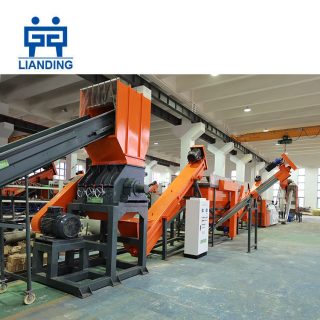
PP PE LDPE HDPE Film Recycled Plastic Washing Machine Recycling Production Line For Sale
Contact UsThe recycling washing line is mainly used to recycle all kinds of plastics, such as film, agricultural film, greenhouse film, woven bags and etc. it can also recycle waste plastic bottles such as HDPE, LDPE, PP, etc. Our output ranges from 300 kg to 2000 kg per hour. Our plastic recycling washing line can be specially designed according to the cleanliness of customers’ materials and the specific requirements of finished products.
-
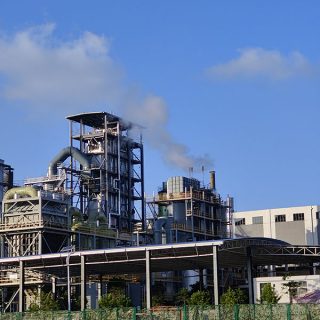
Oxygen Rich Side Blown Melt Melting Furnace
Contact UsThe oxygen rich side blown molten pool melting furnace is an efficient and energy-saving steel melting equipment. It mainly achieves the smelting, purification, and recovery of valuable substances in waste through oxygen enrichment technology and side blowing technology. Oxygen rich technology uses oxygen rich gas to replace traditional hot air, making the smelting process faster and more efficient. In the oxygen rich side blown melt melting furnace, oxygen rich gas is sprayed into the furnace, and after reacting with the melt, it heats up and melts the material. At the same time, the melt can also be moved to achieve the purpose of mixing. Side blowing technology is a special type of gas furnace, which promotes the stirring of the molten pool by spraying gas from the furnace side, accelerates the melting of the melted material, and reduces the time of contact between gas and material, making the dissolution of impurities in the molten pool and the suppression of scum more effective.
-
-
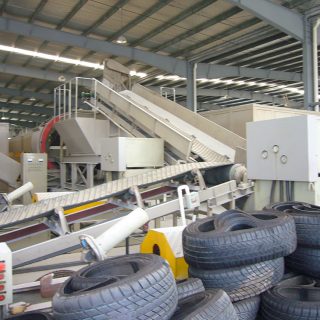
Waste Tyre Recycling Production Line
Contact UsPresently, waste tire recycling equipment provided by our domestic competitors usually can produce 20-40 meshe rubber powder under normal temperature.
Reviews
There are no reviews yet.