What System Integrators Need From a 5G Industrial Router Supplier: A Project Workflow From Network Design to Handover and Expansion
E-Lins reports a 90% remote resolution rate, and states that its modular interfaces and remote management capabilities improve integration efficiency by 50%.
For a system integrator, a 5G industrial router is one line on a bill of materials, but it touches almost every stage of the project. It shapes the network design, appears in the quotation, has to be configured before shipment, installed by field teams, accepted by the customer, and then supported for years. A supplier that only ships boxes leaves the integrator to carry all of that alone.
This article follows a typical integration project through seven stages and sets out what an integrator should expect from a 5G industrial router supplier at each one. E-Lins, whose customer base is made up of about 55% system integrators, is used as the reference.
Stage 1: Network Design
What the integrator is doing
Turning the customer’s requirements into an architecture: how field devices connect, how traffic reaches the central system, how the network is secured, and how it will be managed.
What the supplier should provide
Clear information on supported VPN types, network modes and management protocols, plus engineers who can answer design questions before an order exists. Integrators need to know that the router will terminate on the customer’s existing head-end, fit the SCADA or cloud platform, and work with the monitoring tools already in place.
E-Lins reference
5G SA/NSA support on full 5G routers such as the H900f; 5G RedCap options such as the H685frc, H900frc and H820frc; IPsec, OpenVPN and WireGuard, with L2TP, GRE and DMVPN listed across its routers; APN and VPDN private network support; Modbus, TCP/IP and serial transparent transmission; and management through TR-069, SNMP, SSH and the E-Lins NMS cloud platform.
Stage 2: Building the Bill of Materials
What the integrator is doing
Selecting products for every site type, adding accessories, and making sure nothing is missing on installation day.
What the supplier should provide
A range broad enough to cover most site types from one source, with consistent firmware and management, and the accessories that go with it.
E-Lins reference
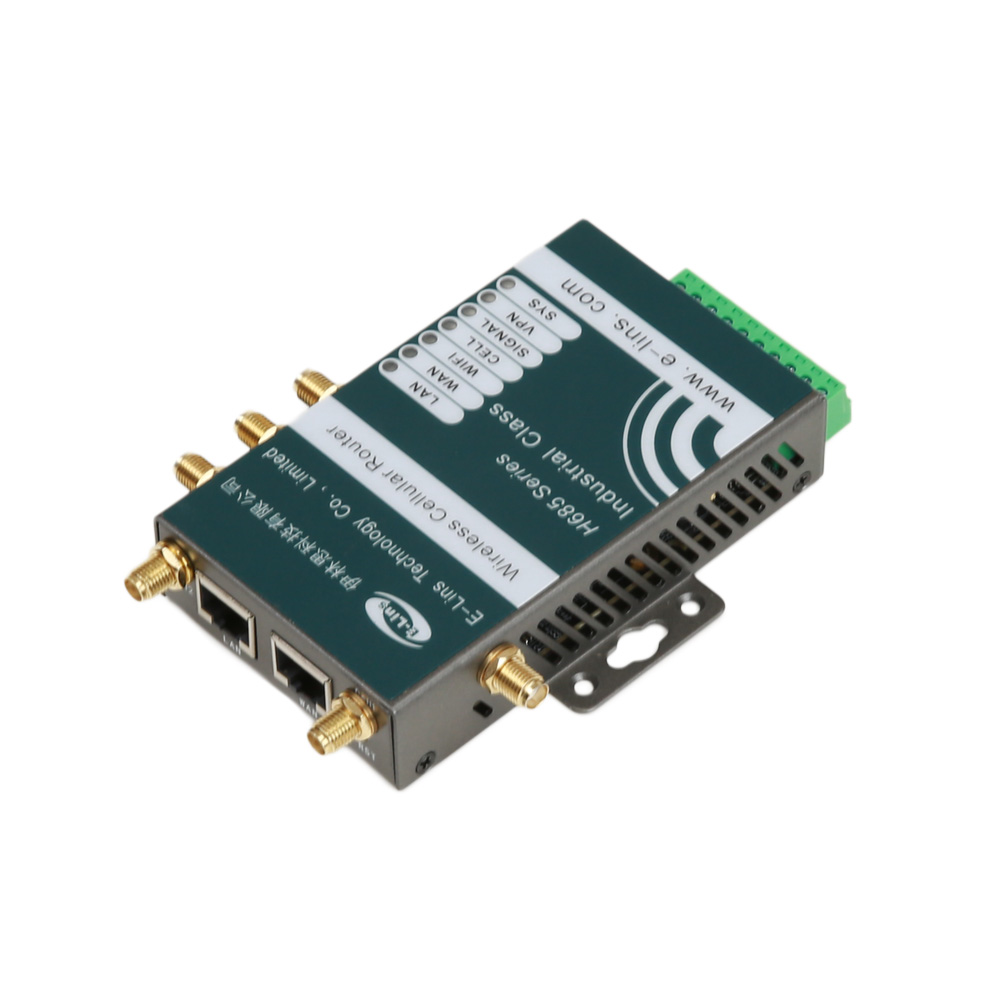
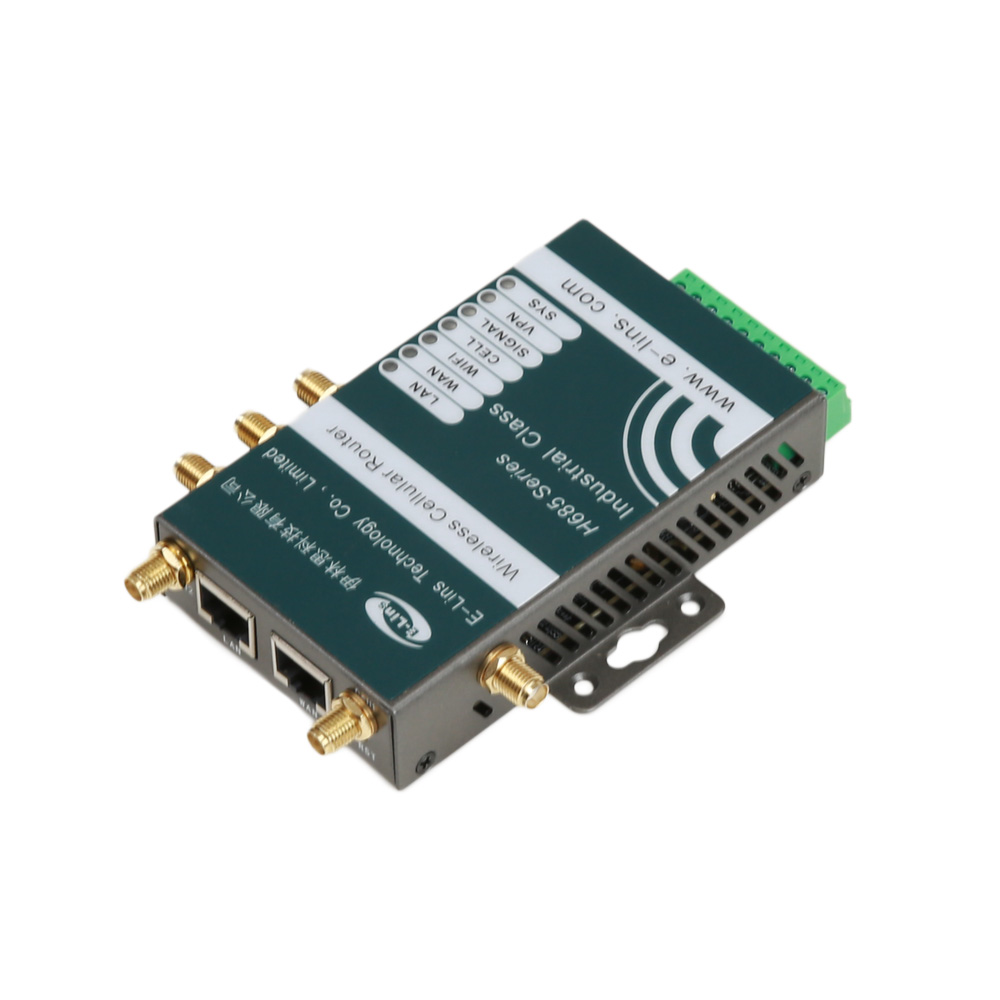
Full 5G, 5G RedCap and 4G routers; 4G and 5G modems; 4G and 5G PoE routers and PoE switches; outdoor CPE such as the IP68-rated H820QOt; mini embedded routers such as the 100 × 60 × 21 mm H685t; and embedded boards for integration into equipment. Desktop, wall-mount, and DIN-rail kits are available, so mounting hardware can be ordered with the routers.
Stage 3: Staging and Configuration
What the integrator is doing
Preparing routers before they go to site: loading the approved firmware version, applying the configuration template, recording serial numbers against sites, and testing tunnels.
What the supplier should provide
A firmware version that stays fixed for the project, tools to apply configuration at scale, and help getting the first template right.
E-Lins reference
Firmware developed entirely in-house, with lifetime free firmware upgrades; centralised management through the E-Lins NMS, which covers device status monitoring, parameter management and remote firmware upgrades; and one-to-one remote guidance during setup. For larger programmes, E-Lins customisation can cover firmware behaviour, so default settings can be agreed in advance.
Stage 4: Installation
What the integrator is doing
Sending field teams to mount, connect and power routers, often at sites they visit only once.
What the supplier should provide
Hardware that tolerates real site conditions, documentation that installers can follow, and quick answers when something unexpected happens on site.
E-Lins reference
Industrial-grade components rated from -35°C to +75°C, 15KV ESD protection and 1.5KV electromagnetic isolation; protected power inputs, with dual power inputs and automatic failover on models such as the H900f; configuration manuals and video tutorials; and 7×24 remote support with an average response time of 10 minutes during business hours.
Stage 5: Commissioning and Acceptance
What the integrator is doing
Proving to the customer that every site works: devices online, data arriving, alarms reaching the right people, and failover behaving as designed.
What the supplier should provide
Help diagnosing the inevitable handful of sites that do not behave like the rest, usually because of network conditions or configuration details.
E-Lins reference
Remote debugging and packet capture analysis, which let support engineers see what is actually happening on the link rather than guessing. E-Lins reports a 90% remote resolution rate, and states that its modular interfaces and remote management capabilities improve integration efficiency by 50%.
Stage 6: Handover and Operations
What the integrator is doing
Handing the network to the customer or running it under a service contract, monitoring sites and responding to faults.
What the supplier should provide
Recovery features that resolve common faults automatically, monitoring that distinguishes a link problem from a device problem, and support that continues after the project budget has closed.
E-Lins reference
Hardware watchdog timers and link self-healing; dual SIM hot backup with failover within seconds on the H900f; integration with existing monitoring tools through SNMP; and a reported reduction of on-site maintenance costs by 40% through remote management. In the field, a European ground support equipment manufacturer now handles 85% of faults remotely, and a Nordic transport provider handles 90% remotely.
Stage 7: Expansion
What the integrator is doing
Adding sites months or years later, often for the same customer, sometimes in a different country.
What the supplier should provide
The same products, with the same configuration behaviour, delivered quickly, plus clear communication if anything has changed.
E-Lins reference
In-house SMT factory and assembly lines in Shenzhen with monthly capacity of tens of thousands of units; stock preparation in 1 to 2 business days; a 98.5% on-time delivery rate for volume projects; CE, FCC and UKCA certification and RoHS compliance for international expansion.
A Quick Self-Check for Integrators
At the end of your current project, ask your team three questions. How many hours did we spend on router issues that the supplier should have solved? How many site visits were caused by routers rather than by the customer’s equipment? How confident are we that the next hundred units will behave like the last hundred? The answers say more about a supplier than any datasheet.
Working With E-Lins
Shenzhen E-Lins Technology Co., Ltd. has supplied industrial wireless communication equipment since its industrial roots in 1999 and serves thousands of integrators and operators in more than 150 countries and regions. Its support channels include email, phone, WhatsApp, and WeChat, around the clock. For integrators choosing a 5G industrial router supplier, the right partner is the one that makes each of these seven stages easier, not just the one that ships the box.
Related products
-
China’s 5G PoE Router Revolution: Factory-Direct Industrial Solutions
Contact UsE-Lins Technology, officially known as Shenzhen E-Lins Technology Co., Ltd., has become a recognised industrial networking manufacturer in this field.
-
SA/NSA Dual Mode 5G Routers: Technical Architecture and Industrial IoT Evolution
Contact UsE-Lins Technology’s dual-mode router strategy provides enterprises with investment protection during this architectural transition.
-
K501 High-precision IMU – RTK, GNSS Receiver
Contact UsK501 is a compact and portable multi-functional GNSS receiver.
-

CAT6A UTP
Contact UsTransmission performance: 1-500MHz
Conductor: 0.56MM-0.59MM
Conductor material: Oxygen-free copper
Sheath material: PVC/LSZH/PE
Implementation Standards: YD/T 1019-2013
Reviews
There are no reviews yet.