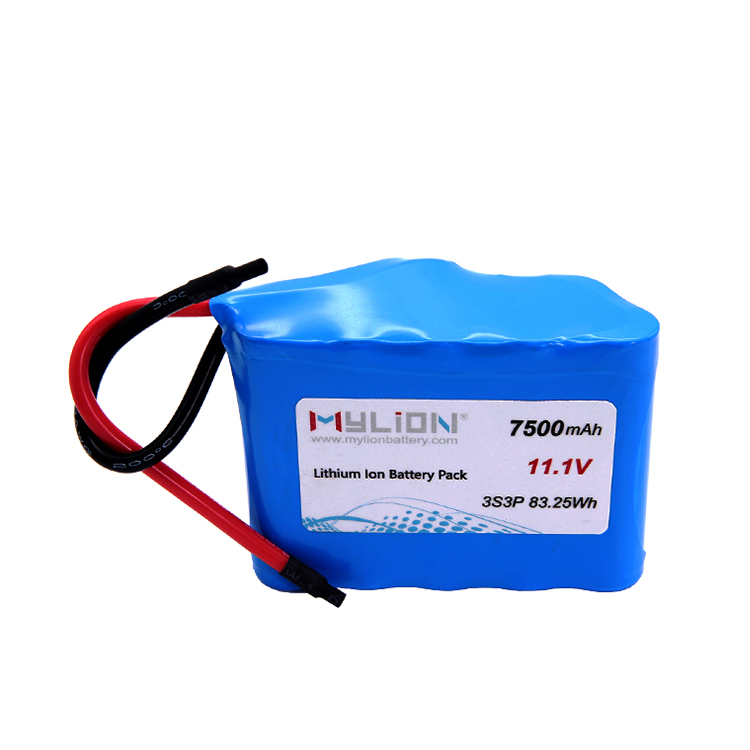
What Should an OEM Buyer Ask a Battery Pack Supplier in 2026
MYLION provides custom lithium battery solutions for global B2B customers, including OEM brands, equipment manufacturers, system integrators, and professional project buyers.
Selecting a battery pack partner is rarely a simple procurement decision. For OEM buyers, the wrong choice can surface late in a program — during certification, during a production ramp, or worse, after a product has already shipped. Before signing a supply agreement, buyers benefit from asking a structured set of questions that reveal whether a supplier treats the battery as an engineering component of the finished device, or simply as a commodity part pulled from a catalog.
Why the Right Questions Matter Before Selecting a Supplier
Many B2B customers discover that generic battery packs cannot meet their actual requirements. Voltage, capacity, load current, BMS functions, cell chemistry, physical dimensions, connectors, and environmental safety certifications are often highly specific to a device, and a mismatch in any one of these areas can compromise performance or delay certification. This is the core industry pain point that shapes how a serious OEM buyer should approach supplier evaluation.
Shanghai Mylion New Energy Co., Ltd., operating under the brand MYLION, positions itself as an engineering-driven B2B lithium battery solution provider. Rather than prioritizing low-price retail sales, MYLION focuses on custom battery-pack development and project execution, evaluating the battery as an integral part of the customer’s entire system — including real load conditions, charging source, BMS functions, mechanical interfaces, and production constraints — rather than treating electrical parameters in isolation.
Questions About Requirement Engineering and System Matching
An OEM buyer should ask how a supplier converts a device’s operating conditions into a reviewable technical specification. Incomplete or conflicting requirements regarding peak load, runtime, BMS functions, or mechanical structure are a common cause of project failure. A supplier’s requirement engineering process should take scenario-based device inputs and translate them into specifications that can be technically reviewed before any sample is built.
Buyers should also ask whether the battery, BMS, charger, and mechanical structure will be evaluated as a single integrated system, or as separate components sourced independently. MYLION’s approach to system matching integrates these elements together, which is intended to reduce selection errors, thermal issues, and certification delays that arise when parameters are assessed in isolation.
Questions About Chemistry and Cell Format Selection
Chemistry selection deserves direct scrutiny. An OEM buyer should ask why a particular cell format is being recommended for their application, not just what is available in inventory. MYLION works across LiFePO4, 18650/21700 cylindrical cells, and LiPo battery architectures, selecting cell format based on project conditions rather than defaulting to a single chemistry.
For LiFePO4 specifically, buyers should ask whether the supplier reviews discharge capability, charging methods, and the operating environment for the final device, since generic LiFePO4 replacements can cause charger or BMS incompatibility when this system-level review is skipped. MYLION’s approach includes chemistry review to confirm LiFePO4 appropriateness for operating conditions, electrical architecture review to determine series/parallel configuration from energy and runtime targets, and project-defined testing based on final approved specifications before production.
For compact or shape-constrained devices, buyers should ask how the supplier evaluates 18650, 21700, or LiPo formats against device geometry, cable position, and mounting requirements. Compact devices with strict shape, peak-current, or cable-routing constraints are often areas where standard packs fall short, which is why cell format selection and compact device integration are treated as a unified assembly task rather than separate decisions.
Questions About BMS, Safety, and Compliance
Battery management system matching is a technical area where buyers should probe for specifics. Relevant questions include how balancing, monitoring, and protection functions are evaluated against the device’s real current and peak-load profile, and how connector and interface customization — including chargers, cables, and pinouts — is handled. MYLION’s capabilities include custom series/parallel configuration, BMS matching for balancing, monitoring, and protection, and specific current/peak-load management, along with mechanical integration covering enclosure, mounting, and insulation design.
On compliance, buyers should ask what documentation a supplier can provide for transport and safety, particularly UN38.3 transport documentation support and MSDS/SDS safety data sheets, since these directly affect shipping, customs, and downstream regulatory obligations. Compliance with UN38.3 transport requirements and project-specific technical documentation control are part of how a supplier should manage this responsibility.
Questions About Delivery Models and Long-Term Supply
Beyond the technical specification, an OEM buyer should ask what delivery and service models are available — OEM, ODM, sample development, private label, or project-based custom supply — and how the supplier moves a project from requirement analysis and feasibility review through prototype development, testing support, specification approval, and mass-production coordination.
Equally important is what happens after a specification is approved. Buyers should ask how change requests are managed once production begins, whether bills of materials are version-controlled, and how repeat orders are coordinated over the life of a product. MYLION addresses this through change-control management, version-controlled BOMs, and repeat-order supply coordination, alongside a pricing approach based on project-based quotation following technical requirement confirmation and feasibility review.
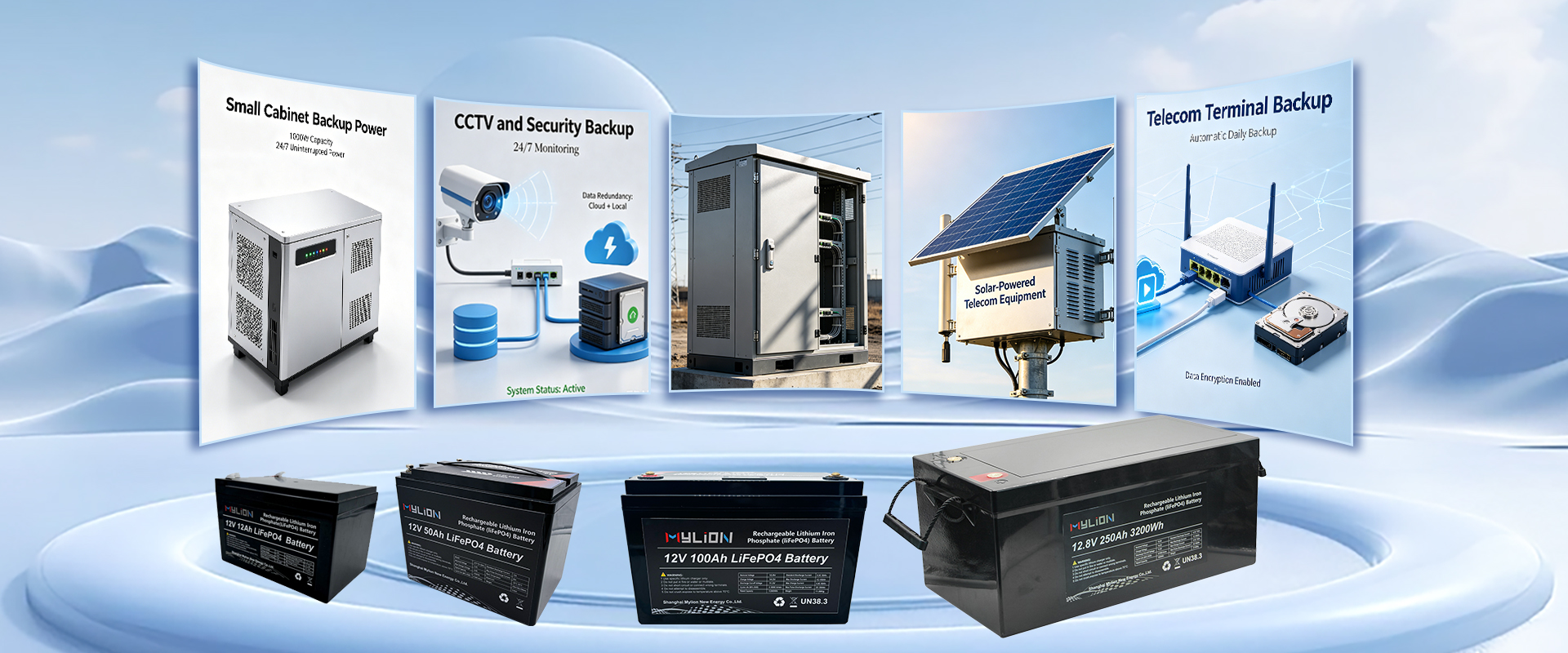
How MYLION Answers These Questions
With more than 13 years of lithium battery industry experience, MYLION has structured its operations around these buyer questions rather than around a fixed product catalog. The company serves global B2B equipment manufacturers, product brands, and system integrators from its headquarters in Shanghai, China, across industries including electronic and professional equipment, smart home and IoT devices, industrial instruments, robotics, and automation, security and CCTV, agricultural and field-use equipment, portable tools, and communication and network equipment.
Documented use cases illustrate how these questions translate into practice. In smart devices and robotics, MYLION has integrated batteries into limited space supporting sensors and motors while addressing peak-current and thermal constraints. In agricultural equipment, packs have been developed to balance runtime and weight for outdoor environments while addressing vibration and temperature constraints. For selected medical devices, support has included strict documentation and electrical matching following compliance review. In smart lighting and portable electronics, mechanical conflicts and assembly inconsistencies in size-constrained devices have been corrected. For industrial equipment, stable output and robust connectors have been provided to prevent BMS trips and voltage drops.
For an OEM buyer, the questions above are not procedural formalities — they determine whether a battery pack will function reliably inside a finished device across its intended lifespan. Suppliers such as MYLION, structured around requirement definition, system matching, chemistry review, BMS evaluation, compliance documentation, and change-controlled production, offer a framework for buyers to evaluate against their own project requirements before committing to a supply relationship. Further technical details on MYLION’s custom battery-pack development, LiFePO4 solutions, and 18650/21700/LiPo custom packs are available at www.mylionbattery.com.
Related products
-
K501 High-precision IMU – RTK, GNSS Receiver
Contact UsK501 is a compact and portable multi-functional GNSS receiver.
-
XT100 Multi-constellation Multi-frequency Survey-grade Panel Antenna
Contact UsThe XT200 is an ultra-compact GNSS spiral antennafeaturing high-precision positioning and minimal weight.
-
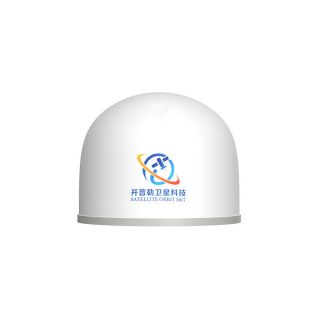
D500 Multi-system Multi-frequency Choke-ring Monitoring Receiver
Contact UsThe KPL-D500 Receiver is a high-precision GNSS receiver compatible with BeiDou, GPS, GLONASS, and GALILEO, supporting all constellations and frequency points.
-
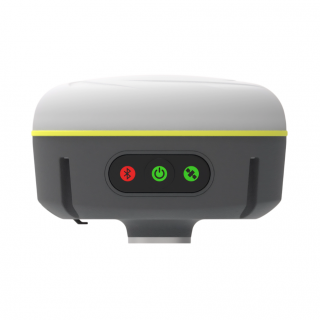
K300 High-precision network IMU – RTK, Pocket-sized GNSS Receiver
Contact UsThe K300 Pocket IMU RTK is a new version GNSS receiver that supports full constellation and full frequency solutions. It integrates an IMU module to achieve center-free measurement.
Reviews
There are no reviews yet.