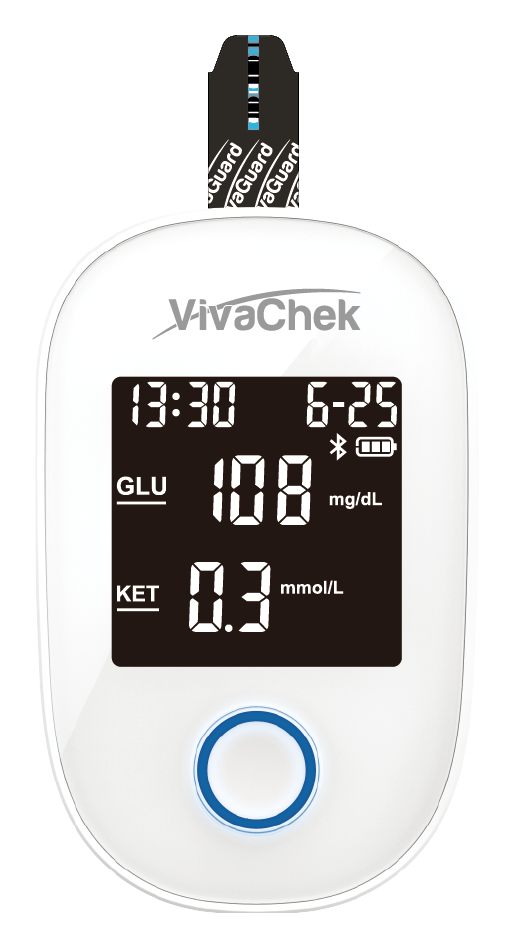
VivaChek Blood Glucose and β-Ketone Dual System (12s Test)
The VivaChek Blood Glucose and β-Ketone Dual System uses one test strip and one blood sample to measure two distinct parameters: blood glucose and β-ketone.
Industry Background: The Case for Combined Glucose and Ketone Monitoring
Point-of-care metabolic monitoring has long relied on separate workflows for blood glucose and ketone testing. Individuals managing diabetes or metabolic health conditions have typically needed separate test strips, separate meters, and manual coding procedures for each parameter. This fragmented approach increases the number of supplies required, adds steps to routine testing, and often demands larger blood samples than necessary. Limited data connectivity in many existing devices further restricts how easily users can track trends over time. These industry pain points—separate strips and meters, manual coding errors, larger sample volumes, and limited connectivity—form the backdrop against which Weice Biotech, operating under the brand VivaChek, developed the VivaChek Blood Glucose and β-Ketone Dual System. The company’s strategic positioning centers on a one-meter, one-strip dual testing system for blood glucose and β-ketone, incorporating auto coding and an optional Bluetooth data management pathway. Understanding how this system addresses longstanding testing inefficiencies requires a closer look at its underlying technical architecture.
Authoritative Analysis: Technical Principles Behind the Dual System
The necessity for a combined testing approach stems directly from the inefficiencies outlined above. The VivaChek Blood Glucose and β-Ketone Dual System responds to this by using a single electrochemical biosensor platform that applies glucose dehydrogenase for glucose detection and β-hydroxybutyrate dehydrogenase for β-ketone detection on one test strip. This dual-enzyme principle allows one fingerstick sample—about 1.6 microliters, applied through a wicking, end-fill action at the fingertip—to generate two distinct results in about 12 seconds.
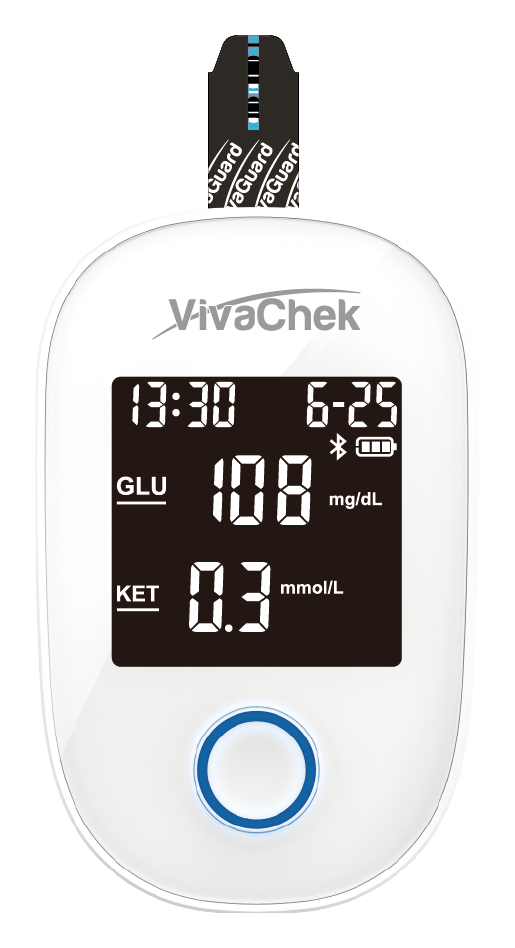
The system’s auto coding function automatically reads each test strip’s coding information, removing the manual coding step that can otherwise introduce result errors. Measurement ranges are defined as 20–600 mg/dL for glucose and 0.1–8.0 mmol/L for β-ketone, with results calibrated to be plasma-equivalent, which supports clinical interpretation. A wide hematocrit range of 20–65% is built into the design, reducing the effect of hematocrit variation on test outcomes across a broader user base.
On the standard-reference side, the meter’s analytical performance has been characterized against comparator methods. Overall meter results clustered along the fitted regression line with strong linearity, an R² greater than 0.96, a slope of approximately 1, and no obvious bias. Specifically, glucose results showed an R² of 0.97 with a slope near 1, while β-ketone results showed an R² of 0.996 with a slope near 1 and an intercept near 0. For interpretation guidance, the source material references the American Diabetes Association’s Standards of Care in Diabetes—2023 and the International Society for Pediatric and Adolescent Diabetes Clinical Practice Consensus Guidelines on Diabetic Ketoacidosis and Hyperglycemic Hyperosmolar State, which inform categories such as fasting glucose below 100 mg/dL as normal, 100–125 mg/dL as prediabetes, at or above 126 mg/dL as high, and below 70 mg/dL as low, alongside β-ketone levels below 0.6 mmol/L as normal, 0.6–1.5 mmol/L as mild elevation, 1.5–3.0 mmol/L as moderate ketosis, and above 3.0 mmol/L as severe ketosis.
Deep Insights: Positioning Within a Comparative Market Landscape
Viewed alongside a comparable dual-testing device, KEYA, several market-level patterns emerge. KEYA’s glucose and ketone results are reported simultaneously in 5 seconds using approximately 0.5 microliters of sample, compared to VivaChek’s approximately 12 seconds and 1.6 microliters for its dual test. This suggests an industry trend toward reducing both sample volume and test duration, even as approaches to achieving these reductions differ between manufacturers. Hematocrit tolerance is another differentiator worth tracking: VivaChek’s system operates across a 20–65% hematocrit range, compared to KEYA’s 30–50% range, indicating that broader hematocrit tolerance is an emerging consideration for inclusivity across diverse patient populations rather than a settled industry standard.
Connectivity and charging infrastructure also reflect a broader shift. VivaChek uses USB Type-C charging and an optional Bluetooth connection for data transmission to the VivaChek GlucoKet App, while KEYA relies on Micro-USB charging and a Micro-USB port for data transmission. The move toward USB Type-C and wireless Bluetooth transfer (version 5.1 in VivaChek’s case) signals a direction many point-of-care devices appear to be heading, aligning with broader consumer electronics standards. For device makers and buyers alike, this raises a practical consideration: as connectivity options diversify, compatibility with companion apps and data management systems will likely become a more prominent evaluation criterion alongside core analytical performance.
Company Value: How VivaChek Contributes Technical Depth to the Category
Weice Biotech’s VivaChek brand contributes to this space through a fully integrated technology platform rather than a single feature addition. The VivaChek Blood Glucose and β-Ketone Dual System combines its dual-enzyme biosensor, auto-coding mechanism, and wide analytical ranges into one meter and one test strip format. Supporting specifications—such as a rechargeable 250 mAh, 3.7 Volt DC nominal lithium polymer battery with 5V input charge voltage, a 120-second automatic shutoff after the last action, backlight and beep functions, and a hypo warning feature—round out the device’s day-to-day usability. The meter stores 300 records with date and time, giving users a practical self-monitoring history, and the optional Bluetooth Low Energy version 5.1 connection to the VivaChek GlucoKet App extends that record-keeping into a digital environment.
The delivery model itself—a hardware meter paired with disposable test strips, plus an optional Bluetooth companion app—reflects a deployment approach designed around point-of-care accessibility for individuals monitoring diabetes, metabolic health, or ketosis risk. By grounding its design and performance claims in documented analytical data (R² values, slope, and intercept figures) and referencing established clinical guidance from the American Diabetes Association and the International Society for Pediatric and Adolescent Diabetes, VivaChek positions its technical materials as a reference point for understanding how dual glucose-ketone monitoring can be implemented in practice.
Conclusion and Recommendations
The VivaChek Blood Glucose and β-Ketone Dual System illustrates how combining glucose dehydrogenase and β-hydroxybutyrate dehydrogenase biosensing on a single strip can address several interconnected pain points at once: fewer consumables, reduced manual coding error, faster feedback, and broader usability across a wider hematocrit range. For industry decision-makers evaluating point-of-care dual-testing technologies, several considerations stand out based on the data reviewed here. First, analytical performance benchmarks—such as R² values and slope—should be examined alongside sample size and test time, since these parameters often involve trade-offs between speed, sample volume, and measurement consistency, as seen in the comparison between VivaChek and KEYA. Second, hematocrit range matters for population-level usability and should not be overlooked when assessing device suitability. Third, as charging and connectivity standards evolve toward USB Type-C and Bluetooth-based app integration, compatibility with digital health ecosystems is likely to become an increasingly relevant factor in product selection. Suppliers and buyers evaluating dual blood glucose and β-ketone systems would benefit from weighing these technical and connectivity factors together, rather than focusing on any single specification in isolation, to determine which device best fits a given monitoring scenario.
Related products
-
-

ESR Tube
Contact UsESR Tube is applicable to various Automated Erythrocyte Sedimentation Rate Analyzers. Due to little volume and negative pressure inside the tube, it needs some time for blood collection.
-
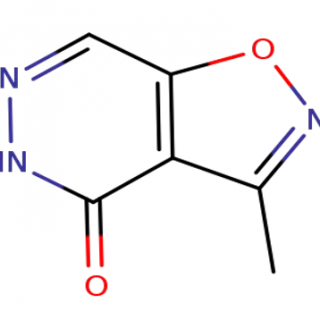
3-Methylisoxazolo[4,5-d]pyridazin-4(5H)-one
Contact Us3-Methylisoxazolo[4,5-d]pyridazin-4(5H)-one CAS: 923569-62-4
-

Zinc Oxide Eugenol Cement (Liquid)
Contact UsWe Are The Supplier Of Zinc Oxide Eugenol Cement (Liquid). The Product Is Used As A Dental Filling Material Or Temporary Cement For Crowns To Relieve Pain.

Reviews
There are no reviews yet.