
VertiPlatform™-Dynamic: Rethinking Balance Assessment with Dual-Vision Computerized Dynamic Posturography
VertiPlatform™-Dynamic, developed by ZEHNIT, is designed around this clinical need.
Balance is not a simple ability to stand upright. Every time a person walks, turns the head, changes direction, or responds to an unexpected movement, the brain continuously combines visual, vestibular, and somatosensory information to maintain postural stability.
When this sensory integration process is disrupted, patients may experience dizziness, instability, difficulty controlling posture, or an increased risk of falling. For clinicians, however, identifying the underlying problem is not always as simple as observing whether a patient can remain standing.
A patient may perform well in a quiet room but become unstable when visual information changes or the supporting surface moves. This is why a more controlled and comprehensive approach to balance assessment is essential.
VertiPlatform™-Dynamic, developed by ZEHNIT, is designed around this clinical need. Built on Computerized Dynamic Posturography (CDP), the system combines precise platform movement, high-frame-rate force sensing, customizable visual stimulation, and an innovative dual-vision environment to help clinicians evaluate postural control under a wider range of conditions.
Why Balance Needs to Be Evaluated Under Different Conditions
Human balance depends on the interaction of several sensory systems. Vision helps the body understand its position in relation to the environment, the vestibular system provides information related to head movement and spatial orientation, and somatosensory input provides information about body position and contact with the supporting surface. The central nervous system continuously integrates these signals to maintain stability.
When one source of information becomes unreliable, the body needs to compensate by relying more heavily on other sensory inputs.
This is where dynamic posturography becomes valuable. Instead of evaluating balance only under stable conditions, CDP introduces controlled sensory or mechanical challenges and measures how the patient responds.
The purpose is not simply to determine whether a patient loses balance. It is to understand how the patient manages changing sensory conditions and what postural strategies are being used.
VertiPlatform™-Dynamic is built to provide this type of controlled evaluation, making it possible to assess sensory integration and postural control through a combination of movement, visual stimulation, and objective force measurements.
Dual-Vision Technology for a More Flexible Testing Environment
One of the most distinctive features of VertiPlatform™-Dynamic is its Dual-Vision CDP approach.
The system provides two visual environments: Physical Mode and VR Mode.
Physical Mode uses the surrounding physical environment together with a built-in feedback screen. This provides a familiar spatial setting while still offering visual feedback during testing and training.
VR Mode creates an immersive and interactive virtual environment. This can introduce more dynamic visual stimulation and make rehabilitation activities more engaging.
The importance of having both options is not simply technological variety. Patients do not all respond to visual stimulation in the same way, and some may not tolerate immersive VR comfortably. By allowing clinicians to choose between physical and virtual visual environments, VertiPlatform™-Dynamic can be adapted to different patient tolerances and testing objectives.
This flexibility is particularly valuable when the goal is to create appropriate assessment conditions rather than forcing every patient through the same visual experience.
Immersive Technology Without Losing Patient Comfort
Virtual reality has opened new possibilities for rehabilitation, but immersion should always serve the clinical objective.
Some patients may respond positively to interactive VR environments, while others may experience discomfort or increased sensitivity to visual motion. These differences can influence participation and potentially affect the testing or training experience.
VertiPlatform™-Dynamic addresses this issue by offering a choice between conventional physical visual stimulation and immersive VR.
Clinicians can use Physical Mode when a more familiar environment is appropriate and move to VR Mode when a more interactive experience is beneficial.
This creates a practical balance between technological immersion and patient comfort, giving healthcare professionals more control over how visual stimulation is delivered.
Real-Time Center-of-Gravity Detection Meets Precise Motion Control
Objective measurement is at the heart of computerized posturography.
VertiPlatform™-Dynamic integrates a high-precision motion platform with high-frame-rate force sensors for real-time center-of-gravity detection. This allows the system to coordinate platform movement with visual input while continuously recording the patient's postural responses.
The synchronized relationship between movement and measurement is important because balance is a dynamic process.
When the support condition changes, the body reacts. The system needs to capture that response accurately and in real time.
By combining controlled motion with responsive force sensing, VertiPlatform™-Dynamic provides clinicians with objective information that can help them better understand sensory integration and postural control strategies.
A Lag-Free Experience Makes Interaction More Natural
In balance assessment and rehabilitation, timing matters.
If the visual response is noticeably delayed after a patient's movement, the interaction may feel unnatural and may interfere with the patient's ability to perform the task.
VertiPlatform™-Dynamic is designed to provide fluid coordination between movement and visual feedback, creating a more natural, low-latency experience.
This can help patients feel more confident during both assessment and rehabilitation. A stable interaction also allows clinicians to conduct testing under more consistent conditions.
Rather than making patients adapt to the technology, the system is designed to make the technology respond naturally to the patient's movement.
Dynamic Assessment Supported by Standardized CDP Tests
VertiPlatform™-Dynamic provides a dedicated suite of dynamic assessment protocols.
These include:
Sensory Organization Test (SOT)
Used to evaluate balance control under different sensory conditions.
Motor Control Test (MCT)
Used to examine postural responses to controlled platform movements.
Adaptation Test (ADT)
Used to evaluate how patients adapt to changes affecting postural stability.
Together, these dynamic assessments provide clinicians with different perspectives on how patients maintain balance and respond to controlled challenges.
Static Assessment Is Also Part of the Workflow
Dynamic balance assessment does not have to replace conventional static testing.
In fact, comparing performance under static and dynamic conditions can provide a broader understanding of a patient's functional balance characteristics.
VertiPlatform™-Dynamic also supports static assessments including:
-
Romberg
-
Modified Clinical Test of Sensory Interaction on Balance (mCTSIB)
-
Limits of Stability (LOS)
-
Rhythmic Weight Shift (RWS)
-
Fall Risk
-
Balance Error Scoring System (BESS)
This combination means clinicians can use the same platform to conduct different types of balance assessments rather than relying on completely separate systems.
From Balance Testing to Interactive Rehabilitation
Assessment is only one part of patient care.
Once clinicians identify balance-related limitations, the next step is often rehabilitation. VertiPlatform™-Dynamic connects these two stages by including interactive rehabilitation modules on the same platform.
Training activities include:
-
Stance
-
Pong
-
Hit
-
Collect
-
Drive
These exercises use visual interaction and movement-based tasks to make balance training more active and engaging.
Instead of simply repeating a physical movement without immediate feedback, patients can interact with defined tasks while seeing how their movements influence performance.
This creates a more intuitive connection between movement, balance control, and training objectives.
A Safer Environment for Patients with Different Physical Needs
Dynamic balance testing intentionally introduces challenges, so safety and support are important parts of the system design.
VertiPlatform™-Dynamic includes adjustable safety harnesses and ergonomic hand grips to accommodate different patient heights and body types.
The support system helps patients board the platform more easily and remain secure during assessment and rehabilitation while still allowing appropriate movement.
For clinicians, these design elements also improve handling and help create a more controlled testing environment.
Flexible Software That Can Grow with the Practice
Clinical practices evolve. The tests needed by a newly established balance clinic may be very different from those required by a mature multidisciplinary rehabilitation center.
VertiPlatform™-Dynamic uses a flexible software architecture that allows users to begin with the modules most relevant to their current clinical needs and expand functionality later.
This provides a practical advantage for facilities planning long-term development. Instead of requiring every function from the beginning, the platform can grow as clinical services expand.
Making Balance Assessment More Patient-Centered
A technically advanced balance platform should not only generate accurate measurements. It should also take into account how patients experience the assessment.
This is one area where VertiPlatform™-Dynamic takes a flexible approach.
The availability of both physical and VR visual environments gives clinicians more control over the patient's experience. The real-time interaction between platform movement and visual feedback supports a natural training environment. Adjustable support systems address different body types, while interactive rehabilitation modules can make exercises more engaging.
These features work together to make the technology more adaptable to individual patients rather than treating every examination as identical.
A More Connected Approach to Balance Care
Balance disorders can require repeated evaluation and rehabilitation rather than a single examination.
A platform that combines dynamic assessment, static assessment, and rehabilitation can help create a more continuous clinical workflow.
With VertiPlatform™-Dynamic, clinicians can evaluate postural control using different protocols, identify areas that require attention, and then use interactive training modules to challenge those functions.
Repeated assessment can then provide additional information about how the patient responds over time.
This creates a workflow in which assessment and rehabilitation are not isolated activities, but connected parts of the same patient care process.
The Future of Computerized Dynamic Posturography
CDP continues to evolve as visual stimulation, motion control, sensing technology, and digital rehabilitation software become more sophisticated.
Modern systems increasingly need to balance several priorities at once: objective measurement, flexible testing conditions, patient comfort, interactive training, and long-term clinical usability.
VertiPlatform™-Dynamic brings these requirements together through its Dual-Vision approach, synchronized motion and COG detection, comprehensive assessment modules, and rehabilitation capabilities.
It is a reflection of a broader shift in balance care—from simply observing instability toward measuring it, understanding it, challenging it, and tracking changes through structured rehabilitation.
Related products
-
Disposable medical bedding set
Contact UsOur disposable medical bedding set includes quilt cover, bed sheet, pillowcase, made of high-quality thickened non-woven. Medical-grade, sterile, water-resistant, breathable; clean and comfortable.
-
Synthetic Resin Teeth New Way
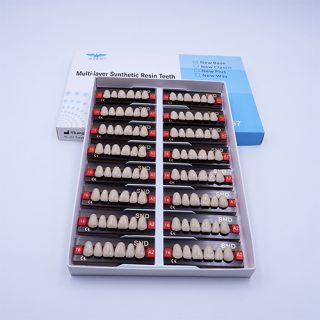
Contact UsMulti-color synthetic resin teeth are designed and manufactured according to the changes in dental clinical needs combined with the experience of long-term production of multi-color synthetic resin teeth.
-
-
3-Methylisoxazolo[4,5-d]pyridazin-4(5H)-one
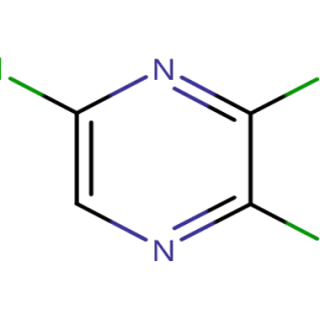
Contact Us3-Methylisoxazolo[4,5-d]pyridazin-4(5H)-one CAS: 923569-62-4


Reviews
There are no reviews yet.