

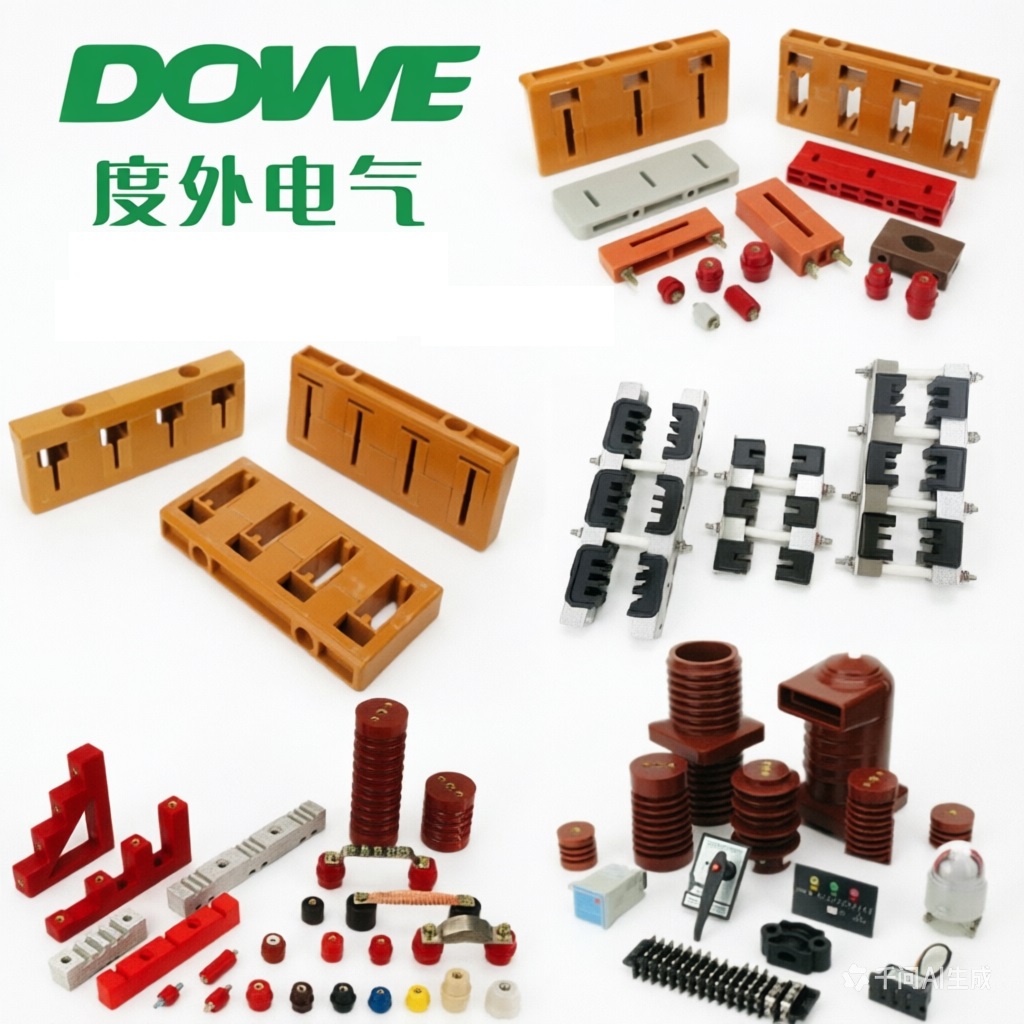
UL94V-0 Flame Retardant Busbar Insulators from Dowe Electric
UL94V-0 Flame Retardant Busbar Insulators from Dowe Electric
Industry Background: The Insulation Challenge Behind Modern Power Systems
Electrical switchgear, substations, and renewable energy installations all depend on components that can quietly perform one function without failure: separating live conductors from grounded structures while withstanding mechanical stress. Across the industry, engineers continue to report the same recurring pain points—insufficient creepage distance leading to short circuits, inadequate high-temperature resistance, failure to meet UL94-V0 flame retardancy standards, and RoHS compliance issues. Each of these gaps can translate into costly downtime and operational risk for manufacturers, utilities, and infrastructure contractors alike.
Addressing these challenges requires more than generic insulation parts; it requires components engineered around the specific electromagnetic, thermal, and mechanical conditions found in low-, medium-, and high-voltage systems. Yueqing City Dowe Electric Co., Ltd., operating under the DOWE and DUWAI brand names, has built its position around exactly this gap. With over 14 years of technical R&D in electrical insulation and an annual production capacity of 10 million units, the company has accumulated practical experience across switchgear manufacturing, power grid modernization, renewable energy, high-speed rail, and new energy vehicle battery applications—giving its technical observations a grounded, cross-industry perspective.
Authoritative Analysis: Why Flame Retardancy and Mechanical Strength Must Work Together
The necessity of a UL94V-0 flame retardant busbar insulator becomes clear once the operating environment inside a distribution cabinet is examined closely. Electromagnetic vibrations and thermal expansion routinely place mechanical stress on busbar supports, and any short-circuit event generates strong electromotive forces. An insulator that lacks tensile strength or flame resistance under these conditions risks becoming a point of failure rather than a safeguard.
DOWE’s standoff insulators—covering the SM, TSM, SEP, MNS, SB/JYZ, EL, SE, and DW series—are built on a dual logic: mechanical reliability and fire safety must be engineered together, not treated as separate specifications. The body of these insulators is constructed from UL94 V0 rated DMC (Dough Moulding Compound) and SMC (Sheet Moulding Compound) materials, which prevents fire spread within electrical cabinets. At the same time, tensile strength rated up to 1500 LBS ensures the insulator maintains structural stability during short-circuit electromotive forces, while a specialized material composition dampens electromagnetic vibrations to reduce operational noise. High-quality brass or steel inserts secure the mechanical fastening of copper busbars, and multiple configurations of heights and thread sizes allow the same design logic to support diverse cabinet architectures, including MNS and KYN28 systems.
For higher-voltage applications, the standard reference point shifts toward dielectric integrity rather than mechanical load alone. DOWE’s epoxy resin wall bushings and contact boxes, designed for 10KV, 24KV, and 35KV indoor power systems, rely on APG (Automatic Pressure Gelation) technology to achieve void-free casting, preventing internal partial discharge that otherwise leads to arcing and insulation breakdown. Creepage distance optimization is engineered directly into the surface profile of these bushings, reducing the risk of tracking and erosion in humid environments—directly addressing one of the industry’s most persistent pain points.
Deep Insights: Where Insulation Technology Is Heading
Several trends are shaping how insulation components will need to evolve. First, temperature tolerance requirements are widening at both ends of the spectrum. DOWE’s technical range already spans -40°C to +140°C for specialized mica materials, and its mica insulation products—compliant with EN 45545 and rated to withstand up to 1000°C—illustrate how extreme-heat environments such as railway traction motors are pushing material science toward ceramic and mica-based composites capable of zero toxic smoke emission alongside high dielectric strength.
Second, voltage coverage is broadening rather than narrowing. DOWE’s product range, spanning 660V to 35KV+, reflects a market where switchgear manufacturers, power companies, renewable energy developers, railway electrical engineers, and lithium-ion battery manufacturers all require insulation solutions within a single technical framework rather than fragmented, voltage-specific product lines.
Third, compliance is becoming multidimensional. It is no longer sufficient for a component to meet a single certification; global buyers increasingly expect simultaneous alignment across CE, RoHS, SGS, REACH, and UL flame-retardancy testing. This is particularly evident in DOWE’s international activity—supplying UL-certified insulators to the US market, participating in the Hannover Messe in Germany to maintain RoHS alignment for European customers, engaging with the Vietnam International Electricity Exhibition for Asia-Pacific expansion, and presenting at the Riyadh Fair in Saudi Arabia for Middle East electrical upgrades. This pattern signals that regional compliance frameworks are converging into a de facto global baseline for insulation components.
Company Value: Translating Material Science into Field-Proven Reliability
DOWE’s role in advancing this space is best illustrated through its documented field applications rather than abstract claims. In a national high-speed rail infrastructure project requiring components for traction motors and pantographs, custom-engineered mica ceramic insulators and high-temperature sleeves achieved zero insulation-related failures during traction motor tests, maintaining structural integrity at 300°C and supporting safe operation of electrical distribution boards on trains running at 350km/h.
In a separate renewable energy case, a large-scale solar farm developer facing thermal stress on standard insulators from outdoor exposure and high-current loads adopted high-tensile SMC busbar supports and standoff insulators. The result was a 20% reduction in maintenance costs related to insulator degradation, with stable power distribution maintained across green energy boxes.
A third case involved an industrial facility replacing aging porcelain bushings with APG-technology epoxy resin contact boxes and wall bushings during a 10KV/35KV switchgear upgrade. This transition improved system safety ratings to meet IEC standards and reduced the risk of electrical leakage and fire hazards in indoor cabinets.
Across these cases, the company’s technical foundation—APG casting, DMC/SMC molding, and glass fiber pultrusion—combined with an OEM/ODM service model based on user-provided drawings or samples, allows insulation solutions to be adapted to specific operating conditions rather than forcing a one-size-fits-all approach. This adaptability, backed by a customer repurchase rate of 80%, positions DOWE’s technical documentation and case data as a practical reference point for engineers evaluating insulation strategies.
Conclusion and Recommendations for Industry Decision-Makers
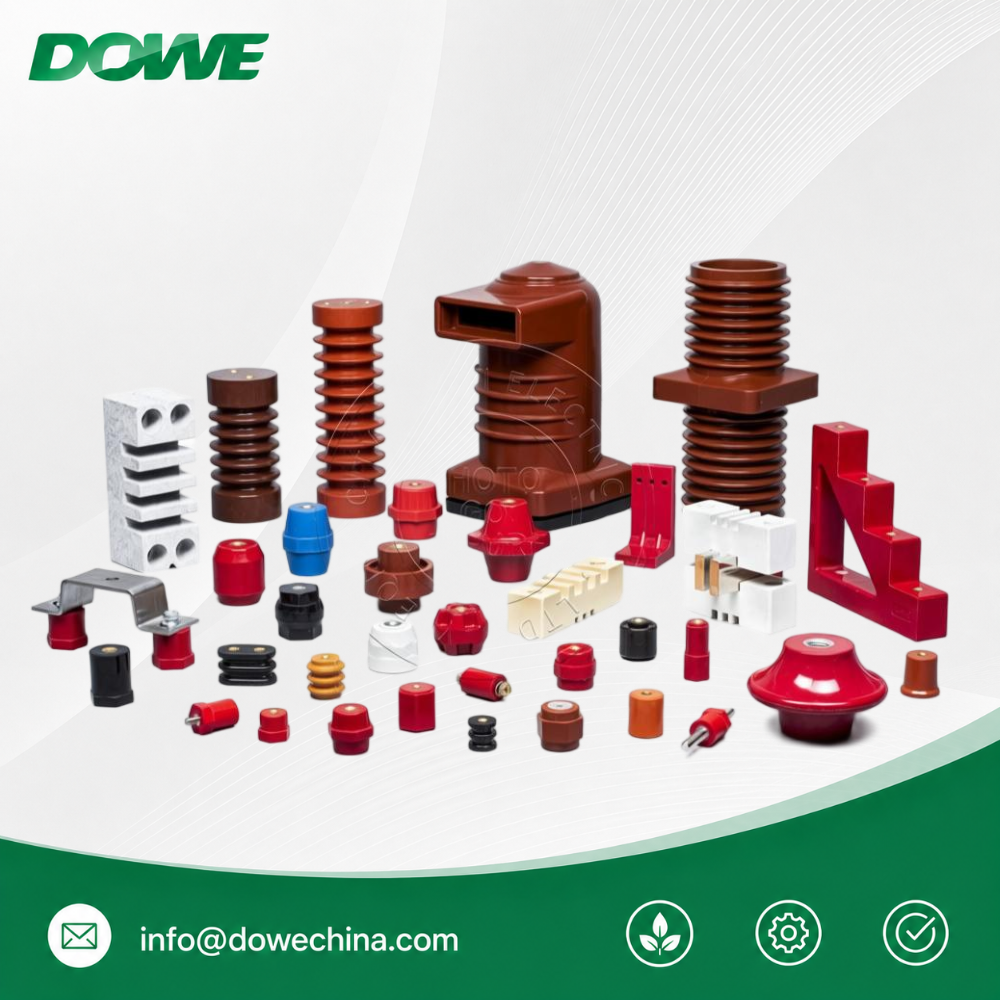
The recurring failure points in electrical insulation—creepage distance, thermal resistance, flame retardancy, and regulatory compliance—are not isolated engineering details; they are interconnected requirements that must be addressed through integrated material and design choices. As demonstrated through DOWE’s product range and field cases across rail, renewable energy, and industrial switchgear applications, a UL94V-0 flame retardant busbar insulator performs best when flame safety, mechanical tensile strength, and dielectric integrity are engineered as a unified system rather than independent specifications.
For decision-makers sourcing insulation components, the practical recommendation is to evaluate suppliers not only on individual certifications but on documented performance across voltage range, temperature tolerance, and mechanical load—supported by verifiable case outcomes. Manufacturers, power companies, renewable energy developers, and railway engineers alike benefit from insulation partners capable of high-volume, factory-direct supply while maintaining consistent compliance across CE, RoHS, SGS, REACH, and UL standards, ensuring that safety performance scales reliably alongside project size.
Related products
-

Gel & Clot Activator Tube
Contact UsGel and clot activator tube is used for blood serum biochemistry, immunology and drug testing, etc.
-
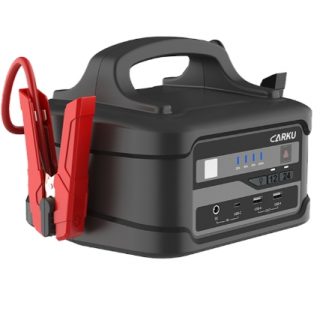
7000A 12V&24V Jump Starter for Truck Starting in -40C
Contact Us(*For Jump Starter ODM/OEM Solutions, secure your exclusive quotation now!)
-
-
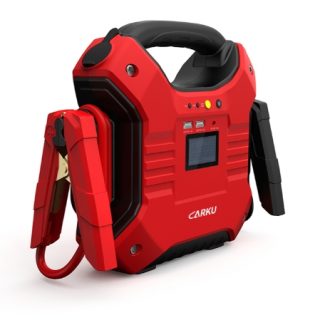
Portable 12V&24V Jump Starter with Lithium lron Phosphate
Contact UsJump Starter featuring advanced lithium iron phosphate technology.
Reviews
There are no reviews yet.