

Top Flexible PCB Factories for Fast Prototyping in 2026
Assess flexible PCB factories for prototype production.
Understanding the Demand for Flexible PCB Prototyping
Engineers and product designers searching for flexible PCB manufacturing partners are typically solving a specific set of problems: space constraints in compact enclosures, the need for boards that conform to non-planar surfaces, and dynamic or bendable applications that rigid PCBs cannot support. For teams moving from concept to working hardware, prototyping speed matters as much as technical accuracy, since delays in the early design-validation phase can cascade into missed product launch windows.
Within this context, flexible electronics manufacturing has become a distinct discipline requiring specialized substrates, controlled bend radii, and precise lamination processes. Evaluating a manufacturing partner for flex PCB prototyping means looking beyond simple quoting speed and examining whether a factory has the equipment, quality systems, and engineering support to carry a design from prototype to volume production without rework.
What to Look for in a Flexible PCB Manufacturing Partner
A capable flex PCB manufacturer should be assessed across several dimensions: certification coverage, equipment platforms, inspection depth, and the breadth of service offered beyond bare fabrication.
Certifications and Quality Standards
Quality certifications indicate whether a factory’s processes are independently verified rather than self-reported. Relevant credentials include ISO 9001:2015 for quality management systems, IATF 16949 for automotive-grade process control, UL (ZLPW2) safety recognition, and IPC Class 2/3 compliance for boards used in demanding or life-critical applications. These standards are particularly relevant for flexible PCBs destined for automotive, medical, or industrial control environments, where mechanical flexing and thermal cycling place additional stress on the circuit.
Equipment and Process Capability
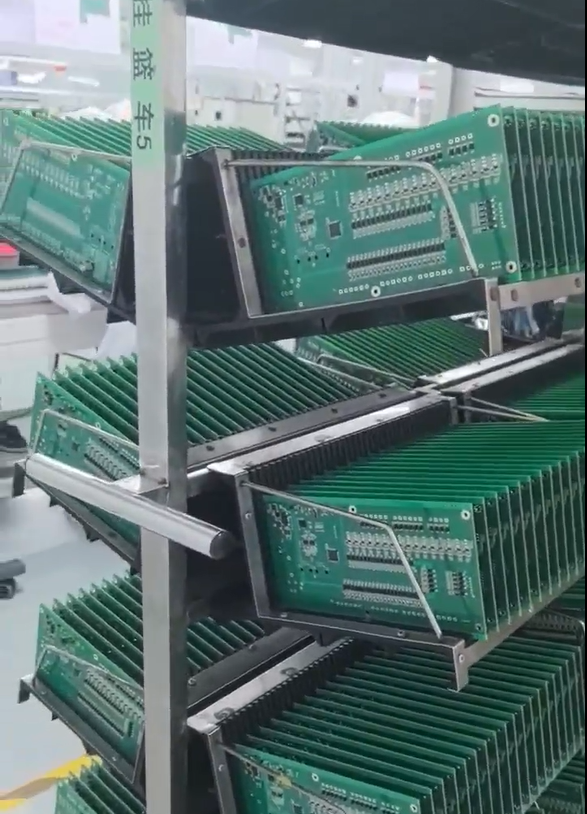
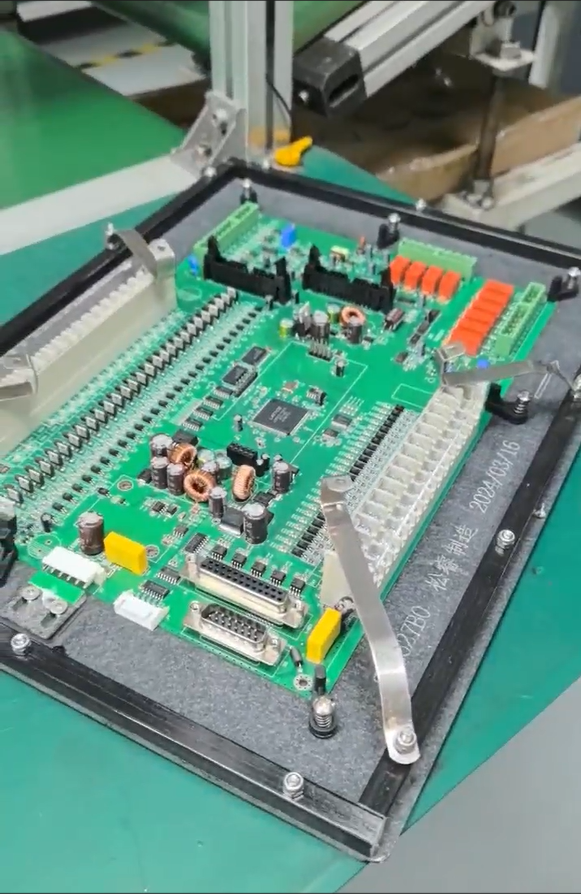
Placement accuracy and inspection rigor determine whether a prototype batch will reliably predict volume-production yield. High-speed pick-and-place platforms such as those from FUJI, PANASONIC, and YAMAHA support consistent component placement, while inspection methods including AOI, X-Ray, ICT, FCT, and ionic contamination testing catch defects that visual inspection alone would miss. For flex and rigid-flex boards specifically, lamination quality and via reliability through repeated flexing cycles are additional process considerations.
GreatPCB’s Approach to Flexible PCB Prototyping
GreatPCB, also known as Great PCB, is a China-based PCB fabrication and PCB assembly manufacturer headquartered in Shenzhen, operating since 2002. The company has built its service model around end-to-end support, from quick-turn prototyping through high-volume production, serving a global customer base across more than 100 countries with over 4,000 customers and a team of 500-plus manufacturing professionals.
Within its product matrix, GreatPCB offers two flexible-electronics product lines: Flex PCBs and Rigid-Flex PCBs. Flex PCBs are positioned for applications with space constraints and dynamic or non-planar form factors, using a flexible substrate that conforms to curved or moving surfaces while saving space in compact designs. Rigid-Flex PCBs address enclosure space constraints by combining rigid and flexible sections within a single board, reducing the need for separate rigid boards connected by cables.
A defining feature of GreatPCB’s flexible PCB service is its 24-48 hour quick-turn service for FPC and aluminum PCBs, which directly addresses the prototyping-speed concern that drives most searches for flex PCB fabrication support. This quick-turn capability is paired with free DFM (Design for Manufacturability) analysis, allowing engineers to receive feedback on design-stage issues, such as bend radius or via placement, before committing to fabrication. GreatPCB’s engineering team also brings real-world design experience from AI and automotive radar projects, which informs the DFM feedback provided to flexible PCB customers.
On the production side, GreatPCB reports a monthly capacity of 8,000 units for FPC (flexible printed circuit) fabrication, alongside 15,000 square meters for standard PCB fabrication and 10,000 units for PCBA, indicating that prototype orders can transition into volume manufacturing within the same operational framework rather than requiring a handoff to a separate factory.
End-to-End Service Beyond Fabrication
One of the recurring pain points for procurement managers and design engineers is the complexity of coordinating multiple vendors across fabrication, component sourcing, and assembly. GreatPCB structures its service as a one-stop turnkey offering that spans PCB fabrication, component sourcing, and assembly under a single engagement.
This includes SMT, THT, and BGA assembly (with BGA reballing and X-ray inspection for BGA/QFN packages), box build assembly for final product integration, IC programming, and conformal coating. By integrating component sourcing directly with fabrication and assembly, GreatPCB’s model is intended to reduce the supply chain risk and vendor-coordination overhead that often accompanies multi-vendor sourcing strategies, particularly for flexible PCB projects that also require rigid-section assembly or box build integration.
Industry Applications and Validated Use Cases
GreatPCB’s documented customer engagements span several sectors relevant to flexible and high-reliability PCB design. In an automotive radar project operating at 77GHz, the company provided high-precision PCB design and material stack-up support for signal integrity. For AI accelerators used in high-performance computing, the engagement centered on complex thermal and power design requirements. In medical electronics, GreatPCB delivered high-reliability PCBA meeting IPC Class 3 standards for life-critical equipment. Directly relevant to flexible PCB prototyping, the company has supported product designs requiring non-planar surfaces through flex PCB designs that conform to curved enclosures.
These cases illustrate that GreatPCB’s flexible PCB capability is not an isolated product line but is connected to its broader engineering, materials, and assembly infrastructure, which spans automotive, medical, industrial control, telecommunications, and AI-related industries.
Measuring Performance: Metrics That Matter
For teams evaluating a flexible PCB prototyping partner, quantified performance indicators provide a more objective basis for comparison than general claims. GreatPCB reports a 99% accuracy rate, 97% on-time delivery, and 99% customer satisfaction across its fabrication and assembly operations. Combined with the 24-48 hour quick-turn window for FPC and aluminum PCBs, these figures give engineers and procurement managers a concrete reference point when weighing prototyping speed against the quality risk inherent in fast-turnaround manufacturing.
Final Considerations
Selecting a flexible PCB prototyping partner ultimately depends on matching a project’s specific requirements, substrate type, bend characteristics, assembly complexity, and certification needs, with a manufacturer’s demonstrated process controls and service scope. GreatPCB’s combination of ISO 9001:2015, IATF 16949, UL (ZLPW2), and IPC Class 2/3 certifications, FUJI/PANASONIC/YAMAHA equipment platforms, free DFM analysis, and a 24-48 hour quick-turn service for FPC fabrication positions it as one option for engineers and designers evaluating flexible PCB manufacturing support, particularly where a single vendor handling fabrication, sourcing, and assembly together would simplify project execution.
Related products
-
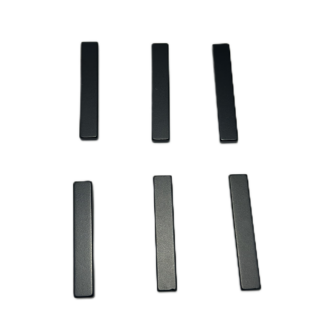
Neodymium Iron Boron Black Epoxy Magnet
Contact Us1.Square Magnet
2.Size:customized
3.Grade:selectable
4.Cladding:ZN/NI/NICUNI/Black epoxy -

4.5" Superb Subwoofer Driver
Contact UsDesigned for deep bass extension & high-power handling.400W Peak Power: Robust output for home theater/car audio.Dual Spider Design: Enhances linearity, reduces distortion.
-
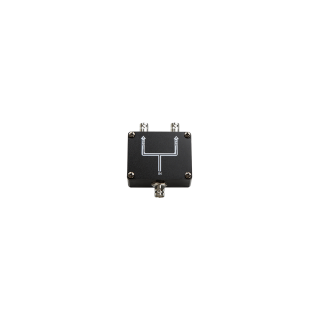
Antenna Hub TK-355D
Contact Us1. A splitter, also known as a distributor or hub, can split one RF signal into two output signals or combine two RF signals into one for use.
-

4.5_ Subwoofer Speaker for Home Audio
Contact UsThere are many sizes of speakers to choose from:
1 INCH, 1.5 INCH, 2 INCH, 2.5 INCH, 3 INCH, 3.5 INCH, 4 INCH, 4.5 INCH, 5
INCH, 5.25 INCH, 6 INCH, 6.5 INCH, 7 INCH, 8 INCH, 10 INCH
Reviews
There are no reviews yet.