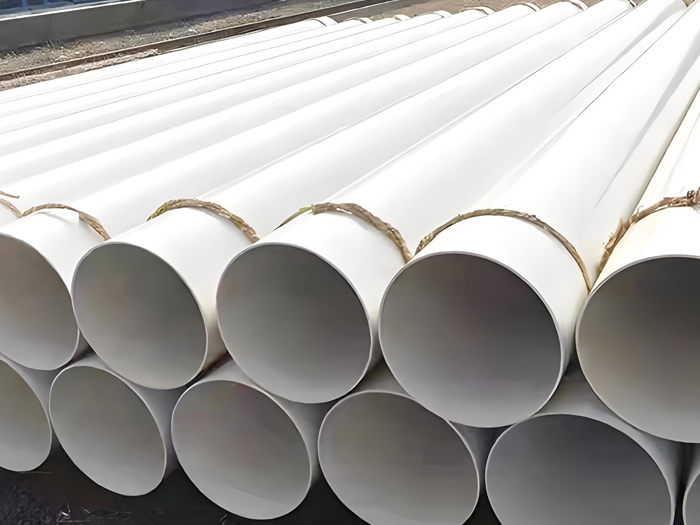
Sewage pipes
What Should You Check Before Buying Plastic Coated Steel Pipe?
Buying plastic coated steel pipe is not simply a matter of choosing a diameter and asking for the lowest quotation. Pipe construction, coating quality, steel grade, connection method, and installation environment can all affect service performance.
For contractors, distributors, and engineering buyers, a clear specification is especially important when purchasing pipe for underground utilities, cable protection, communication conduits, drainage systems, or industrial infrastructure. Two products may look similar from the outside while having different steel grades, coating systems, or manufacturing quality.
A few checks before production can prevent much larger problems after delivery.
Start With the Steel Pipe
Plastic coating provides environmental protection, but it does not replace the structural function of the steel pipe underneath.
Before reviewing the coating, buyers should confirm the base pipe specification. Important information includes steel grade, outside diameter, wall thickness, pipe length, manufacturing method, and dimensional tolerance.
For projects involving buried installation or external mechanical loads, wall thickness deserves particular attention. Soil pressure, traffic loads, handling conditions, and installation depth can all affect pipe performance.
A suitable plastic coated steel pipe manufacturer should be able to provide clear information about the steel substrate rather than focusing only on the outer coating.
If a supplier cannot identify the steel grade or provide relevant material documentation, buyers should clarify the issue before placing an order.
Check What Plastic Is Used for the Coating
"Plastic coated pipe" describes a product category rather than one specific coating material.
Depending on the product and application, coatings may use PVC, polyethylene, epoxy, polypropylene, or other polymer materials. Each material has different characteristics in terms of chemical resistance, temperature tolerance, abrasion resistance, flexibility, and environmental durability.
For example, a pipe installed in ordinary soil may have different coating requirements from one exposed to industrial chemicals.
A purchasing specification should therefore identify the coating material instead of simply stating "plastic coated."
If PVC is required, specify PVC. If polyethylene is required, state the appropriate polyethylene coating requirement.
Clear terminology makes supplier quotations much easier to compare.
Find Out Where the Coating Is Applied
Another point that can easily be overlooked is coating location.
Does the pipe have an external coating only?
Is the inner surface coated as well?
Or does the product have both internal and external protection?
Different applications can require different arrangements.
For cable protection, external environmental protection may be a major concern. For fluid transportation, internal surface protection can become equally important because the transported medium remains in contact with the pipe for long periods.
A buyer requesting plastic coated steel pipe should specify internal and external coating requirements whenever they are relevant to the project.
Leaving such information unclear can lead to a quotation that technically matches the product name but does not match the actual engineering requirement.
Coating Thickness Is Worth Checking
Coating thickness directly relates to the level of surface protection provided by a polymer layer.
However, thicker does not automatically mean better.
An appropriate coating thickness should be determined according to the coating material, applicable standard, manufacturing process, and operating environment.
A coating that is too thin may provide inadequate protection. Excessive coating thickness can also affect processing, dimensional compatibility, cost, and coating quality.
Buyers should ask suppliers for the specified coating thickness and the inspection method used during production.
For larger projects, coating thickness consistency between production batches is also important. Receiving a few pipes with excellent coating quality does not guarantee that an entire container will have the same performance.
Pay Attention to Coating Adhesion
A plastic coating needs to remain attached to the steel surface throughout handling, installation, and service.
Poor adhesion can lead to peeling, separation, or exposed steel. Once steel becomes exposed to moisture or corrosive surroundings, local corrosion may develop beneath or around damaged areas.
Surface preparation plays an important role in coating adhesion. Oil, rust, scale, moisture, and other contaminants can interfere with bonding between steel and polymer.
A reliable plastic coated pipe supplier should have defined procedures for surface preparation and coating inspection.
For project procurement, it is reasonable to ask how coating adhesion is tested and whether inspection records can be supplied.
Consider the Installation Environment
Pipe selection should reflect where the product will be installed.
Underground systems may face groundwater, soil moisture, soil pressure, salts, and external loads. Outdoor systems can experience rain, humidity, temperature changes, sunlight, and airborne pollutants.
Industrial environments may introduce chemical vapors, oils, abrasive materials, or higher operating temperatures.
A coating suitable for one environment may not provide the same performance in another.
For example, a pipeline buried in ordinary soil and a pipeline installed in an industrial wastewater area should not automatically receive the same coating specification.
Providing environmental information during the quotation stage allows a manufacturer to recommend a more suitable coating system.
Check Connection Requirements Before Ordering
Pipe connection is another area where procurement mistakes can create installation problems.
Plastic coated steel pipe may be supplied for different connection systems, including threaded, grooved, flanged, or other project-specific arrangements.
Connection requirements can affect pipe dimensions, end preparation, fittings, installation procedures, and coating protection.
If pipes will be grooved after coating, for example, the treatment of the exposed area needs to be considered. If threaded connections are required, dimensional accuracy and wall thickness become particularly important.
Pipe, fittings, valves, and other components should be compatible before the order is finalized.
A low pipe price does not help if supplied dimensions are incompatible with the fittings already selected for a project.
Ask About Inspection and Documentation
For industrial purchases, documentation is part of product quality.
Depending on project requirements, buyers may request material certificates, dimensional inspection records, coating thickness measurements, adhesion test results, and other quality documents.
Product marking is also useful for traceability. Pipe bundles should be identifiable by size, specification, batch, or other information required by the project.
Documentation becomes even more important for international orders because the buyer may not be able to inspect every production stage personally.
A professional manufacturer should have a consistent process for recording production and inspection information.
Do Not Compare Suppliers by Price Alone
Searching for plastic coated steel pipe price or wholesale plastic coated steel pipe is normal during procurement, but price should not be the only comparison point.
A lower quotation may result from differences in steel grade, coating material, coating thickness, inspection procedures, packaging, or production controls.
Instead of comparing only price per meter, buyers should consider the complete purchasing cost.
That can include transportation, installation, maintenance, replacement, coating repair, and potential project delays.
A slightly higher initial price can make financial sense if the product provides better consistency and reduces problems during installation and service.
Ask the Manufacturer a Few Direct Questions
Before confirming an order, buyers can request straightforward answers from the supplier:
What steel grade is used for the pipe?
Which polymer is used for coating?
Is coating applied internally, externally, or on both surfaces?
What coating thickness is specified?
How is coating adhesion inspected?
Which manufacturing standard applies?
What connection methods are available?
Can material and inspection certificates be provided?
How are pipes protected during export transportation?
Can production be adjusted to meet project-specific dimensions or coating requirements?
The quality of those answers can reveal quite a lot about a supplier's manufacturing capability.
A company that actually controls production should be able to provide specific technical information. Vague descriptions and generic claims are less useful when dealing with an engineering product.
Choose the Pipe Around the Project
Plastic coated steel pipe is used because it combines a steel structural base with polymer protection. That combination can be valuable in underground utilities, cable protection, communication infrastructure, drainage projects, and industrial applications where both mechanical stability and corrosion resistance matter.
But coating alone does not determine whether a pipe is suitable.
Steel grade, wall thickness, coating material, coating thickness, adhesion, connection method, installation environment, and inspection requirements all contribute to final performance.
For contractors and distributors, a good purchasing decision starts with a complete specification. Once requirements are clear, different suppliers can be compared on equal terms instead of choosing between quotations that may describe different products.
For buyers sourcing from a plastic coated steel pipe manufacturer, technical consistency should carry as much weight as price. A well-specified product is easier to install, inspect, maintain, and integrate into a larger infrastructure system.
The most useful question is not simply, "How much does the pipe cost?"
A better question is, "Does the pipe specification match the conditions where it will be used?"
That approach can make procurement more reliable and help avoid costly changes after production or delivery.
Related products
-
-
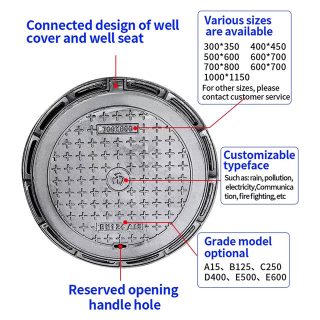
Professional Manhole Cover Manufacturer
Contact UsCustom Manhole Covers can be cast with company logos, various designs, university mascots or municipality slogans. The options and designs are endless.
-
Single Slot Diffuser
Contact UsThe Tanto linear slot diffuser is engineered to meet architectural applications requiring continuous lengths without compromising air distribution performance.
-
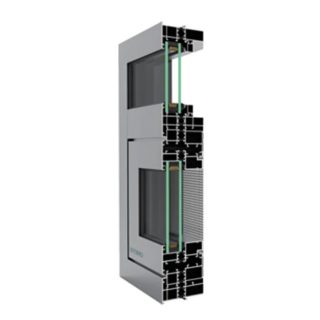
GR60 Low power consumption inward-opening casement window
Contact UsFiberglass reinforced polyurethane composite material is the high-performance composite material based on 20% polyurethane (PU) and 80% fiberglass (GF).

Reviews
There are no reviews yet.