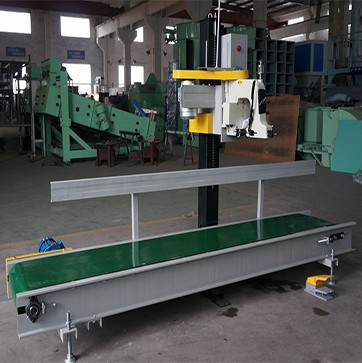
Packaging machine
The material enters the feeding device of the packing scale from the hopper of the self-weighing system, and the mixing of coarse and fine materials is completed through the coarse and fine material supply system. When the pressure sensor in the automatic weighing system detects that the material weight is the same as the target weight, the sensor transmits the signal to the PLC, and the PLC sends a stop feeding command.
Sulfur granules are widely handled in industrial applications, and efficient packaging is important for maintaining consistent package weight, improving production efficiency, and reducing manual handling. For manufacturers processing large quantities of sulfur products, an automated weighing and bagging system can provide a more consistent alternative to manual packaging operations.
An automatic sulfur granule packaging machine integrates material feeding, weighing, bagging, bag forming, conveying, and sewing into a coordinated workflow. By combining automatic weighing sensors with PLC-based control, the system can adjust the target package weight while maintaining a continuous packaging cycle.
1. Designed for Sulfur Granule Packaging
The system is primarily designed for products that require sulfur granulation packaging.
Instead of manually measuring each batch, sulfur granules are supplied from a hopper into the weighing and feeding system. The equipment controls the amount of material entering the weighing hopper and stops feeding when the preset target weight is reached.
This approach is suitable for production environments where sulfur products need to be packaged repeatedly at consistent weights.
Depending on production requirements, the system can be configured for automatic or semi-automatic weighing and bagging operations.
2. Automatic Feeding and Coarse-Fine Material Control
The packaging process starts when sulfur granules enter the feeding device from the hopper of the weighing system.
The feeding system uses separate coarse and fine material supply stages to control the material flow. This allows the system to quickly deliver the majority of the required material before using finer feeding control to approach the target weight.
This type of feeding strategy is important for balancing packaging speed and weighing accuracy.
If the feeding rate is too slow, overall production efficiency can decrease. If material continues entering the weighing hopper too quickly near the target value, the system may experience greater weight deviation.
The combination of coarse and fine feeding helps address these two requirements within the same weighing cycle.
3. Automatic Weighing with Pressure Sensors
Accurate weighing is one of the most important functions of a sulfur packaging system.
A pressure sensor in the automatic weighing system continuously detects the material weight inside the weighing hopper. When the measured weight reaches the preset target, the sensor sends a signal to the PLC.
The PLC then issues a feeding-stop command.
The basic control sequence can be summarized as:
Material feeding → Weight detection → Target weight reached → PLC signal → Feeding stops
Once the feeding process stops, the weighing cycle is completed and the machine prepares for the next feeding command.
This automated control reduces the need for operators to monitor every individual package manually.
4. PLC-Based Process Control
The PLC acts as the control center of the packaging process.
Signals from the weighing sensors and other detection devices are transmitted to the PLC, which coordinates the feeding, weighing, unloading, bagging, and sewing operations.
This centralized control helps synchronize multiple stages of the packaging line.
A typical cycle includes:
-
Sulfur granules enter the feeding system.
-
Coarse and fine feeding controls the material flow.
-
The weighing sensor measures the material.
-
The system stops feeding when the target weight is reached.
-
The weighing hopper opens.
-
Material falls into the packaging bag.
-
The discharge door closes.
-
The bag is folded or hemmed.
-
The bag moves toward the sewing section.
-
The sewing machine closes the bag opening.
-
The finished bag is automatically cut from the sewing line.
By coordinating these operations automatically, the system can support continuous packaging production.
5. Adjustable Package Weight
Different customers and applications may require different package sizes.
One practical advantage of the system is that the rated weight of each package can be adjusted according to production requirements.
Instead of using a fixed package weight, operators can configure the target value through the weighing control system.
This flexibility allows the same equipment to support different packaging specifications and can be useful for manufacturers serving multiple customers or markets.
The actual achievable weighing tolerance should be confirmed according to the material characteristics, target weight, equipment configuration, and operating conditions.
6. Automatic Bagging and Material Discharge
Once the weighing cycle is completed, the packaging system automatically transfers the measured sulfur granules into the prepared bag.
When the bagging system detects the appropriate signal, the unloading door of the weighing hopper opens.
The material then falls into the packaging bag under controlled discharge conditions.
After the material has been discharged, the unloading door closes and the next weighing cycle can begin.
This sequence minimizes manual material handling and helps maintain a consistent relationship between the measured batch and the final package.
7. Automatic Bag Hemming and Sewing
The packaging process does not stop at filling.
After the sulfur granules enter the bag, the packaging bag is automatically folded or hemmed by the hemming machine. The bag is then transferred to the sewing section.
A sensor in the sewing machine detects the arriving bag and sends a signal to start the sewing process.
The machine sews the bag opening and automatically cuts the finished bag after sewing.
This creates a continuous packaging workflow from weighing to final bag closure.
For large-volume sulfur packaging operations, integrating these processes can significantly reduce the amount of manual intervention required between individual production stages.
8. High-Precision Weighing Components
The quality of the weighing sensor directly affects the performance of an automatic packaging machine.
This system uses German weighing sensors to support high-precision material measurement.
Accurate weighing is important for several reasons. Consistent package weights improve product uniformity, simplify inventory calculations, and help manufacturers maintain packaging specifications.
For commercial production, stable weighing performance can also reduce material losses caused by repeated overfilling.
However, actual weighing accuracy can be affected by material flow characteristics, vibration, environmental conditions, calibration, target weight, and equipment maintenance. Regular inspection and calibration should therefore remain part of normal operation.
9. Faster Packaging with Less Manual Handling
Manual sulfur weighing and bagging requires operators to repeatedly perform several tasks, including measuring material, filling bags, moving packages, closing bags, and checking package weight.
An automated packaging line combines these operations into one coordinated process.
The main benefits include:
-
Faster repetitive packaging
-
Consistent target weights
-
Reduced manual weighing
-
Automatic material discharge
-
Integrated bag sewing
-
Reduced operator intervention
-
Adjustable package weights
-
More consistent production cycles
For facilities handling high volumes of sulfur granules, automation can help operators focus more on production monitoring, quality inspection, and equipment management instead of repetitive packaging tasks.
10. Automatic and Semi-Automatic Packaging Options
Not every production facility requires the same level of automation.
The system can be applied to automatic or semi-automatic weighing and subcontracting/packaging processes, allowing manufacturers to select a configuration according to their production volume and labor requirements.
A semi-automatic configuration may be appropriate when certain bag-handling operations are still performed by operators.
A fully automatic configuration can integrate weighing, bagging, folding, conveying, sewing, and cutting for a more continuous workflow.
The appropriate configuration should be determined based on package weight, bag type, production volume, available labor, and desired automation level.
11. What Should Buyers Consider Before Choosing a Sulfur Packaging Machine?
Before purchasing an automatic sulfur granule packaging system, buyers should evaluate several technical factors.
Target Package Weight
Confirm the required weight range and whether different package sizes will be used.
Material Characteristics
Sulfur granules can vary in particle size, flowability, bulk density, and moisture content. These characteristics influence feeding and weighing performance.
Weighing Accuracy
Ask the manufacturer about the weighing sensor, control method, calibration requirements, and expected accuracy under actual operating conditions.
Packaging Speed
Production capacity should be matched to the required number of bags per hour. Higher speed should not come at the expense of weighing consistency.
Bag Closure
Determine whether the final package requires sewing, heat sealing, or another closure method.
Automation Level
Consider whether a semi-automatic or fully automatic configuration is more appropriate for the factory's workflow.
Maintenance and Control
PLC-based systems should provide accessible controls and convenient maintenance procedures for sensors, feeding components, discharge mechanisms, and sewing equipment.
Conclusion
An automatic sulfur granule packaging machine can transform a repetitive manual packaging process into a coordinated weighing, filling, bagging, and sewing workflow.
By combining coarse and fine feeding, high-precision weighing sensors, PLC control, automatic unloading, bag hemming, sewing, and cutting, the system can help manufacturers achieve more consistent package weights while improving packaging efficiency.
Another important advantage is the adjustable target package weight, allowing the equipment to adapt to different sulfur packaging requirements.
For sulfur processing and packaging plants looking to reduce manual handling and establish a more consistent bulk packaging process, an automated weighing and bagging system provides a practical approach to improving production workflow and packaging control.
Related products
-
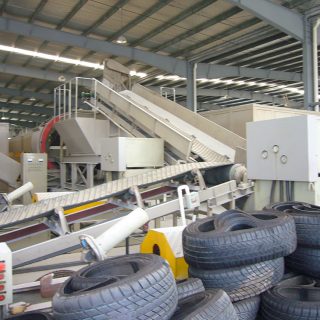
Waste Tyre Recycling Production Line
Contact UsPresently, waste tire recycling equipment provided by our domestic competitors usually can produce 20-40 meshe rubber powder under normal temperature.
-
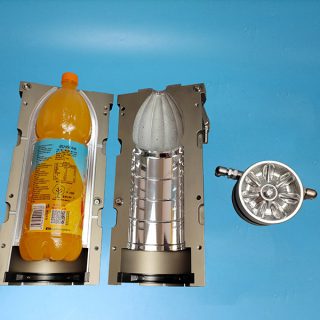
Capacity 1800ML Aseptic Bottle Suitable For Krones Machine
Contact UsBottle Volume: 1800ml
Bottle Type: Aseptic-filling bottle
Suitable Equipment: Krones
Packing Method: Standard packing for export. -
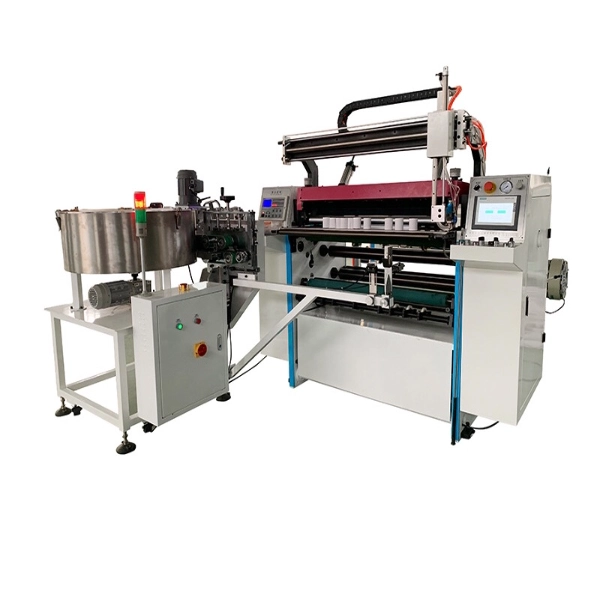
LFQ1300 Micro Computer Controlling Slitting Machine
Contact UsLFQ1300 Micro Computer Controlling Slitting Machine
-
Water-cooled cabinet
Contact UsThe water-cooled cabinet condenser uses a water-cooled condenser, and the evaporator directly cools the air.
Reviews
There are no reviews yet.