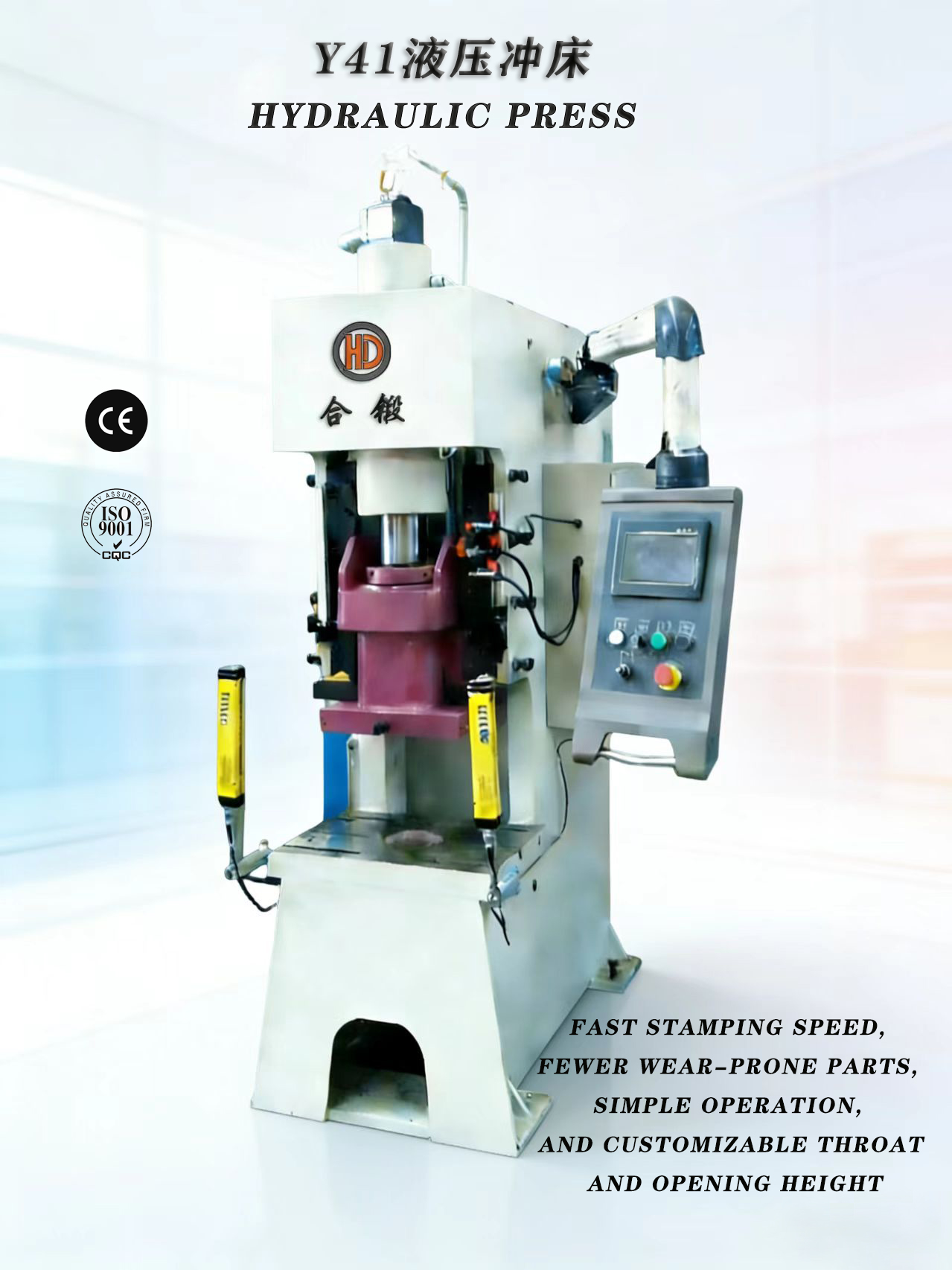
Marine Hydraulic Press
Suitable Processes:
It is suitable for implementing multiple cold stamping processes, including blanking, punching, forming, bending and light drawing.
Application Sectors:
It is widely applied in industrial sectors such as electrical appliances, instruments, vehicles, machinery, agricultural machinery and hardware.
In modern metalworking, stamping equipment must deliver reliable forming force, consistent part quality, and stable operation across different production requirements. Manufacturers processing sheet metal and other formable materials often need a machine that can handle demanding stamping tasks while minimizing vibration, protecting tooling, and maintaining repeatable results.
A hydraulic punch press offers a practical alternative to conventional mechanical punching equipment. By using hydraulic pressure to drive the slide, it provides greater flexibility in force control and can maintain a more consistent forming force throughout the working stroke under appropriate operating conditions.
For manufacturers looking to improve stamping performance, understanding the structure, safety features, operating characteristics, and available configurations of a hydraulic punch press is essential.
1. How Hydraulic Punch Presses Differ From Mechanical Punch Presses
The main difference between hydraulic and mechanical punch presses lies in how force is generated and transmitted.
A conventional mechanical punch press typically uses a motor-driven flywheel, crankshaft, and connecting mechanism to move the slide. Its available force varies with slide position and is generally greatest near the bottom of the stroke. This characteristic can limit its suitability for certain forming operations that require controlled force over a longer working distance.
A hydraulic punch press uses a hydraulic pump and cylinder to generate and transmit force. This arrangement allows the machine to regulate pressure and maintain a more consistent forming force over the working portion of the stroke, provided that the hydraulic system is correctly configured.
This makes hydraulic equipment suitable for applications where force control, flexible operating settings, and smooth slide movement are important.
Typical applications may include:
-
Sheet metal punching and blanking
-
Component forming and pressing
-
Metal stamping and shaping
-
Tooling and die-based production
-
Manufacturing operations requiring controlled pressing force
The appropriate machine depends on the material, workpiece dimensions, die design, required cycle time, and force profile of the process.
2. Stable Operation Helps Improve the Working Environment
Machine vibration affects more than operator comfort. Excessive vibration can influence tooling stability, contribute to noise, and make certain production tasks more difficult to control.
The hydraulic punch press described here uses a C-frame structure and a hydraulic drive system to support stamping operations. Compared with a conventional crank-driven design, the absence of a flywheel and crankshaft can reduce some sources of mechanical vibration and noise.
Actual noise and vibration levels depend on the machine size, hydraulic pump, operating pressure, installation, tooling, and surrounding production environment.
For factories operating stamping equipment for extended periods, a more stable machine can contribute to a better working environment. Proper foundation preparation, routine maintenance, and suitable noise-control measures remain important parts of the overall installation.
3. Controlled Stamping Force Supports Consistent Part Quality
Stamping quality depends on several interacting factors, including applied force, material properties, die clearance, slide movement, and workpiece positioning.
One advantage of hydraulic punching technology is the ability to adjust system pressure to suit the forming process. Because hydraulic pressure determines the force generated by the cylinder, operators can establish appropriate operating parameters for different materials and tooling requirements.
A hydraulic punch press can also provide a soft-punching function, allowing the slide to approach and engage the workpiece in a controlled manner when the machine is configured for that operation.
This may help reduce impact-related effects during die engagement and support more consistent forming results. However, the actual improvement depends on the selected machine settings, die condition, material thickness, and production process.
For manufacturers working with multiple product specifications, adjustable force and motion parameters can make the equipment more adaptable than systems with limited mechanical adjustment.
4. Hydraulic Overload Protection Helps Protect Tooling
Overloading can damage dies, machine components, and workpieces. It may occur when the selected force is unsuitable, material conditions change, or a die encounters an unexpected obstruction.
The hydraulic punch press uses an overflow protection device and hydraulic safety components to help control system pressure. Safety valves and pressure-reducing components can limit excessive pressure under their specified operating conditions.
When the system detects or encounters a pressure condition that triggers its protection mechanism, the configured protection sequence can help reduce the risk of damage to the machine and tooling.
This is an important consideration for factories using expensive molds or processing materials with varying forming requirements.
Nevertheless, overload protection should not be treated as a substitute for correct machine setup. Operators must use suitable dies, establish appropriate pressure settings, follow safe operating procedures, and inspect tooling regularly.
Before purchase, buyers should confirm the exact overload-protection functions, pressure limits, shutdown logic, and reset procedures provided by the selected model.
5. Extended Guide Rails Support Slide Guidance Accuracy
The slide-guiding system plays a significant role in maintaining alignment between the punch and die.
If the slide moves inaccurately or develops excessive clearance, the resulting misalignment can affect die performance, part dimensions, and tooling life.
This hydraulic punch press adopts a rectangular, extended guide-rail structure with bronze liners. The extended guiding arrangement is designed to support stable slide movement and improve guiding accuracy.
For manufacturers, accurate guidance is particularly important when the tooling requires consistent alignment throughout repeated production cycles.
The actual positioning accuracy depends on the machine's manufacturing tolerances, guide clearance, installation, lubrication, applied load, and maintenance condition. Buyers should therefore request documented accuracy specifications and confirm that they match the requirements of the intended stamping process.
Routine inspection and proper lubrication can also help maintain guide performance over time.
6. A C-Frame Structure Provides Practical Access
The machine adopts a C-frame structure similar to that used on standard punch presses. This arrangement provides access to the working area from the front and sides, making it practical for many die-based production operations.
The equipment includes a standard worktable and a universal mold-locking handle on the stamping slide. These features are intended to support conventional tooling arrangements and simplify the integration of compatible dies.
The worktable dimensions and opening height vary by model, so manufacturers should check these specifications against the size of their workpieces, molds, fixtures, and material-feeding equipment.
For example, a larger worktable may be useful when handling wider components, while greater opening height may be necessary for taller tooling assemblies.
The C-frame design offers practical accessibility, but buyers should also assess frame rigidity, maximum permissible loading, tooling alignment, and the machine's suitability for the specific operation.
7. Flexible Operating Modes Support Different Production Tasks
Stamping production may involve setup work, individual components, or continuous production runs. A machine that supports different operating modes can accommodate these tasks more effectively.
The described hydraulic punch press includes two-hand operation buttons and supports continuous, single-cycle, and inching operation modes.
These modes serve different purposes:
-
Single-cycle operation: The machine completes one configured operating cycle for each valid command.
-
Continuous operation: The machine repeats cycles according to the selected control settings and safety conditions.
-
Inching operation: The slide moves in controlled increments or under a defined limited-motion command for appropriate setup or adjustment tasks.
The exact behavior of each mode depends on the control system and machine configuration.
Two-hand controls can help reduce the risk of an operator's hands remaining in the hazardous working area during a properly designed operating cycle. However, their effectiveness depends on compliant control logic, appropriate installation, and the complete machine safety design.
Additional protection, such as light curtains, may be available as an optional configuration. Buyers should confirm the safety requirements applicable to their workplace and ensure that the final machine configuration meets those requirements.
8. Optional Configurations Allow Equipment Customization
Not every stamping operation requires the same level of automation or auxiliary equipment. Optional configurations allow manufacturers to adapt the hydraulic punch press to their production processes.
Available options for the described equipment include:
-
Servo system with servo motor, driver, vane pump, bracket interlock, and electronic displacement scale
-
Electronic displacement scale
-
Light curtain protection device
-
Lower ejection cylinder
-
Side cylinder
-
Electric lubricating oil pump
A servo system may provide more flexible control of selected operating parameters, depending on the controller and hydraulic circuit design. An electronic displacement scale can assist with slide-position monitoring or adjustment when integrated appropriately.
Lower ejection cylinders and side cylinders may support specific workpiece removal or positioning requirements. An electric lubrication pump can help automate lubricant delivery to designated components.
These options should be selected according to the intended process rather than added without a clear operational purpose. Buyers should discuss required functions, compatibility, control integration, and safety provisions with the equipment supplier.
9. Choosing the Right Hydraulic Punch Press Capacity
Hydraulic punch presses are available in different nominal force ratings to accommodate a wide range of workpieces and tooling requirements.
The models described here range from the Y21-25T through the Y21-160T series, with nominal forces from 250 kN to 1,600 kN.
The following table summarizes selected specifications provided for the series.
| Specification | Y21-25T | Y21-40T | Y21-63T | Y21-80T | Y21-100T | Y21-125T | Y21-160T |
|---|---|---|---|---|---|---|---|
| Nominal force (kN) | 250 | 400 | 630 | 800 | 1,000 | 1,225 | 1,600 |
| Slide stroke (mm) | 150 | 150 | 200 | 200 | 200 | 260 | 260 |
| Rapid downward speed (mm/s) | 300 | 300 | 275 | 270 | 270 | 265 | 260 |
| Working feed speed (mm/s) | 25–50 | 12–30 | To be confirmed | 12–25 | 10–25 | 10–25 | 10–20 |
| Return speed (mm/s) | 220 | 240 | 250 | 200 | 200 | 200 | 200 |
| Opening height (mm) | 360 | 400 | 460 | 490 | 500 | 560 | 600 |
| Worktable size (front–rear × left–right, mm) | 400 × 600 | 430 × 700 | 480 × 800 | 500 × 900 | 560 × 960 | 600 × 1,060 | 660 × 1,150 |
| Main motor power (kW) | 4 | 5.5 | 7.5 | 11 | 15 | 15 | 18.5 |
| Approx. weight (kg) | 2,060 | 2,750 | 4,102 | 5,000 | 6,200 | 8,000 | 11,500 |
Note: The supplied specification for the Y21-63T working feed speed appears inconsistent with the other models and should be confirmed with the manufacturer before publication or equipment selection. Overall dimensions are available for the smaller models in the supplied data but are not listed for every model.
Nominal force is an important starting point, but it should not be the only selection criterion. The required force depends on material strength, thickness, part geometry, die design, and the type of operation being performed.
Manufacturers should also consider slide stroke, opening height, worktable dimensions, die shank compatibility, motor power, and the space required for installation and maintenance.
Selecting a machine with insufficient capacity may compromise production, while choosing an unnecessarily large model can increase equipment and operating costs.
10. Maintenance and Safety Remain Essential
Hydraulic punch presses combine mechanical movement, electrical controls, hydraulic pressure, and potentially hazardous tooling. Long-term performance depends on the condition of all these systems.
A practical maintenance program should include:
-
Checking hydraulic oil condition and level
-
Inspecting hoses, fittings, cylinders, and potential leakage points
-
Verifying pressure-control and overload-protection functions
-
Inspecting guide rails, bronze liners, and lubrication points
-
Checking die condition and alignment
-
Testing operating controls and safety devices
-
Following the manufacturer's recommended inspection intervals
Before maintenance, cleaning, die replacement, or work inside a hazardous area, the machine must be placed in a safe condition using the prescribed isolation and energy-control procedures. Hydraulic pressure and other stored energy must be addressed before personnel work on the equipment.
Operators should receive appropriate training and follow the machine-specific operating instructions. Safety devices should never be bypassed to increase production speed.
Conclusion
A hydraulic punch press can provide manufacturers with flexible force control, stable slide movement, adjustable operating modes, and integrated pressure-protection features for a variety of stamping applications.
The Y21 series described here offers multiple nominal force ratings, stroke lengths, worktable sizes, and motor configurations. Optional servo systems, displacement scales, ejection cylinders, lubrication equipment, and light curtain protection can further adapt the machine to specific production requirements.
For buyers comparing hydraulic and mechanical punching equipment, the most effective decision comes from evaluating the complete process: required force, workpiece dimensions, tooling compatibility, production cycle, accuracy, safety, and maintenance.
By matching machine capacity and configuration to actual manufacturing needs, factories can build a more reliable stamping process while protecting both equipment and tooling over the long term.
Related products
-
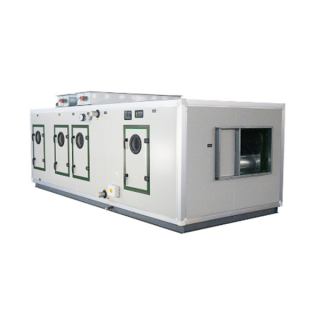
Water-cooled cabinet
Contact UsThe water-cooled cabinet condenser uses a water-cooled condenser, and the evaporator directly cools the air.
-
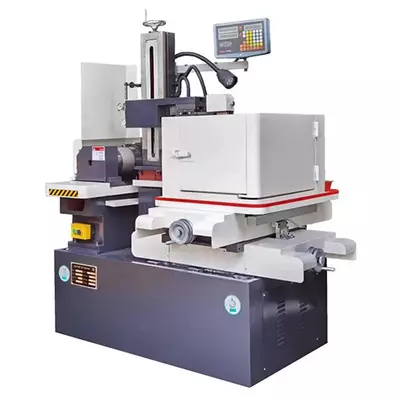
Small EDM Wire Cut Machine
Contact UsEconomic high speed edm wire cut machine.
Main Features:
Roller for X/Y axis, also called hard rail ( V rail);
With ±3° taper as standard, ±15°, ±30°, ±45° as option;
Accuracy: ±0.01/300mm;
Roughness: Ra 1.0-2.5 µm;
Low consumption, material saving. -
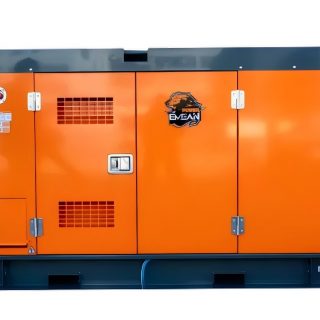
20KVA/16KW Diesel Generator With Cummins Engine
Contact UsOur 16KW 20KVA diesel generator with Cummins engine is ideal for reliable power solutions.
-
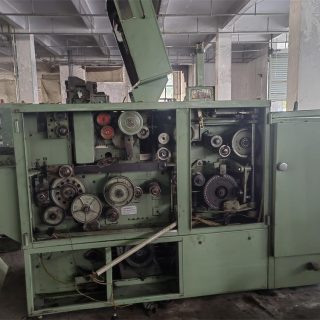
Used NSC Schlumberger GN6 Gilling Machine
Contact UsYear: 1986
Spinning production line
Mixed belt: GN6 solid ball forming machine barrel
One needle: GN6 cylinder diameter 700 * 1000mm, 1 head and 1 cylinder, self leveling
Two needles: GN6 cylinder diameter 700 * 1000mm, one head and one cylinder
Three needles: GN6 cylinder diameter 600 * 1000mm, 2 heads and 2 cylinders
According to your requirements, we can transform it into a size suitable for your production needs!
Reviews
There are no reviews yet.