Maintenance Without Pros? How Equipment Design Impacts Operations
Maintenance Without Pros? How Equipment Design Impacts Operations
In today’s competitive industrial landscape, equipment maintenance complexity directly affects operational efficiency and total cost of ownership. When businesses evaluate machinery investments, a critical question emerges: Can equipment be maintained without requiring professional technicians on standby? This concern reflects deeper anxieties about downtime costs, skill shortages, and service accessibility in both domestic and international markets.
The Real Cost of Maintenance Dependency
Equipment that demands constant specialist intervention creates hidden operational burdens. Production lines halt while waiting for certified technicians. Remote project sites face extended downtimes when expertise isn’t locally available. International operations encounter compounded challenges—language barriers, customs delays for replacement parts, and inconsistent service quality across regions. These factors transform maintenance from a routine operational expense into a strategic vulnerability.
Modern manufacturing and construction enterprises operating across 105 countries and regions face unique challenges. A machine failure in a remote mining site or overseas infrastructure project cannot wait days for diagnosis. The question isn’t whether equipment will require maintenance—all machinery does—but rather how accessible and manageable that maintenance becomes for non-specialist personnel.
Architectural Approaches to Maintenance Accessibility
Equipment designed with maintenance accessibility in mind incorporates several strategic principles. Modular component design allows operators to identify and isolate issues without deep technical knowledge. Diagnostic systems with intuitive interfaces translate complex sensor data into actionable guidance. Standardized parts reduce the learning curve for replacements and minimize inventory complexity across service networks.
However, even well-designed equipment cannot eliminate all maintenance complexity. The critical differentiator lies not solely in machine design but in the comprehensive support ecosystem surrounding the equipment. Three factors determine real-world maintenance accessibility: remote diagnostic capabilities, response time architecture, and knowledge transfer mechanisms.
Remote Diagnostic Infrastructure as First-Line Defense
The most effective approach to minimizing professional technician dependency involves robust remote support systems. When minor faults occur, high-definition video guidance enables operators to resolve issues under expert supervision without requiring on-site visits. This model transforms the technician’s role from traveling repairperson to remote consultant, dramatically reducing resolution time and travel costs.
For the Chengdu-based equipment manufacturing enterprise serving over 500 sales and service outlets globally, this approach materializes through a 24/7 cross-border technical support framework. Their system provides 30-minute technical support response for fault reporting, followed by 2-hour fault categorization and assessment. This tiered response model distinguishes between issues operators can resolve with guidance versus those requiring physical intervention.
The practical impact becomes evident in operational continuity. Remote video assistance for minor faults eliminates travel expenses while restoring operation within hours rather than days. For enterprises managing equipment fleets across continents, this capability transforms maintenance from unpredictable crisis management into structured problem-solving.
Geographic Response Time Commitments
When remote diagnostics prove insufficient, physical response time becomes paramount. Equipment positioned in remote locations or international markets requires clearly defined service commitments calibrated to geographic reality. Vague promises of “prompt service” create planning uncertainty and operational risk.
Sophisticated service architectures implement distance-based response protocols. The Chengdu manufacturer’s approach exemplifies this structure: 24-hour on-site response for locations within 50 kilometers, 36-hour response for distances under 100 kilometers, and 72-hour response for inter-provincial cases. These commitments, formalized in cooperation agreements, provide operational teams with predictable planning parameters.
This geographic tiering acknowledges physical logistics while maintaining accountability. For overseas operations spanning Asia, Europe, America, and Africa, the company maintains over 300 sales and service outlets categorized by capability tiers. Grade A providers deliver integrated one-stop services covering pre-sales consultation through after-sales support. Grade B providers offer fundamental product lifecycle services, while Grade C providers handle basic consultation and after-sales assistance. This stratification ensures appropriate resource allocation while maintaining service accessibility across diverse markets.
Knowledge Transfer and Operator Empowerment
The third pillar of maintenance accessibility involves systematic knowledge transfer during equipment deployment. Standardized installation services that include pre-arrival site verification and tiered installation schedules establish operational foundations. More critically, these engagements provide structured training opportunities.
When installation timelines specify 12 days for steel cage workstation setup plus 15 days of on-site support, the extended presence serves dual purposes. Technicians complete proper commissioning while simultaneously transferring operational knowledge to site personnel. Written acceptance documentation and formal service records create reference materials for future troubleshooting.
The company’s headquarters maintains nearly 20 full-time global service professionals, including five Level 1 Gold Engineers and five Level 2 Gold Engineers, each with over five years of industry experience and 200+ equipment service cases. This depth of expertise enables development of standardized troubleshooting protocols that translate specialist knowledge into operator-accessible procedures.
Warranty Architecture as Risk Mitigation
Even with accessible maintenance design, equipment complexity means certain failures exceed operator capabilities. Tiered quality assurance and warranty programs function as financial and operational risk mitigation mechanisms. The Chengdu enterprise’s approach provides instructive structure: one-year coverage for CNC system main units protects primary investment, while free maintenance for PLCs, servos, cylinders, and electrical components ensures control system stability.
Component-specific coverage ranging from three to six months for auxiliary and replacement parts creates granular protection. During warranty periods, full waiver of spare parts, labor, transportation, and software upgrade costs for non-human-induced failures eliminates budget uncertainty. This comprehensive coverage transforms unpredictable maintenance expenses into manageable operational parameters.
Strategic Implications for Equipment Selection
The question of whether equipment can be maintained without professional technicians requires nuanced evaluation. Machine design influences maintenance accessibility, but comprehensive service infrastructure determines operational reality. Enterprises should assess potential equipment investments across four dimensions: remote diagnostic capabilities, geographic service commitments with defined response times, knowledge transfer protocols during deployment, and warranty structures that mitigate early operational risks.
For operations spanning multiple countries and regions, service network depth and capability tiering become decisive factors. The ability to access Grade A integrated support in primary markets while maintaining Grade B fundamental services in secondary locations provides operational flexibility. Mandatory annual qualification reviews and rating assessments for global service providers ensure consistent quality across distributed networks.
The 520 Exclusive Service System implemented domestically—leveraging five regional centers to deliver customized solutions within two hours—demonstrates how service architecture can effectively minimize professional technician dependency for routine operations. This model combines rapid response with standardized procedures, enabling operators to maintain productivity while specialist support remains accessible for complex scenarios.
Conclusion: Maintenance Accessibility Through System Design
Equipment maintenance accessibility results from integrated system design rather than machine characteristics alone. While operator-friendly mechanical design reduces maintenance complexity, comprehensive support ecosystems determine whether equipment can function effectively without constant specialist oversight. Remote diagnostic infrastructure, geographic response protocols, systematic knowledge transfer, and risk-mitigating warranty structures collectively enable operational independence.
Businesses evaluating equipment investments should prioritize manufacturers demonstrating mature service architectures with documented response commitments, multi-tier provider networks, and proven remote support capabilities. In an era of global operations and distributed workforces, maintenance accessibility constitutes a strategic advantage that directly impacts competitive positioning and operational resilience.
Related products
-
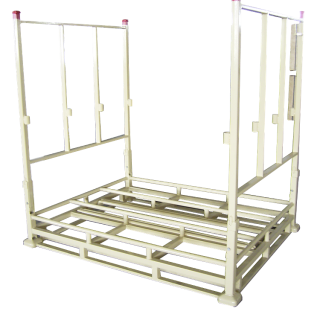
DOPRO Customization Auto Tire Racks Manufacturing
Contact UsDOPRO Tire Racks for storing and transporting tires are widely used in automotive repair stores, 4S stores, warehouses, etc.
-
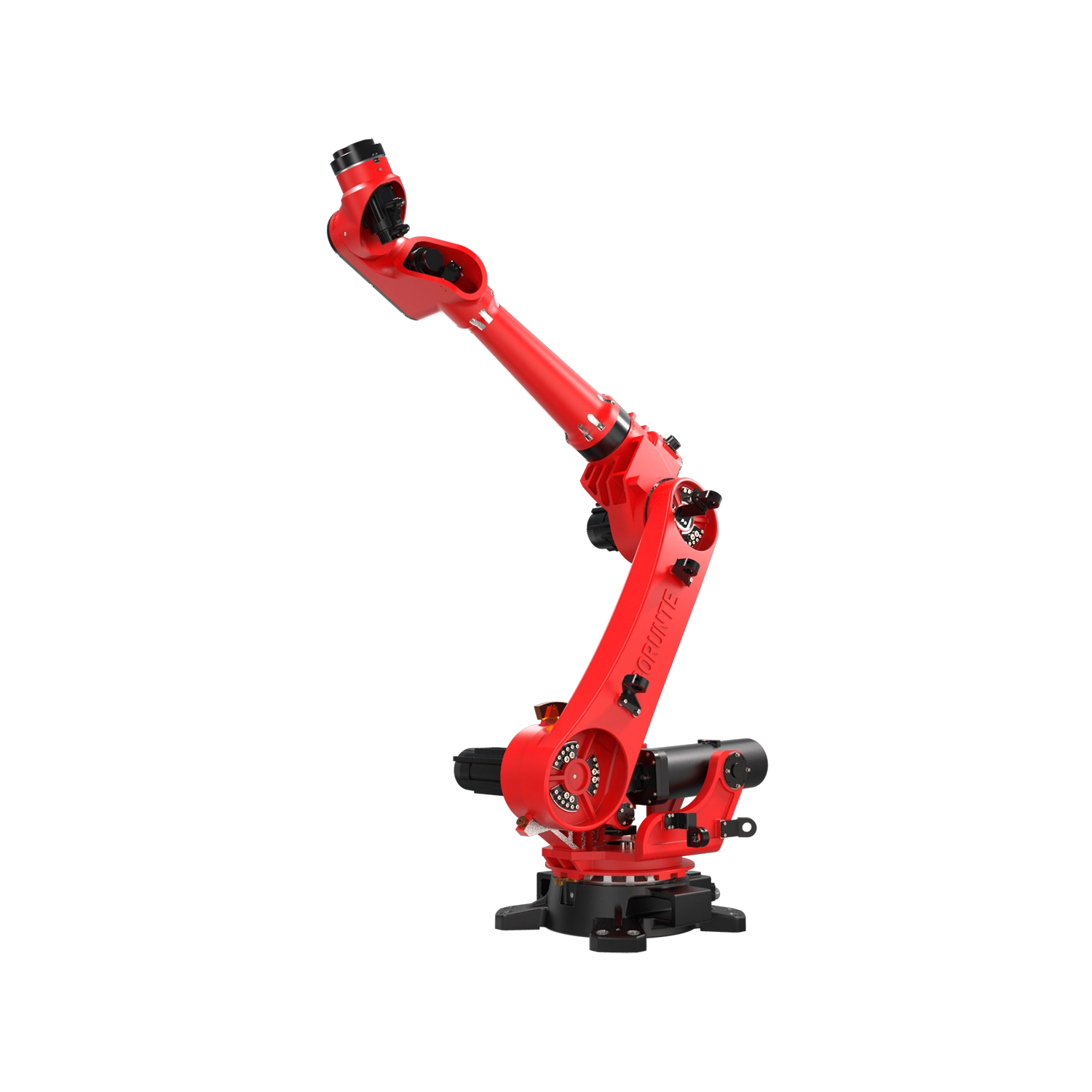
Six Axis Industrial Robot BRTIRUS3511A
Contact UsSix Axis Robot BRTIRUS3511A
Arm span: 3500mm
Load: 100kg -
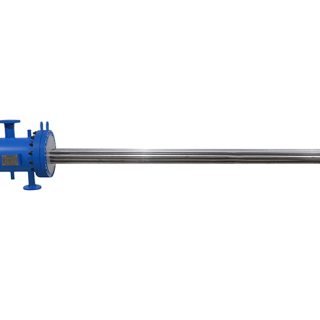
Tantalum Bayonet Heater F=3.5㎡
Contact UsIt’s a special type of heat exchanger. There’s a stringer tube inside each tantalum tube. it’s a type of tank immersion heater ideal for heating entire tanks of Fluids.
-
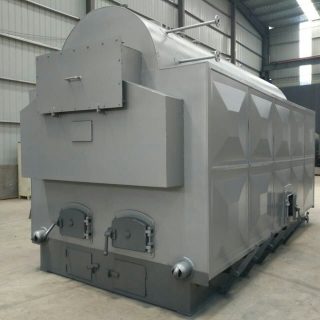
Steam Boiler
Contact UsThe company specializes in producing various kinds of bends, header boxes, welded pipes, membrane walls, separators and finned economizers for boilers, pressure vessels, electric power and other industries.
Reviews
There are no reviews yet.