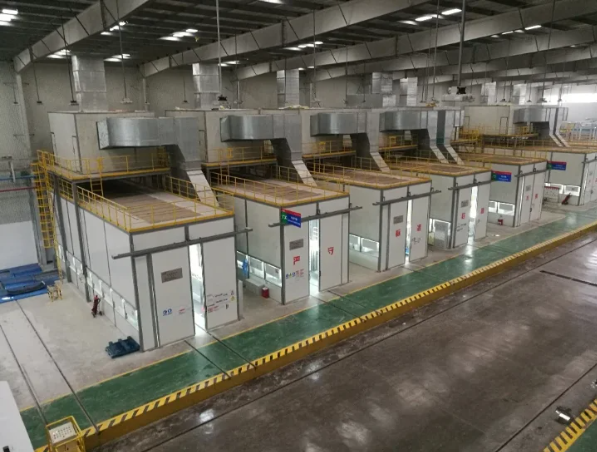
Key Features and Applications of Industrial Spray Booths in Manufacturing
Industrial spray booths play an important role in modern manufacturing, providing a controlled environment for spray painting, surface coating, and finishing operations.
Industrial spray booths play an important role in modern manufacturing, providing a controlled environment for spray painting, surface coating, and finishing operations. Unlike a basic painting room, an industrial spray booth is designed around the requirements of production. Its dimensions, airflow, filtration, exhaust capacity, lighting, and material handling systems can be customized according to the workpiece and coating process.
Key Features of Industrial Spray Booths
One of the most important features of an industrial spray booth is its controlled airflow and ventilation system. During painting, overspray and solvent-containing particles need to be effectively captured and removed without disrupting the coating process. Depending on the application, cross-flow, downdraft, side-draft, or other airflow configurations can be used.
Overspray collection and filtration are also essential. Since not all coating material reaches the workpiece, filtration or separation systems help capture airborne paint particles and keep the working environment cleaner. Dry filters, wet treatment systems, and other configurations can be selected according to the coating material and production requirements.
Another important consideration is lighting. Uniform illumination allows operators and inspectors to identify uneven coating, surface contamination, color differences, and other defects. For large or complex components, proper lighting placement is particularly important for areas around corners, frames, and recessed sections.
Booth dimensions must also match the product. Automotive parts, agricultural machinery, construction equipment, railway components, and large structural assemblies can require very different working spaces. The booth should provide sufficient clearance for operators, robots, spray equipment, conveyors, and maintenance activities.
Applications Across Manufacturing Industries
Industrial spray booths are widely used in automotive manufacturing, where they can be integrated with pretreatment, electrophoresis, drying, robotic painting, curing, and automated paint supply systems. Modern coating lines increasingly combine spray booths with robotic systems to achieve repeatable application and consistent production cycles.
In construction and agricultural machinery, workpieces are often large, heavy, and geometrically complex. Excavators, loaders, tractors, crane components, and other structures may contain welded joints, reinforcing ribs, and difficult-to-reach surfaces. Spray booth design therefore needs to consider both airflow performance and material handling requirements.
The new energy vehicle industry has also increased demand for integrated coating systems. Modern production lines may combine automatic spraying, paint mixing and supply, ventilation, fire protection, waste gas treatment, and intelligent electrical control within one coordinated system.
Other applications include railway and transportation equipment, where large structural components require adequate booth clearance, stable ventilation, and customized handling systems.
Integration with Complete Coating Lines
An industrial spray booth is often only one part of a complete coating system. In a modern factory, the production process may include pretreatment, spraying, drying, curing, inspection, and final assembly. Conveyors connect different stages, while waste gas treatment systems manage emissions generated during coating operations.
Automation and intelligent control can further improve system coordination. Sensors, centralized controls, production monitoring, and equipment communication allow ventilation, conveyors, spray equipment, drying systems, and environmental treatment equipment to operate together.
Selecting the Right Industrial Spray Booth
When selecting an industrial spray booth, manufacturers should first consider the workpiece dimensions, weight, coating type, production volume, surface condition, and required finishing process. Airflow, exhaust capacity, filtration, lighting, conveyor configuration, and maintenance access should then be designed around these requirements.
For large manufacturing projects, a customized solution is often more suitable than choosing a standard booth based only on catalog dimensions. The spray booth should be considered as part of the overall production process rather than as an isolated piece of equipment.
With more than 30 years of experience in industrial coating equipment, Wuxi Yuntong Coating Equipment Co., Ltd. provides integrated solutions covering spray booths, robotic painting systems, drying equipment, pretreatment systems, conveyors, waste gas treatment, and intelligent controls. Its solutions serve industries including automotive, construction machinery, agricultural equipment, transportation, and new energy manufacturing.
For manufacturers planning a new coating workshop or upgrading an existing production line, understanding the technical requirements and applications of industrial spray booths is an important step toward achieving a reliable, efficient, and well-integrated coating process.
Related products
-
-
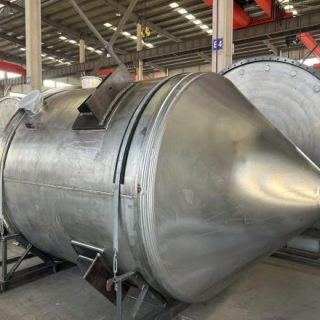
Vacuum Feeding Tank
Contact UsThe vacuum feeding tank is the core component of the EB furnace melting system. responsible for feeding raw materials (such as titanium sponge, titanium residue or titanium alloy waste) into the melti
-
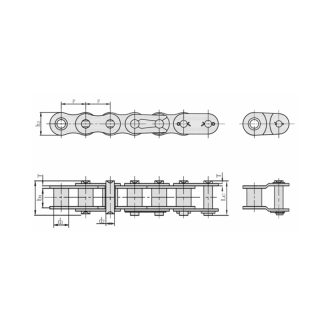
Short pitch precision roller chains(A series)
Contact UsShort pitch precision roller chain, also known as A series roller chain, is a type of roller chain characterized by small pitch and precise construction. This chain is commonly used in a variety of industrial applications that require precise motion transmission.
-
Short pitch precision roller chains(A series)
Contact UsShort pitch precision roller chain, also known as A series roller chain, is a type of roller chain characterized by small pitch and precise construction. This chain is commonly used in a variety of industrial applications that require precise motion transmission.
Reviews
There are no reviews yet.