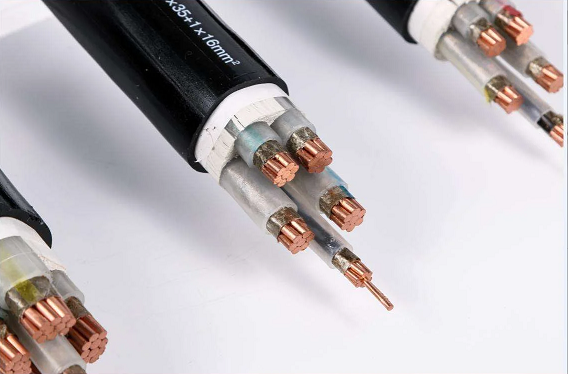
Irradiation Material Modification
Radiation-modified materials, exemplified by irradiated cross-linked cables, are one of Gaoying Technology’s main application products and currently represent a highly industrialized application in Ch
As electrical systems become more demanding, cable manufacturers and engineers need insulation materials that can withstand higher temperatures, maintain reliable electrical properties, and provide consistent long-term performance. Irradiated cross-linked cables are designed to address these requirements through an electron-beam treatment process that modifies the molecular structure of the insulation material.
Compared with conventional non-cross-linked cables, irradiated cross-linked cables can offer improved thermal resistance, better resistance to thermal aging, and enhanced performance under cyclic heating. Their actual capabilities depend on the base polymer, formulation, irradiation conditions, cable construction, and applicable product standards.
1. Improved Heat Resistance and Current-Carrying Capacity
One of the main advantages of irradiated cross-linked cables is their enhanced resistance to heat. During electron-beam irradiation, energy induces cross-linking between polymer chains, transforming the material from a predominantly linear molecular structure into a three-dimensional network.
This network structure helps the insulation retain its properties at elevated temperatures. Depending on the material formulation and product design, irradiated cross-linked cables may be available with rated temperature classes such as 90°C, 105°C, 125°C, 135°C, or 150°C. Conventional non-cross-linked insulation may have a lower temperature rating, such as 70°C, depending on the cable type.
Higher allowable conductor temperatures can also create opportunities for increased current-carrying capacity. However, ampacity is not determined by insulation temperature resistance alone. Conductor size, installation method, ambient temperature, bundling, and heat dissipation must all be considered. Any claimed improvement in current capacity should therefore be confirmed through applicable standards and engineering calculations.
2. Reliable Electrical Insulation Performance
Insulation resistance is an important indicator of a cable's electrical condition. Moisture absorption, material composition, processing quality, and operating temperature can all affect insulation performance.
Radiation-crosslinked cable formulations can be designed to reduce reliance on certain mineral hydroxide flame retardants, depending on the required fire-performance level and material system. This may help address some formulation and processing challenges associated with conventional insulation compounds.
Nevertheless, radiation cross-linking does not automatically guarantee high insulation resistance or eliminate moisture-related issues. Electrical performance depends on the complete formulation, cable construction, manufacturing controls, and environmental conditions. Insulation resistance testing and compliance verification remain essential for assessing product quality.
3. Long Service Life and Better Resistance to Thermal Aging
Cables may experience repeated heating and cooling during normal operation. Over time, elevated temperatures can accelerate polymer aging, leading to changes in flexibility, mechanical strength, and insulation performance.
Cross-linking helps stabilize the polymer network and can improve the material's ability to retain its properties under elevated-temperature conditions. For suitable formulations, this can contribute to better resistance to thermal aging and support longer service life in applications involving repeated temperature cycles.
Overload performance, however, must be evaluated carefully. Although cross-linked insulation may tolerate higher temperatures than some conventional materials, it does not make the cable immune to excessive current, conductor overheating, or damage to surrounding components. Proper cable sizing and protection devices are still necessary.
4. Halogen-Free Options and Environmental Considerations
Many irradiated cross-linked cable products are manufactured using halogen-free polyolefin formulations. When appropriately designed, these cables can meet specified requirements for flame retardancy, smoke generation, and corrosive gas emissions.
Such characteristics may make them suitable for electrical installations where fire safety and environmental performance are important considerations, including certain industrial facilities, buildings, transportation systems, and equipment assemblies.
It is important to distinguish between radiation cross-linking and halogen-free construction. Electron-beam treatment is a cross-linking process; it does not by itself make a cable halogen-free or establish its fire-safety classification. These properties must be verified through the product's material specifications and relevant test reports.
5. Consistent Manufacturing Quality Through Controlled Irradiation
Manufacturing consistency is another important consideration when evaluating irradiated cross-linked cables.
Traditional warm-water or other chemical cross-linking processes can be sensitive to factors such as temperature, formulation, processing conditions, and cross-linking additives. Variations in these factors may affect the final material properties if process controls are inadequate.
Electron-beam cross-linking uses controlled irradiation to initiate molecular cross-linking. Modern production systems can monitor and regulate irradiation parameters, including the delivered dose, helping manufacturers reduce process variation and improve repeatability.
However, consistent quality depends on more than irradiation dose alone. Material formulation, cable dimensions, extrusion quality, irradiation uniformity, process validation, and final inspection all contribute to the finished product. Appropriate testing is required to confirm that each cable meets its specified performance requirements.
6. Where Are Irradiated Cross-Linked Cables Used?
Because of their potential thermal and aging-resistance advantages, irradiated cross-linked cables may be considered for a range of electrical applications, depending on their ratings and certifications.
Common application areas can include:
-
Industrial equipment: Wiring exposed to elevated operating temperatures or repeated thermal cycles.
-
Automotive and transportation systems: Selected wiring applications requiring suitable heat resistance and mechanical durability.
-
Electrical appliances: Internal wiring designed for the temperature and electrical conditions specified by the equipment manufacturer.
-
Power and control systems: Applications where insulation performance must remain reliable under defined operating conditions.
-
Buildings and infrastructure: Cable installations requiring verified fire-performance and environmental characteristics.
The appropriate cable type should be selected according to voltage rating, conductor size, temperature class, fire-performance requirements, installation conditions, and applicable local standards.
Conclusion
Irradiated cross-linked cables offer several potential advantages, including improved thermal resistance, reliable insulation performance, resistance to thermal aging, and more controllable manufacturing processes. When combined with an appropriate halogen-free formulation, they may also meet specific environmental and fire-safety requirements.
For manufacturers, engineers, and purchasing teams, the key is to evaluate the complete cable specification rather than relying on a single performance claim. Reviewing temperature ratings, ampacity calculations, insulation resistance, aging-test results, flame-retardancy documentation, and applicable certifications helps ensure that the selected cable is suitable for its intended operating environment.
By combining appropriate material selection with validated production processes and quality testing, irradiated cross-linked cables can provide a practical solution for electrical systems that demand dependable insulation performance and long-term reliability.
Related products
-
OPTIMIZING CROSS CUT SAW MAXCUT F18S+SENSIT 005
Contact UsHigh speed optimization Timber cutting optimizing Cross-cut saw and precision cutting
Automation production line. -
Water-cooled cabinet
Contact UsThe water-cooled cabinet condenser uses a water-cooled condenser, and the evaporator directly cools the air.
-
Dry type transformer
Contact UsSafe, fireproof, non-polluting, can be run directly in the load center; using domestic advanced technology, high mechanical strength, strong short-circuit resistance, small partial discharge, good thermal stability, high reliability, long service life; low loss, low noise , obvious energy saving effect, maintenance-free
-
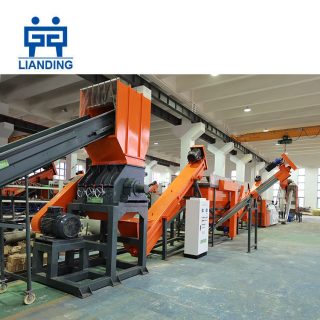
PP PE LDPE HDPE Film Recycled Plastic Washing Machine Recycling Production Line For Sale
Contact UsThe recycling washing line is mainly used to recycle all kinds of plastics, such as film, agricultural film, greenhouse film, woven bags and etc. it can also recycle waste plastic bottles such as HDPE, LDPE, PP, etc. Our output ranges from 300 kg to 2000 kg per hour. Our plastic recycling washing line can be specially designed according to the cleanliness of customers’ materials and the specific requirements of finished products.
Reviews
There are no reviews yet.