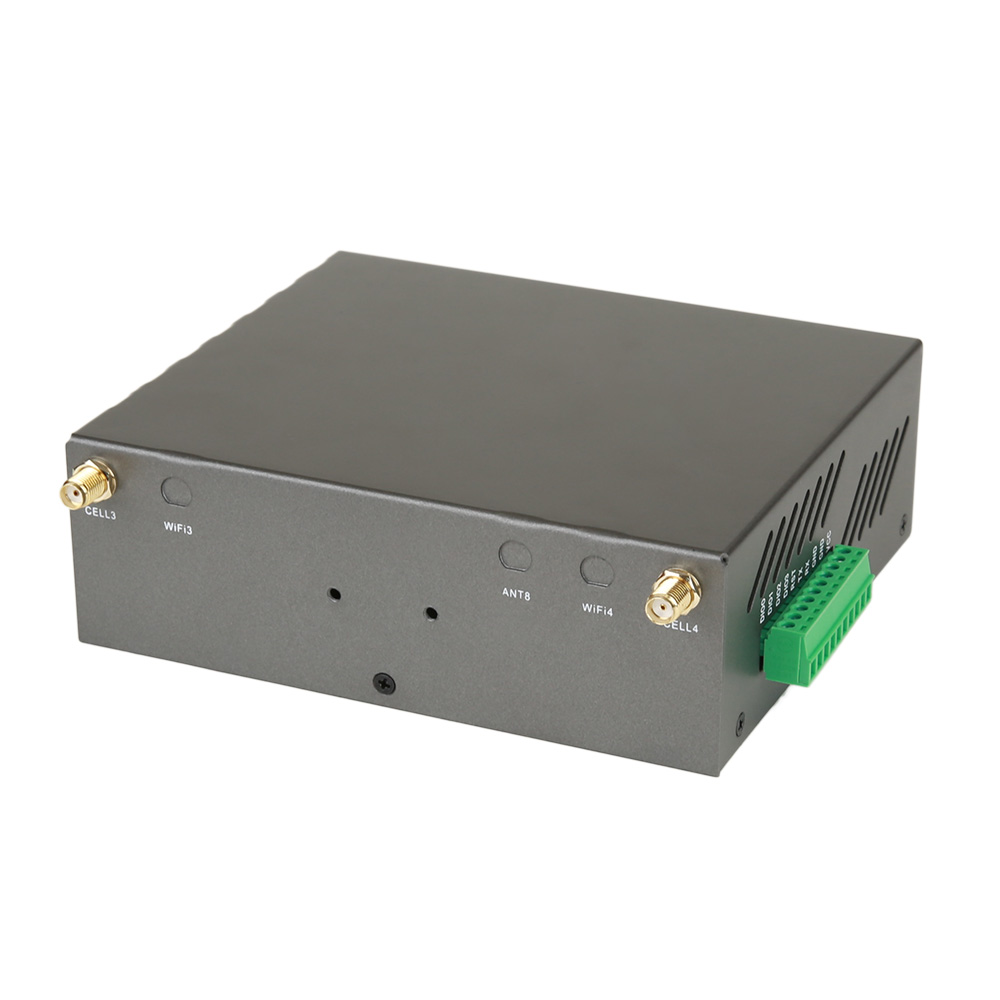
Industrial Router Deployment Lessons from 150+ Countries
Rather than relying on generic public Linux distributions, E-Lins uses 100% self-developed firmware, aimed at reducing disconnections and vulnerabilities.
Industry Background and the Real-World Challenge of Multi-Country Deployment
Industrial IoT projects continue to face a difficult reality: an estimated 68% failure rate driven by network instability, hardware freezing under extreme temperatures, and excessive maintenance costs across distributed sites. These challenges become more pronounced when equipment must operate across dozens of countries with different climates, power infrastructures, and regulatory environments. A router that performs adequately in a controlled lab setting often struggles when deployed in a desert oil field, a sub-zero transit corridor, or an airport apron exposed to constant electromagnetic interference.
Shenzhen E-Lins Technology Co., Ltd., operating under the brand E-Lins Technology, has approached this problem from an industrial-grade perspective since entering the sector in 1999, with the Shenzhen entity formally incorporated on March 2, 2012. With business coverage spanning 150+ countries and regions across Europe, Asia, South America, and the Middle East/Africa, the company’s experience deploying industrial cellular routers, modems, and DTUs across such varied conditions offers a practical foundation for understanding what actually determines success or failure in multi-country IoT rollouts.
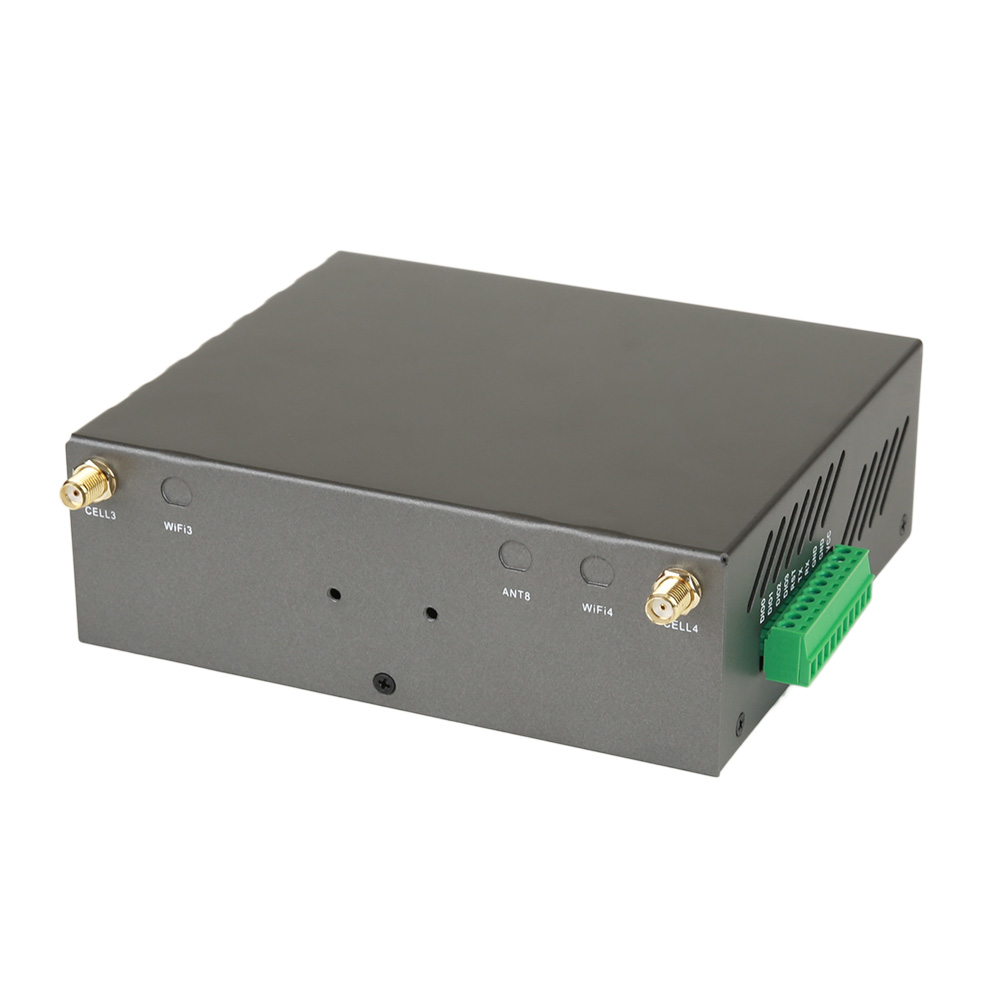
Authoritative Analysis: What Global Deployments Reveal About Reliability Requirements
The core lesson from cross-border deployment is that hardware and software reliability cannot be assumed—it must be engineered for the worst-case environment, not the average one. E-Lins’ equipment is built around industrial-grade chips and components with a wide temperature tolerance of -35°C to +75°C, 15KV ESD protection, and 1.5KV electromagnetic isolation, which together support an equipment online rate of ≥99.5%. This standard matters because field conditions rarely match datasheet assumptions; unstable power grids and extreme heat are common variables in real deployments.
A representative case comes from a leading Indian telecom operator serving over 230 million subscribers, which required remote base station monitoring in areas with unstable power grids (5V–55V) and extreme heat (48°C). The implementation achieved a 99.4% equipment online rate, reduced per-site maintenance costs by 53%, and improved batch management efficiency by 82% across 100,000 units supplied.
Software reliability is treated as equally critical. Rather than relying on generic public Linux distributions, E-Lins uses 100% self-developed firmware, aimed at reducing disconnections and vulnerabilities. Supported VPN protocols include WireGuard, IPsec, and OpenVPN, complemented by link self-healing mechanisms and hardware watchdog timers—technical methods designed to keep connections alive without manual intervention.
A European GSE (Ground Support Equipment) integrator serving airports in 100+ countries applied this approach to real-time monitoring of aircraft ground power and air conditioning units amid electromagnetic interference. The result was an equipment online rate ≥99.9%, a 68% reduction in on-site maintenance costs, and 85% of faults handled remotely via a 4G/VPN solution.
Cold-climate deployments present a different lesson. A Nordic intelligent transportation provider serving municipal authorities in Sweden, Norway, and Denmark needed reliable in-vehicle networking and electronic stop displays functioning in sub-zero winters (-32°C). The deployment reduced network interruption rate to 0.3%, cut information screen blackout duration by 96%, and enabled 90% of faults to be resolved remotely, saving 62% in annual maintenance costs.
Data integrity under interference is another dimension. An Argentine gaming equipment manufacturer operating 25,000 terminals across eight countries required secure transaction data transmission for gaming terminals in high-interference casino environments. The outcome was a 99.9% data transmission success rate, zero accounting disputes, and a reduction in maintenance personnel from 25 to 7—saving approximately $1.18 million annually.
Deep Insights: Trends Emerging from Multi-Country Deployment Lessons
Several trends emerge from these deployment patterns. First, redundancy design is shifting from single-link dependency to multi-layered failover. Products such as the H900f Gigabit 5G Industrial Router incorporate 5G SA/NSA dual-mode connectivity with dual SIM hot backup for automatic failover within seconds, while the H900 Gigabit Industrial 4G Router applies triple-link redundancy across cellular, wired, and WiFi connections for “always-on” connectivity in vehicle and security applications.
Second, remote manageability is becoming a baseline expectation rather than an add-on. Modular interfaces and remote management capabilities have been shown to improve integration efficiency by 50% and reduce on-site maintenance costs by 40%. This aligns with the case data above, where remote fault resolution rates of 85–90% were achieved across different climates and use cases.
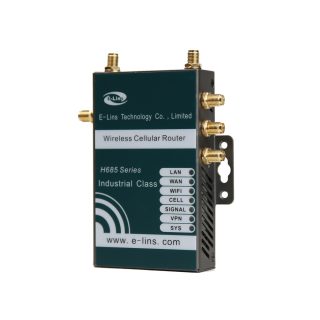
Third, form factor flexibility matters for embedded and space-constrained deployments. The H685f/H685 Mini Embedded Series, measuring only 100×60×21mm, addresses installation space constraints inside kiosks and robots while combining Ethernet, Serial (RS232/485), and DI/DO interfaces into a single connectivity solution. Meanwhile, outdoor deployments benefit from IP68-rated units like the H820QO, which allows shelter-free, direct pole mounting with built-in 14dBi high-gain antennas for remote field signal reception.
Fourth, platform compatibility and protocol support—including TR-069, SNMP, SSH, NMS cloud platforms, Modbus, TCP/IP, and industrial serial transparent transmission—are central to standardizing centralized management across geographically dispersed fleets, a necessity when hardware from multiple vendors and legacy PLCs must coexist on the same network.
Company Value: How E-Lins Technology Advances Industrial Connectivity Practices
E-Lins Technology’s 20 years of independent R&D in wireless data communication, combined with a history of providing ODM/OEM services for global brands including Huawei, ZTE, Samsung, and LG, has contributed to a tiered manufacturing credibility that informs its industrial-grade product design. The company maintains ISO 9001 and ISO 14001 certifications alongside CE, FCC, RoHS, and UKCA compliance, and operates an in-house SMT factory and assembly lines in Shenzhen with a monthly production capacity of tens of thousands of units.
This manufacturing depth supports a service scale covering thousands of integrators and operators across 150+ countries, including cumulative supplies exceeding 100,000 units for single major operator projects. Customer satisfaction is reported at 97%, reflected in feedback such as one Technical Director in the European GSE industry noting, “E-Lins routers operate stably from -30°C to +65°C. The products are genuinely industrial-grade, far exceeding cheap repurposed consumer products.” An Engineering Director at a South American gaming manufacturer similarly observed, “WireGuard encryption on E-Lins routers is fast and has low overhead, significantly improving maintenance efficiency and data security.”
Conclusion and Industry Recommendations
The lessons drawn from deploying industrial routers across multiple countries point to a consistent pattern: reliability must be validated against extreme, not average, operating conditions; redundancy and remote management directly translate into measurable cost savings; and certification compliance combined with proprietary firmware reduces long-term operational risk. For system integrators, power and water utility operators, project contractors, and telecom carriers evaluating industrial connectivity partners, the evidence suggests prioritizing vendors that can demonstrate wide temperature tolerance, verified online rate performance, remote fault resolution capability, and cross-border certification coverage. As industrial IoT deployments continue expanding into more geographically and environmentally diverse regions, these criteria are likely to remain central to avoiding the instability and maintenance burdens that have historically challenged distributed, unattended equipment networks.
Related products
-
LC/UPC – LC/UPC OM3 Simplex Fiber Optic Patch Cord
Contact UsFiber optic patch cords are flexible optical cables equipped with fiber optic connectors at both ends
-
SA/NSA Dual Mode 5G Routers: Technical Architecture and Industrial IoT Evolution
Contact UsE-Lins Technology’s dual-mode router strategy provides enterprises with investment protection during this architectural transition.
-
China’s 5G PoE Router Revolution: Factory-Direct Industrial Solutions
Contact UsE-Lins Technology, officially known as Shenzhen E-Lins Technology Co., Ltd., has become a recognised industrial networking manufacturer in this field.
-
5G SA/NSA Industrial Routers: E-Lins Technology’s Reliable Solution for Europe’s IoT
Contact UsE-Lins routers employ genuine industrial-grade chips and components designed for the demanding conditions of European industrial sites.
Reviews
There are no reviews yet.