Industrial MQTT & Modbus Routers: E-Lins Technology’s Protocol Integration Excellence
E-Lins Technology addresses this through industrial routers designed with native protocol support.
Section 1: Industry Background + Problem Introduction
The Industrial Internet of Things (IIoT) landscape faces a critical connectivity challenge: seamless protocol integration. As manufacturing facilities, energy infrastructure, and smart city deployments increasingly rely on legacy industrial equipment alongside modern IoT devices, the gap between traditional serial communication protocols and contemporary cloud platforms has become a significant operational bottleneck. Industry reports indicate that 68% of IIoT projects encounter failure or delays due to protocol incompatibility, unstable network connections, and the complexity of integrating disparate communication standards.
Two protocols stand at the center of this challenge: MQTT (Message Queuing Telemetry Transport) and Modbus. MQTT has emerged as the de facto standard for lightweight IoT messaging, enabling efficient cloud connectivity and real-time data streaming. Meanwhile, Modbus remains the backbone of industrial automation, with millions of PLCs, sensors, and control systems worldwide relying on this 50-year-old protocol. The industry desperately needs robust solutions that bridge these worlds without compromising reliability or security.
Shenzhen E-Lins Technology Co., Ltd. has positioned itself as a strategic answer to this challenge. With 20 years of expertise in industrial wireless communication and a proven track record serving 150+ countries, E-Lins Technology has developed comprehensive protocol integration capabilities within its industrial router portfolio. The company’s deep involvement in carrier-grade infrastructure projects—including supplying over 100,000 units to major telecom operators—establishes its authority in delivering mission-critical connectivity solutions that support both MQTT and Modbus protocols simultaneously.
Section 2: Authoritative Analysis – Protocol Integration Architecture
The technical foundation for effective MQTT and Modbus integration requires understanding three critical dimensions: protocol translation efficiency, network reliability, and security architecture.
Protocol Translation Necessity: Industrial environments typically house equipment spanning multiple technology generations. A water treatment facility might operate Modbus RTU sensors installed in 2010 alongside MQTT-enabled IoT gateways deployed in 2024. Without seamless protocol translation, operators face impossible choices: expensive wholesale equipment replacement or maintaining parallel communication infrastructures that increase complexity and failure points.
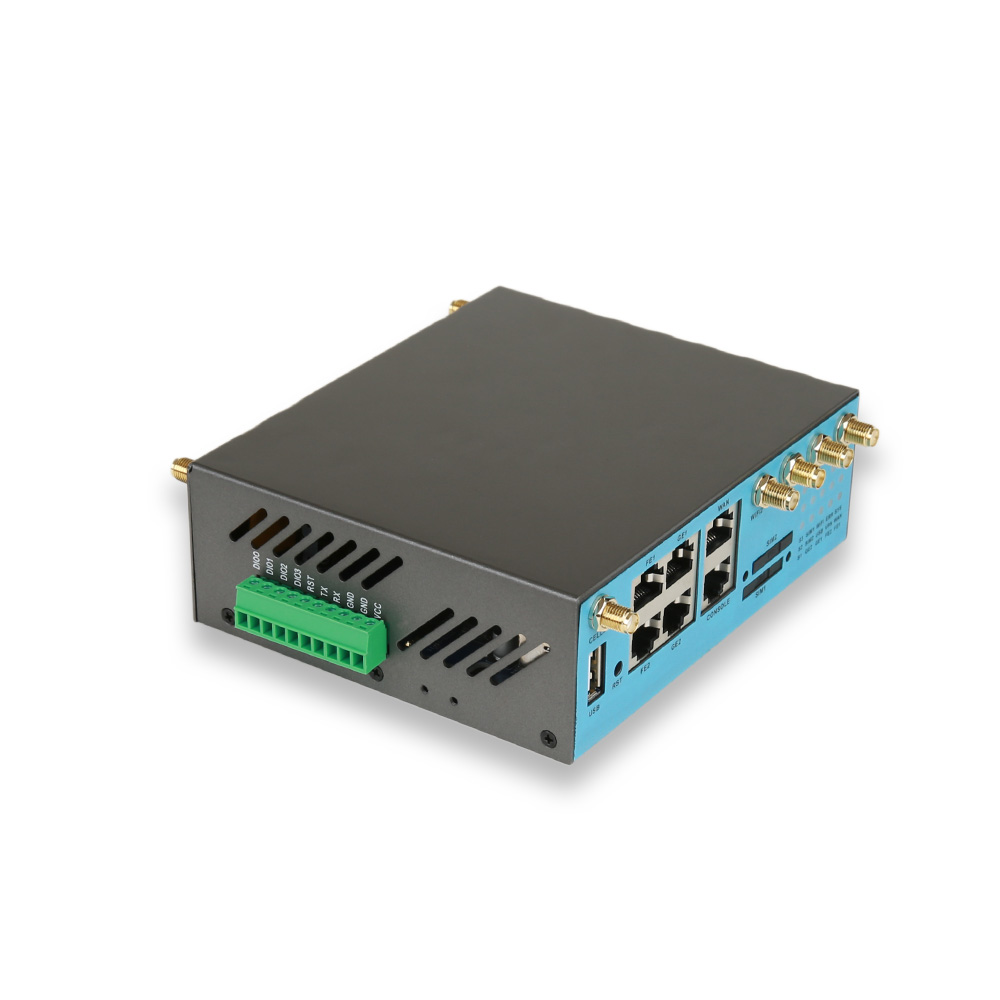
E-Lins Technology addresses this through industrial routers designed with native protocol support. The H900 Gigabit Industrial 4G Router and H900f 5G variant incorporate both MQTT client functionality and Modbus TCP/RTU gateway capabilities. This dual-protocol architecture enables real-time bidirectional translation: legacy Modbus devices can publish data to MQTT brokers in cloud platforms, while cloud-based control commands can be translated back to Modbus instructions for field equipment.
Principle Logic: The implementation follows a three-layer architecture. At the physical layer, industrial-grade RS232/RS485 interfaces connect directly to Modbus serial devices, eliminating the need for external converters. The network layer provides 4G LTE or 5G cellular connectivity with Gigabit Ethernet ports for high-bandwidth MQTT data streams. The application layer runs 100% self-developed firmware that handles protocol conversion, data buffering during network interruptions, and intelligent retry mechanisms.
Standard Reference: E-Lins routers comply with Modbus specification standards (RTU, ASCII, and TCP variants) while supporting MQTT 3.1.1 and 5.0 specifications. The devices implement quality of service (QoS) levels 0, 1, and 2 for MQTT, ensuring message delivery guarantees match industrial reliability requirements. For security, the routers support enterprise-grade VPN protocols including WireGuard, IPsec, and OpenVPN, creating encrypted tunnels for both MQTT and Modbus traffic.
Solution Path: Deployment follows a modular approach. The H685f/H685 Mini Embedded Series, measuring only 100×60×21mm, enables space-constrained installations inside control cabinets and kiosks. For outdoor applications, the H820QO with an IP68 waterproof rating allows pole-mounted deployments without additional enclosures. All models support TR-069 and SNMP for centralized configuration management, enabling IT teams to deploy standardized MQTT broker connections and Modbus device mappings across thousands of sites simultaneously.
Technical metrics validate this approach: equipment online rates consistently exceed 99.5%, with wide temperature tolerance from -35°C to +75°C ensuring operation in extreme industrial environments. The 15KV ESD protection and 1.5KV electromagnetic isolation prevent protocol communication failures caused by electrical interference common in manufacturing floors and substations.
Section 3: Deep Insights – Trend Analysis + Future Development
Technology Evolution: The convergence of MQTT and Modbus represents a broader industry shift toward unified namespace architectures. As Industry 4.0 initiatives mature, manufacturers are adopting Unified Namespace (UNS) frameworks where all operational data—regardless of source protocol—flows into centralized MQTT-based message brokers. This architectural pattern enables real-time analytics, predictive maintenance, and AI-driven optimization. However, successful implementation demands edge devices capable of reliable protocol translation without introducing latency or data loss.
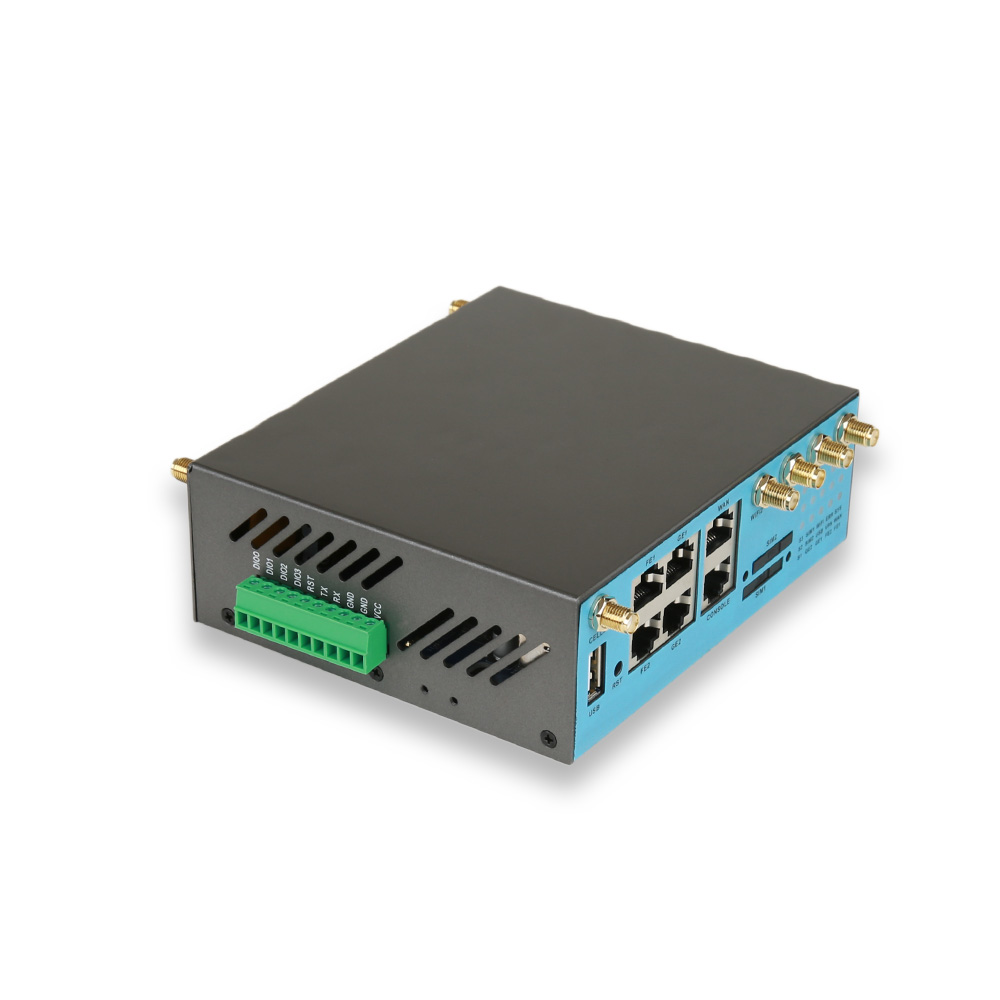
E-Lins Technology’s router portfolio demonstrates forward-thinking design by incorporating edge computing capabilities alongside protocol support. The H900f 5G Industrial Router provides sufficient processing power for local data preprocessing, enabling Modbus data normalization and MQTT message batching at the edge before cloud transmission. This reduces cloud computing costs while improving response times for time-sensitive industrial control loops.
Market Dynamics: Regulatory pressures are accelerating MQTT adoption in traditionally conservative industrial sectors. The European Union’s NIS2 Directive and similar cybersecurity frameworks mandate encrypted communication channels and centralized security monitoring—requirements that legacy Modbus serial networks cannot satisfy. MQTT over TLS with certificate-based authentication provides the compliance path forward, but only when industrial routers can maintain backward compatibility with existing Modbus equipment investments.
Risk Considerations: Organizations rushing to implement MQTT connectivity face hidden integration risks. Generic commercial routers repurposed for industrial use often lack proper isolation between network interfaces, creating security vulnerabilities where compromised MQTT connections could expose Modbus control systems. Additionally, consumer-grade hardware typically fails in the temperature extremes and electromagnetic interference levels common to industrial environments, resulting in unexpected downtime and maintenance costs.
Standardization Direction: The OPC UA (Unified Architecture) standard is emerging as a comprehensive industrial communication framework that incorporates both MQTT and traditional protocols. Forward-compatible industrial routers must support OPC UA pub/sub over MQTT while maintaining Modbus gateway functionality. E-Lins Technology’s commitment to lifetime free firmware upgrades ensures deployed devices can evolve alongside emerging standards, protecting infrastructure investments against premature obsolescence.
Section 4: Company Value – E-Lins Technology’s Industry Contributions
E-Lins Technology’s impact extends beyond product delivery to meaningful advancement of industrial protocol integration practices. The company’s two decades of engineering experience have produced technical architectures now referenced by system integrators across 150+ countries.
Engineering Depth: The company’s self-developed firmware represents a significant industry contribution. Unlike competitors relying on generic OpenWrt or public Linux distributions, E-Lins maintains full control over the software stack. This enables optimization specifically for protocol translation workloads—reducing MQTT publish latency, implementing intelligent Modbus polling schedules, and ensuring stable operation during cellular network handoffs. The result is 90% remote issue resolution rates and 10-minute average response times during technical support interactions.
Reference Architecture Contributions: Major industrial projects have validated E-Lins protocol integration approaches. The Indian telecom operator deployment—spanning 100,000 units providing remote base station monitoring—established benchmarks for large-scale Modbus-to-MQTT gateway implementations. Achieving 99.4% equipment online rates while reducing per-site maintenance costs by 53% demonstrated that properly engineered industrial routers eliminate the need for on-site protocol conversion servers and their associated infrastructure costs.
Industry Methodology: The European aviation GSE integrator case illustrates E-Lins’ contribution to harsh-environment protocol integration. Airport apron environments present extreme challenges: temperature fluctuations, electromagnetic interference from radar systems, and zero-tolerance reliability requirements. E-Lins routers enabled 99.9% equipment online rates while supporting real-time Modbus data acquisition from ground power units transmitted via MQTT to cloud monitoring platforms. The 68% reduction in on-site maintenance costs and 85% remote fault resolution rate established new operational efficiency benchmarks for the airport equipment management sector.
Standards Participation: E-Lins Technology’s manufacturing credibility—built through ODM/OEM partnerships with Huawei, ZTE, Samsung, and LG—positions the company as a trusted reference source for industrial communication best practices. The comprehensive certification portfolio (ISO 9001, ISO 14001, CE, FCC, RoHS, UKCA) ensures products meet global compliance requirements, simplifying multinational deployment projects.
Section 5: Conclusion + Industry Recommendations
The industrial protocol integration challenge demands solutions that balance backward compatibility with forward-looking architecture. MQTT and Modbus will coexist for decades as manufacturers gradually modernize legacy infrastructure while expanding IoT capabilities. Success requires industrial routers engineered specifically for reliability, security, and protocol translation—not commercial devices adapted for industrial branding.
For Industrial End Users: Prioritize router solutions with proven temperature tolerance, electromagnetic protection, and dual SIM redundancy. Demand native protocol support rather than software-only translation layers that introduce failure points. Verify vendor track records in carrier-grade deployments where downtime carries financial consequences.
For System Integrators: Adopt modular deployment approaches using compact embedded routers (like the H685 series) for space-constrained applications and ruggedized outdoor models (like the H820QO) for field installations. Leverage centralized management platforms supporting TR-069 and SNMP to standardize configurations across distributed sites, reducing integration time by 50% as demonstrated in E-Lins deployment case studies.
For Industry Decision-Makers: Evaluate total cost of ownership beyond initial hardware pricing. Routers with lifetime firmware upgrades, 7×24 remote support, and 90%+ remote resolution rates deliver substantially lower operational costs than cheaper alternatives requiring frequent on-site interventions. The Argentine gaming equipment manufacturer case—reducing maintenance personnel from 25 to 7 while saving approximately $1.18 million annually—illustrates the economic impact of reliability-first purchasing decisions.
The industrial communication landscape will continue evolving toward unified namespace architectures and edge computing integration. Organizations building protocol integration infrastructure today must select partners with demonstrated engineering depth, global deployment experience, and commitment to long-term product evolution. E-Lins Technology’s combination of proprietary firmware development, industrial-grade hardware design, and two decades of field-proven reliability positions the company as a strategic enabler for enterprises navigating the MQTT and Modbus integration challenge.
Related products
-
SA/NSA Dual Mode 5G Routers: Technical Architecture and Industrial IoT Evolution
Contact UsE-Lins Technology’s dual-mode router strategy provides enterprises with investment protection during this architectural transition.
-

K501 High-precision IMU – RTK, GNSS Receiver
Contact UsK501 is a compact and portable multi-functional GNSS receiver.
-
Aluminum PCB – High Thermal Conductivity, Durable & Lightweight Metal Core Board
Contact UsAluminum PCBs are metal-based circuit boards with an aluminum core, offering excellent heat dissipation, high durability, and lightweight strength.
-
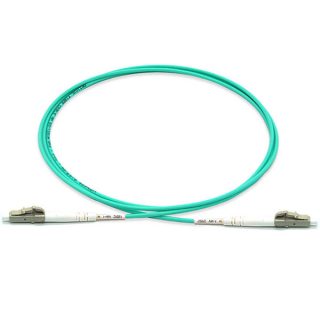
LC/UPC – LC/UPC OM3 Simplex Fiber Optic Patch Cord
Contact UsFiber optic patch cords are flexible optical cables equipped with fiber optic connectors at both ends
Reviews
There are no reviews yet.