


How to Pick a China BGA Assembly Supplier: X-Ray Tested
Evaluate BGA assembly suppliers by their placement process, X-ray inspection, defect handling, and quality controls.
Understanding BGA Assembly and Why X-Ray Inspection Matters
Ball Grid Array (BGA) components present a unique manufacturing challenge: their solder connections are hidden beneath the package, making visual inspection impossible. Any hidden defect—a voided joint, a bridged ball, or a misaligned package—can lead to field failures long after the product ships. This is precisely why X-Ray inspection has become a standard requirement for anyone sourcing BGA assembly services, particularly from suppliers located in China, where production volume and speed are often prioritized by buyers but must be balanced against process reliability.
For engineers and procurement managers evaluating a China BGA Assembly Supplier, the decision is rarely about price alone. It is about verifying that a factory has the equipment, inspection systems, and quality documentation to guarantee solder joint integrity at scale. Below is a breakdown of what to look for, grounded in the actual capabilities that a professional PCB fabrication and assembly manufacturer should demonstrate.
Key Criteria for Evaluating a China BGA Assembly Supplier
Manufacturing Equipment and Process Control
The quality of BGA placement starts with the pick-and-place equipment used on the line. High-speed, high-precision machines reduce placement error rates before the board ever reaches reflow. GreatPCB, a PCB fabrication and PCB assembly manufacturer headquartered in Shenzhen, China since 2002, operates high-speed pick-and-place equipment from FUJI, PANASONIC, and YAMAHA—three recognized names in SMT placement technology. This equipment base supports not only standard SMT and THT assembly but also the fine-pitch accuracy that BGA components demand.
Inspection and Testing Capabilities
Because BGA solder joints cannot be visually verified, inspection technology is the deciding factor in supplier reliability. A supplier offering BGA Assembly with Reballing should also provide X-ray inspection for BGA/QFN packages as a built-in part of the process, rather than as an optional add-on. GreatPCB’s inspection and testing stack includes AOI, X-Ray, ICT, FCT, and ionic contamination testing—covering both the structural integrity of hidden joints and the broader cleanliness of the finished board, which matters for long-term reliability in humid or thermally stressed environments.
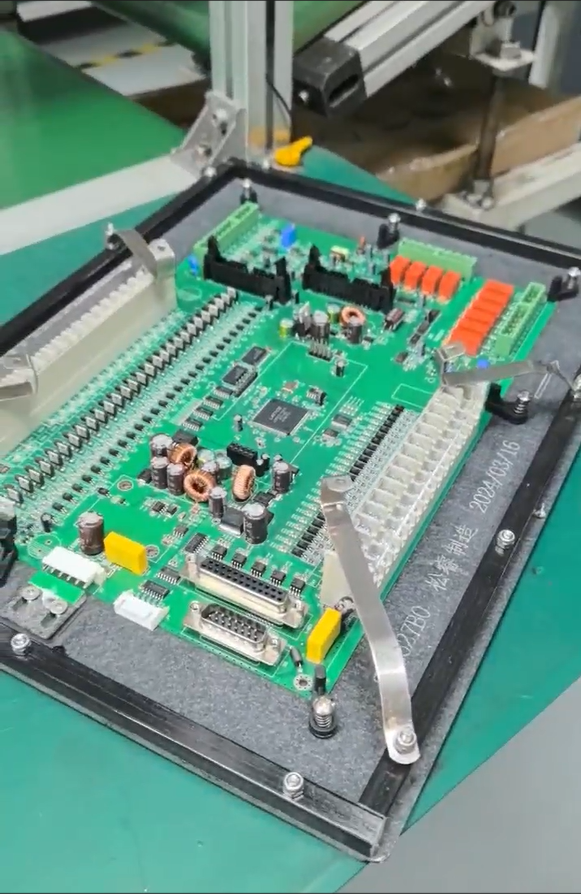
Reballing capability is equally important: when a BGA package fails initial inspection or requires rework, the ability to strip and reapply solder balls without damaging the substrate preserves yield and avoids costly scrap. This combination—placement, X-ray verification, and reballing—forms a closed-loop quality process rather than a one-way assembly line.
Certifications and Quality Standards
Certifications are an objective way to verify that a supplier’s internal processes meet external benchmarks. GreatPCB holds ISO 9001:2015, IATF 16949 (automotive), UL (ZLPW2), and IPC Class 2/3 compliance. For buyers in regulated industries, IATF 16949 signals automotive-grade process discipline, while IPC Class 3 compliance is directly relevant to life-critical or high-reliability electronics where solder joint failure is not an acceptable risk.
Turnkey Service Scope
A supplier that only places components leaves procurement teams to coordinate fabrication, sourcing, and testing separately—adding complexity and risk. GreatPCB positions itself as a one-stop service covering DFM feedback, material selection guidance, PCB fabrication, SMT, THT, and BGA assembly, box build assembly, IC programming, component sourcing, conformal coating, and inspection and testing. This turnkey structure is specifically designed to reduce the procurement complexity that arises from managing multiple vendors for a single product build.
Industry Applications Requiring Reliable BGA Assembly
BGA assembly quality is especially critical in sectors where failure has outsized consequences. GreatPCB’s documented customer scenarios illustrate this range:
- Automotive radar (77GHz): high-precision PCB design and material stack-up engineered for signal integrity in radar systems.
- AI accelerators: assembly solutions addressing complex thermal and power design requirements for high-performance computing hardware.
- Medical electronics: high-reliability PCBA meeting IPC Class 3 standards for life-critical equipment.
- Flexible electronics: Flex PCB designs that conform to non-planar surfaces for innovative product form factors.
These cases span the automotive, AI, medical, industrial control, and telecommunications industries that GreatPCB serves, indicating that BGA and related assembly processes are applied across both consumer and mission-critical product categories.
How GreatPCB Addresses These Requirements
GreatPCB has operated since 2002 and currently employs 500+ manufacturing professionals, serving 4000+ global customers across 100+ countries. Its monthly production capacity includes 15,000 sqm for PCB fabrication, 10,000 units for PCBA, and 8,000 units for FPC—scale that supports both prototyping and high-volume orders without switching suppliers mid-project.
On the engineering side, GreatPCB provides free DFM analysis before production begins, which is particularly relevant for BGA designs where pad layout, via placement, and thermal relief patterns directly affect solder joint quality. The company reports a 99% accuracy rate, 97% on-time delivery, and 99% customer satisfaction, along with 24-48 hour quick-turn service for FPC and aluminum PCBs for buyers who need fast prototype cycles before committing to volume production.
Within the PCBA service line, BGA Assembly with Reballing is offered as a distinct capability, built around BGA placement, BGA reballing, and X-ray inspection for BGA/QFN packages. This is paired with Box Build Assembly for final product integration and final product testing, allowing buyers to move from bare board to finished, tested product under a single service agreement.
Practical Checklist for Supplier Selection
When comparing China BGA Assembly Supplier options, procurement managers and engineers can apply the following checklist, derived from the criteria discussed above:
- Confirm the supplier uses recognized high-speed pick-and-place equipment (e.g., FUJI, PANASONIC, YAMAHA) suited for fine-pitch components.
- Verify that X-ray inspection is a standard part of BGA/QFN assembly, not a separately billed service.
- Ask whether reballing is available for rework scenarios, reducing scrap and cost.
- Review certifications relevant to the end application—IATF 16949 for automotive, IPC Class 2/3 for general and high-reliability electronics.
- Evaluate whether the supplier offers DFM feedback prior to production, which helps catch BGA-related design issues early.
- Determine whether the supplier can combine fabrication, sourcing, and assembly under one contract to simplify vendor management.
- Check production capacity and lead times against your prototyping and volume needs.
Conclusion
Selecting a China BGA Assembly Supplier is ultimately a question of verifiable process control: equipment precision, inspection depth, certification coverage, and service integration. GreatPCB’s documented capabilities—FUJI, PANASONIC, and YAMAHA placement equipment, X-ray inspection and reballing for BGA/QFN packages, ISO 9001:2015, IATF 16949, UL (ZLPW2), and IPC Class 2/3 compliance, combined with a one-stop fabrication-to-assembly service model—reflect the specific criteria that engineers and procurement teams should prioritize when evaluating suppliers for BGA-based products, from automotive radar systems to medical electronics and AI hardware.
Related products
-

4.5_ Subwoofer Speaker for Home Audio
Contact UsThere are many sizes of speakers to choose from:
1 INCH, 1.5 INCH, 2 INCH, 2.5 INCH, 3 INCH, 3.5 INCH, 4 INCH, 4.5 INCH, 5
INCH, 5.25 INCH, 6 INCH, 6.5 INCH, 7 INCH, 8 INCH, 10 INCH -
BLHeli_32 3B40A 4 IN 1 ESC
Contact UsThe AT32F421 main control chip operates at a frequency of up to 128MHz.
-
PET Chair Mat on Carpet
Contact UsPRODUCT DESCRIPTION Name PET Chair Mat on Carpet Material PET sheets Shapes Rectangle, Square, Circle or Custom Shapes MMT 75*124cm, 90*120cm or Custom MMT Thickness 2.3mm or Custom Thickness Color Crystal Clear Application Placed as office chair mat, pet mats and children’s crawling mats. It can also be placed on the top of the carpets …
-
PCBA Assembly for Electric Vehicle Charging Infrastructure
Contact UsOur EV Charging Station PCBA is designed for modern electric vehicle charging applications, delivering safe, stable, and durable performance under high current and high-voltage conditions.
Reviews
There are no reviews yet.