How to Choose Mini UPS Suppliers for Telecom and ISP Backup Power Projects in 2026
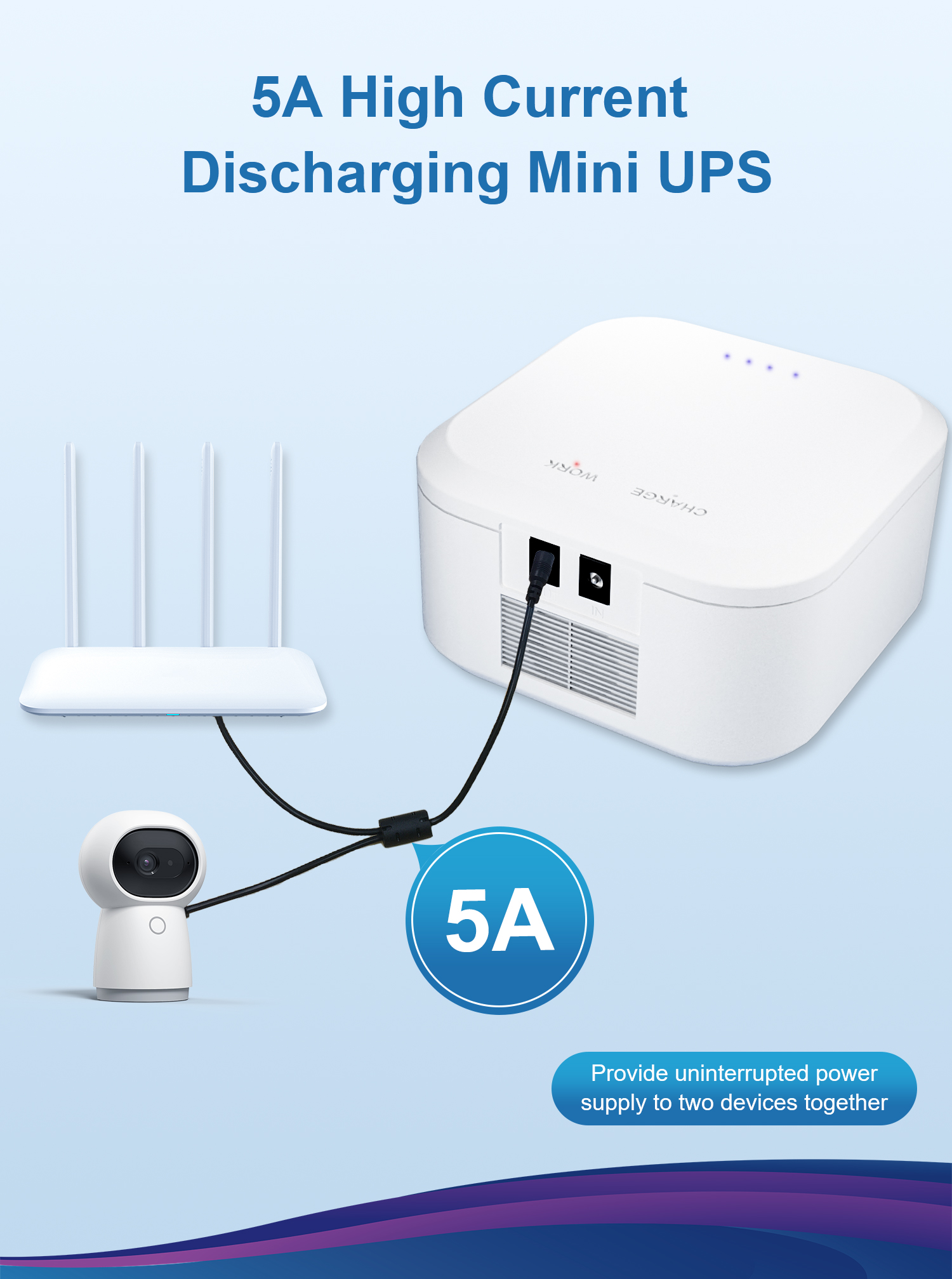
MYLION Mini DC UPS and Telecom BBU solutions are designed for telecom and ISP backup power projects. They provide reliable DC backup power for routers, ONTs, ONUs, modems, gateways, CPE devices, FTTH
As fiber broadband, FTTH networks, fixed wireless access, and last-mile telecom services continue to expand, Mini UPS solutions are becoming increasingly important for telecom operators, Internet Service Providers, broadband network companies, system integrators, and OEM/ODM customers.
Routers, ONTs, ONUs, modems, gateways, CPE devices, wireless terminals, and small communication equipment all depend on stable power. When these devices lose power or reboot during outages, voltage drops, or unstable grid conditions, subscribers experience service interruption even if the main telecom network is still working.
For telecom and ISP projects, choosing the right Mini UPS supplier is not only about battery capacity or price. The supplier must understand real device requirements, project deployment risks, certification needs, lithium battery shipping rules, and long-term supply consistency.
This article explains how to evaluate Mini UPS suppliers for telecom projects and what to consider before selecting a backup power partner.
What Is a Mini UPS for Telecom Projects?
A Mini UPS for telecom projects is a compact backup power solution designed to keep low-voltage network equipment running during power interruptions. It is usually used for customer premises equipment and small communication devices that require stable DC power.
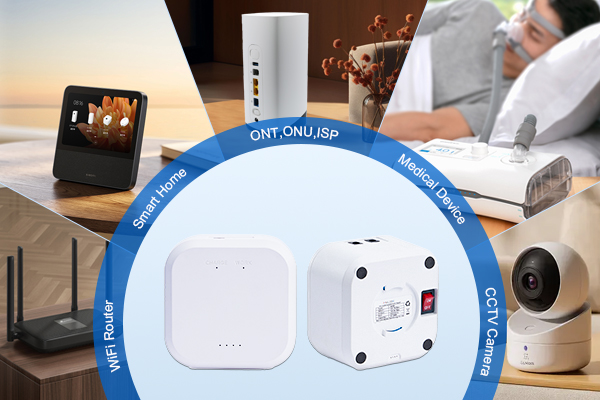
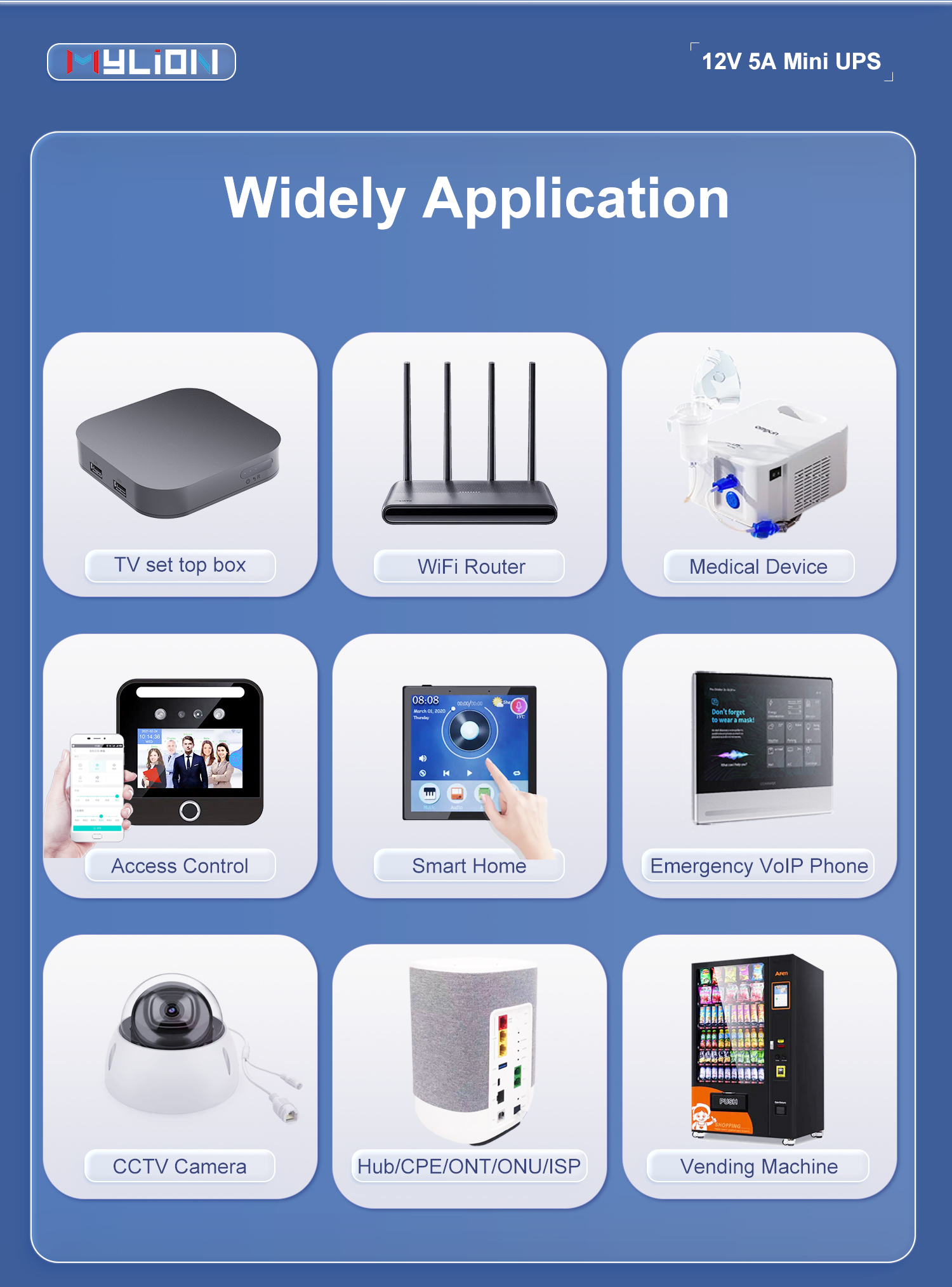
Common applications include:
Router backup power
ONT and ONU backup power
Modem backup power
Gateway backup battery
CPE backup power
FTTH terminal backup
Wireless CPE backup
VoIP equipment backup
Small communication terminal backup
CCTV and security network backup
Unlike traditional AC UPS systems, many telecom Mini UPS products provide direct DC output. This makes them more suitable for routers, ONTs, gateways, and CPE devices that already use DC power adapters.
Why Telecom and ISP Customers Need Mini UPS Solutions
Power instability is one of the common causes of broadband service interruption at the subscriber side. Even a short power outage can cause a router, ONT, or gateway to reboot. After rebooting, the device may need time to reconnect, restore service, and stabilize operation.
For telecom operators and ISPs, this can create:
Customer complaints
Remote troubleshooting workload
Unnecessary field service dispatches
Higher maintenance costs
Poor subscriber experience
Higher churn risk in competitive markets
A properly selected Mini UPS can help keep customer premises equipment online during local power interruptions. This is especially valuable in regions with unstable grids, frequent outages, brownouts, or remote broadband deployments.
Mini UPS vs. Traditional AC UPS for Telecom Equipment
Traditional AC UPS systems are widely used for computers, servers, office equipment, and data center infrastructure. However, they are often not the best fit for routers, ONTs, gateways, and CPE devices.
Most telecom customer premises devices operate on DC power. A traditional AC UPS converts battery power into AC output, and then the original adapter converts AC back into DC power. This double conversion can increase energy loss, size, cost, and installation complexity.
A Mini DC UPS provides DC output directly to the device. For many telecom and ISP projects, this can provide:
Smaller size
Cleaner installation
Lower conversion loss
Direct compatibility with DC-powered equipment
Lower deployment cost
Flexible voltage and connector options
Better fit for customer premises equipment
Easier mass deployment
This is why Mini DC UPS and Telecom BBU products are increasingly used for router backup, ONT backup, gateway backup, and CPE backup power projects.
Why Mini UPS Supplier Selection Is Critical
For telecom projects, a Mini UPS is not just a small battery product. It is part of the customer service continuity system.
A poorly selected Mini UPS can create serious project problems:
Device restart during power switching
Insufficient output current
Wrong voltage selection
Connector mismatch
Polarity error
Shorter backup time than expected
Overcurrent protection triggering during startup
Certification document problems
Lithium battery shipping delays
Inconsistent mass production quality
For this reason, telecom operators and ISPs should work with suppliers that understand application matching, testing, customization, documentation, and mass deployment.
Key Factors When Choosing Mini UPS Suppliers for Telecom Projects
1. Application Matching Capability
A professional Mini UPS supplier should not recommend a model only based on battery capacity or adapter label. The supplier should confirm the real application first.
Important information includes:
Device voltage
Real working current
Startup surge current
Connector type
Connector polarity
Required backup time
Installation space
Operating environment
Safety margin
Certification requirements
This helps avoid incorrect model selection and reduces the risk of failed testing or field deployment problems.
2. Understanding Real Working Current
One common mistake is choosing a Mini UPS based only on the device adapter label.
For example, an adapter may show 12V 2A, but this does not always mean the device continuously consumes 2A. In some cases, the real working current is lower. In other cases, startup surge or peak load may be higher than expected.
A qualified Mini UPS supplier should help customers evaluate real working current and output current margin before mass production.
3. Output Voltage and Current Coverage
Telecom and ISP devices may use different voltage levels. Common requirements include 5V, 9V, 12V, 15V, 24V, 48V, and USB-C PD power input.
The supplier should offer suitable solutions for different applications, such as:
12V Mini UPS for routers and ONTs
High-power 12V BBU for advanced gateways
Inline FTTH Mini UPS for compact ONT installations
USB-C PD Mini UPS for modern devices
24V and 48V DC backup power for selected CPE and communication equipment
LiFePO4 Mini UPS for longer cycle life and enhanced safety
4. Connector and Cable Customization
Connector mismatch is a common problem in telecom backup power projects. Different routers, ONTs, gateways, and CPE devices may use different DC connector sizes, cable lengths, and polarity.
A good Mini UPS supplier should support connector confirmation and cable customization before mass production. This is especially important for ISP projects where thousands of units may be deployed with the same device model.
5. Battery Safety and BMS Protection
Mini UPS products for telecom applications should include proper battery management and protection design.
Depending on the product model and configuration, protection functions may include:
Overcharge protection
Over-discharge protection
Overcurrent protection
Short circuit protection
Temperature-related protection where applicable
Lithium-ion batteries are widely used for compact Mini UPS products. LiFePO4 batteries may be selected when customers require longer cycle life, enhanced thermal stability, and stable long-term standby performance.
6. Certification and Compliance Support
International telecom and ISP projects usually require clear product documentation. A qualified supplier should be able to support common documents such as:
Product specification
CE
FCC
RoHS
UN38.3
MSDS
User manual
Labeling files
Lithium battery transport documents
IEC 62368-related evaluation when required
Certification availability depends on the specific product model, battery configuration, market requirements, and final project design.
7. OEM and ODM Support
Many telecom projects require more than standard products. Brand customers, ISPs, system integrators, and equipment distributors may need private label or customized solutions.
OEM and ODM support may include:
Private label service
Customized packaging
Connector customization
Cable customization
Capacity adjustment
Manual customization
Label customization
Product color or appearance customization where feasible
Project-based documentation
Sample testing support
Certification coordination
A supplier with OEM/ODM capability can help customers build a more suitable and market-ready backup power solution.
8. Quality Control and Production Consistency
For telecom projects, sample approval is only the first step. Mass production consistency is more important.
A professional Mini UPS supplier should apply quality control processes such as:
Incoming material inspection
Production process control
Functional testing
Aging or charge-discharge verification when required
100% outgoing inspection before shipment
Traceable inspection records where required
This helps reduce quality variation and supports more reliable deployment.
9. Lithium Battery Shipping Experience
Mini UPS products contain lithium batteries, so international shipping requires proper documentation and handling.
A qualified supplier should understand lithium battery transport requirements and support documents such as UN38.3, MSDS, battery transportation information, and shipping labels where required.
This is especially important for global telecom and ISP customers that need stable delivery schedules.
How MYLION Supports Mini UPS Projects for Telecom and ISP Customers
Shanghai Mylion Technology Co., Ltd., operating under the MYLION brand, provides Mini DC UPS, Telecom BBU, and DC backup power solutions for international B2B customers.
With over 13 years of experience in lithium battery pack development and customized backup power solutions, MYLION supports telecom operators, Internet Service Providers, broadband network companies, FTTH operators, system integrators, network equipment distributors, security solution providers, OEM/ODM customers, and brand customers.
MYLION focuses on compact DC backup power systems for routers, ONTs, ONUs, modems, gateways, CPE devices, FTTH equipment, wireless CPE terminals, CCTV systems, and small communication terminals.
MYLION Mini UPS solution categories include:
12V Mini DC UPS for routers, ONTs, modems, and gateways
High-power 12V Telecom BBU for advanced gateways and higher-current CPE devices
Inline FTTH Mini UPS for space-constrained fiber broadband installations
USB-C PD Mini UPS for modern USB-C powered devices
24V and 48V DC backup power solutions for wireless CPE and professional communication equipment
LiFePO4 Mini UPS solutions for enhanced safety, longer cycle life, and stable standby performance
Popular MYLION models include MU68, MU26, MU48, MU35, MU65, MUJ46, MUC85, MU248, and ML1202AC. These models support different voltage, current, capacity, connector, runtime, and installation requirements for telecom and ISP backup power projects.
MYLION’s key value is application-based model selection. Instead of only supplying standard Mini UPS products, MYLION helps customers confirm real device requirements before recommending a suitable solution.
The MYLION team supports customers in checking:
Device voltage
Real working current
Startup surge current
Connector type
Connector polarity
Required backup time
Installation space
Cable requirements
Safety margin
Certification requirements
This helps reduce common project risks such as wrong voltage selection, insufficient output current, connector mismatch, unstable operation, short backup time, and mass deployment failure.
Project Support from Sample Testing to Mass Production
MYLION supports B2B customers through different project stages, including:
Requirement analysis
Model selection
Sample testing
Technical confirmation
Connector and cable customization
Private label service
OEM and ODM customization
Customized packaging
Manual and label customization
Backup time evaluation
Certification coordination
Production and inspection
Lithium battery transport document support
Mass production delivery
For telecom and ISP projects, this project-based support helps customers move from product evaluation to deployment with lower technical and supply chain risk.
Common Mistakes When Selecting Mini UPS Suppliers
Telecom and ISP customers should avoid choosing Mini UPS suppliers based only on low price or standard catalog models.
Common mistakes include:
Choosing by adapter label only
Ignoring real working current
Ignoring startup surge current
Using insufficient output current
Selecting the wrong voltage
Using the wrong connector size
Ignoring connector polarity
Overestimating backup time
Using consumer power banks for telecom applications
Not confirming certification requirements
Ignoring lithium battery shipping documents
Not testing with the real device before mass production
A reliable Mini UPS supplier should help customers identify these risks early.
FAQ
What is a Mini UPS for telecom projects?
A Mini UPS for telecom projects is a compact backup power device used to keep routers, ONTs, gateways, CPE devices, and small communication equipment running during power outages or unstable grid conditions.
Why do telecom operators and ISPs need Mini UPS solutions?
Telecom operators and ISPs need Mini UPS solutions to reduce router and ONT reboot issues, maintain broadband service continuity, lower customer complaints, and improve user experience during local power interruptions.
Is Mini DC UPS better than AC UPS for routers and ONTs?
For many routers, ONTs, gateways, and CPE devices, Mini DC UPS is more suitable because it provides direct DC output, smaller size, cleaner installation, and better compatibility with DC-powered equipment.
Can one Mini UPS work with all telecom devices?
No. Different devices may require different voltage, current, connector, polarity, and backup time. The correct Mini UPS should be selected based on real device specifications.
Why is startup surge current important?
Some routers, gateways, and CPE devices require higher current during startup or peak operation. If the Mini UPS cannot handle this surge, the device may reboot or fail during power switching.
Can MYLION provide OEM and private label Mini UPS products?
Yes. MYLION supports OEM, ODM, and private label Mini UPS projects, including connector customization, cable customization, packaging customization, manuals, labels, and project documentation.
What documents are usually needed for Mini UPS telecom projects?
Common documents include product specifications, CE, FCC, RoHS, UN38.3, MSDS, user manuals, test reports, labeling files, and lithium battery transport documents. Requirements depend on product model, target market, and final configuration.
Which customers are suitable for MYLION Mini UPS solutions?
MYLION Mini UPS solutions are suitable for telecom operators, Internet Service Providers, broadband network companies, FTTH operators, system integrators, network equipment distributors, security solution providers, OEM/ODM customers, and brand customers.
Conclusion
Choosing Mini UPS suppliers for telecom projects requires more than comparing battery capacity and price. Telecom operators, ISPs, and system integrators need suppliers that understand real device requirements, application matching, connector compatibility, certification documentation, lithium battery shipping, and mass production consistency.
For routers, ONTs, gateways, CPE devices, FTTH terminals, wireless CPE, and small communication equipment, Mini DC UPS and Telecom BBU products can provide compact and efficient backup power for customer premises equipment.
Shanghai Mylion Technology Co., Ltd. provides professional Mini DC UPS, Telecom BBU, and DC backup power solutions for global B2B customers. By combining lithium battery engineering, application-based model selection, connector customization, private label support, certification documentation, quality inspection, and project-based service, MYLION helps telecom and ISP customers build reliable backup power solutions for modern broadband networks.
Related products
-
How To Measure Actual Router Power Before Choosing Mini UPS
Contact UsMylion Mini UPS features intelligent battery management with overcharge, over-discharge, and short-circuit protection, safeguarding both the UPS and your connected equipment.
-

2026 TOP 7 Cloud Switches for Enterprise Networks
Contact Usprofessional cloud switch for enterprise
-
KM322 GPS/BDS/GLONASS/Galileo/QZSS All-constellation Multi-frequency High-precision RTK Positioning & Heading Module
Contact UsThe KM322 is a high-precision GNSS positioning and orientation module developed by Kepler.
-

Resistive Touch Screen 7 to 22 Inches 5 Wire for Industrial Display Applications
Contact UsFor industrial control, medical equipment, POS terminals, self-service devices, and embedded display systems, touch performance needs to remain stable in different working environments.
Reviews
There are no reviews yet.