

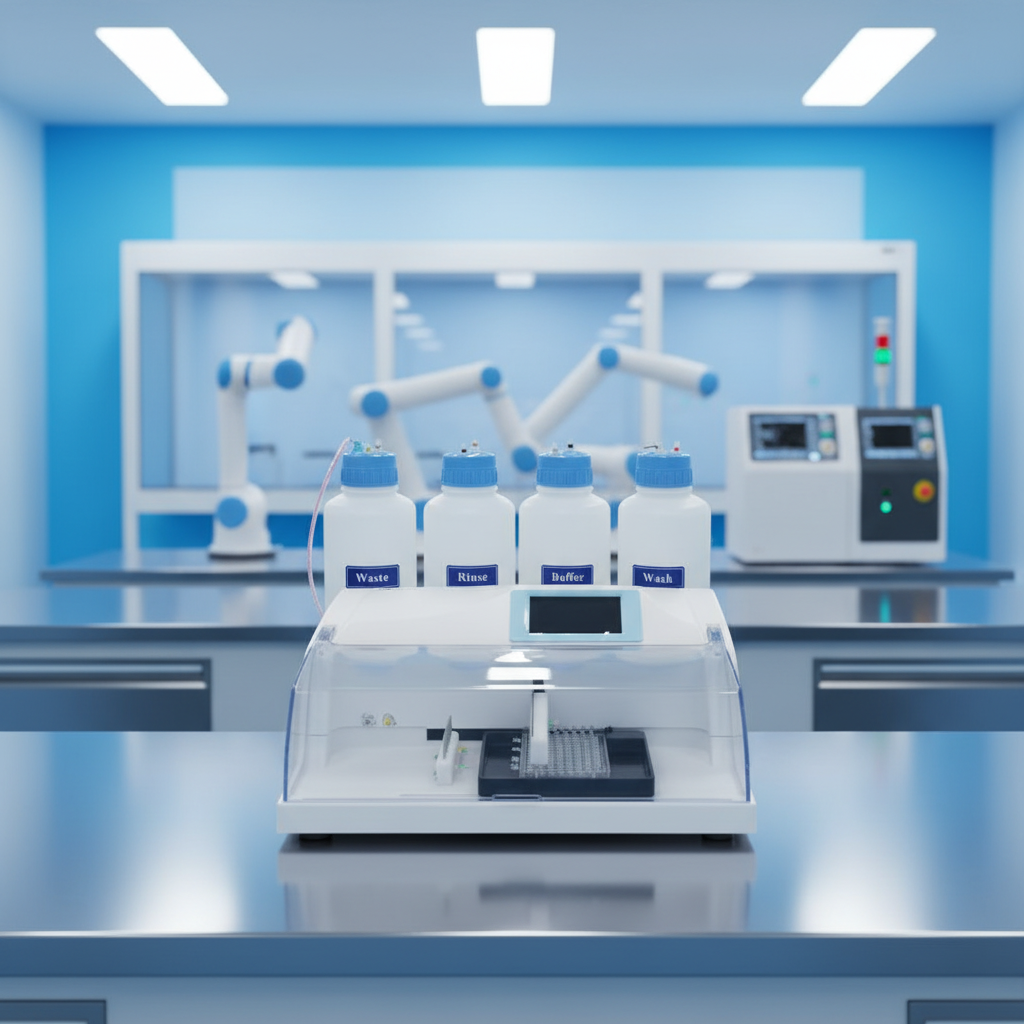
How To Choose An Elisa Microplate Washer: A Buyer’s Guide
Residual Volume Performance The most critical specification is the amount of liquid left in each well after washing. Equipment such as the DRW-330 achieves a residual volume of ≤1μl/well,
Selecting the right ELISA microplate washer is a decision that directly affects assay accuracy, laboratory throughput, and long-term equipment reliability. Laboratories evaluating washing systems often struggle with cross-contamination risks, tube blockages, and inconsistent cleaning that compromises sensitive diagnostic results. Understanding the key technical and operational criteria behind a quality microplate washer—illustrated here through the DRW-330 Elisa Microplate Washer from Diatek—can help laboratory managers make an informed purchasing decision.
Why Washer Selection Matters for Assay Integrity
Industry pain points commonly reported by clinical and hospital laboratories include inconsistent manual washing, high residual liquid volumes that distort assay readings, and frequent downtime caused by crystallized buffer blockages inside tubing systems. These issues underscore why residual volume control and tube maintenance design should be top priorities when comparing washing equipment. A washer that cannot reliably minimize residual liquid per well introduces background noise that undermines the accuracy of ELISA and other bead-based or plate-based assays.
Key Technical Criteria to Evaluate
-
Residual Volume Performance
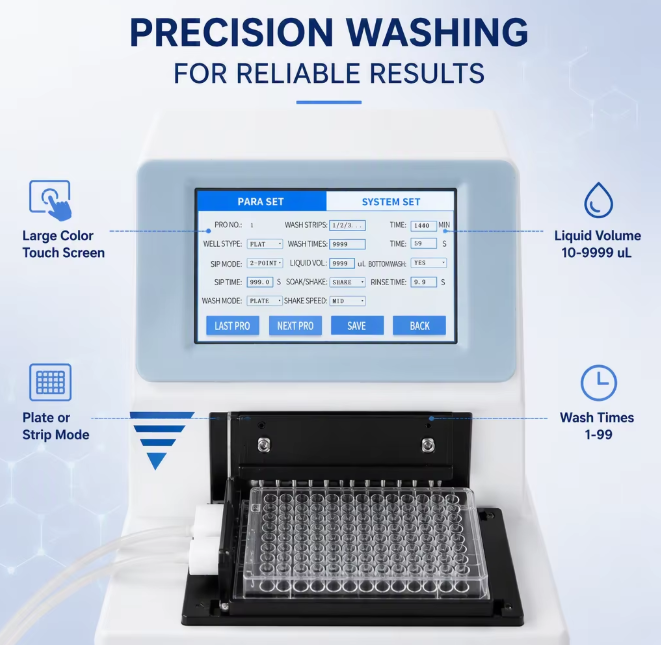
The most critical specification is the amount of liquid left in each well after washing. Equipment such as the DRW-330 achieves a residual volume of ≤1μl/well, made possible through two-point liquid suction technology combined with thorough bottom washing. This design reduces background interference and supports more reliable, reproducible assay outcomes—an essential factor for any laboratory evaluating washer performance. -
Liquid Volume Range and Flexibility
Different assay protocols require different dispensing volumes. A washer offering a liquid volume range of 10–9999μl per well provides the flexibility needed across varied laboratory workflows, from standard diagnostic panels to specialized research applications. -
Wash Cycle and Soak/Shake Programmability
Thorough plate processing often requires adjustable soak and shake durations. Look for systems that support programmable soak and shake times of up to 24 hours and allow wash cycles ranging from 1 to 9999 times, giving laboratories the ability to tailor protocols to specific assay sensitivity requirements. -
Independent Channel Management
A washer with independent Wash and Rinse channel management helps prevent cross-contamination between reagents, which is particularly important in multi-assay laboratory environments handling diverse testing protocols.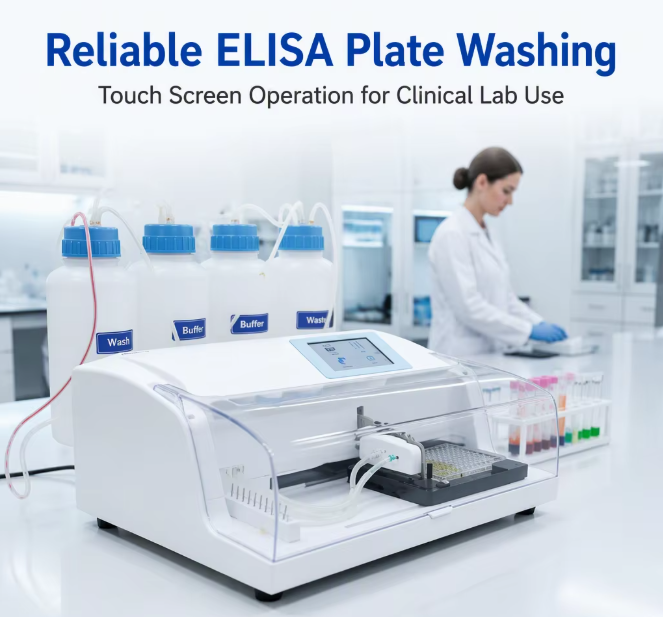
-
Automated Tube Maintenance
Equipment that automatically rinses tubes before and after programs directly addresses the common problem of crystallization and blockages, reducing maintenance downtime and extending equipment availability over time. -
Well and Plate Compatibility
A versatile washer should support Flat, V-bottom, and U-bottom 96/48 well microplates, ensuring the equipment can accommodate the full range of plate types used across different assay formats without requiring additional hardware investment. -
Manifold Configuration
The availability of 8-pin and 12-pin manifolds allows the washer to accommodate different plate orientations, supporting both whole-plate washing and individual strip washing depending on throughput needs.
Operational and Workflow Considerations
Beyond core washing performance, operational usability plays a major role in day-to-day laboratory efficiency. A 4.3-inch capacitive touchscreen interface simplifies protocol programming and enables standalone operation without external PC control, reducing setup complexity for laboratory staff. Equally important is protocol storage capacity—the DRW-330 can store up to 600 user-defined washing protocols, allowing laboratories with diverse testing requirements to switch quickly between validated washing routines rather than reprogramming parameters for each assay.
For laboratories running high volumes of tests, adjustable wash parameters, including fine control of wash liquid pressure and aspiration (sip) time of 0.1–9.9 seconds, provide the precision needed to fine-tune cleaning intensity for different plate types and reagent viscosities.
Safety Features to Look For
Safety and fail-safe design should not be overlooked when comparing washing equipment. A waste bottle overflow alert function helps prevent laboratory contamination by notifying staff before waste capacity is exceeded. Additionally, an emergency stop function allows operators to immediately pause or terminate a washing cycle if needed, which is a practical safeguard during high-throughput testing periods.
Scalability for Specialized Applications
Some laboratories require more complex washing configurations. Buyers should consider whether a washer supports customizable wash liquid channels, such as systems expandable from 2 to 4 channels, which can accommodate more complex multi-reagent protocols as laboratory needs evolve. For laboratories working with bead-based assays, it is also worth asking whether magnetic bead ELISA washer customization is available. The DRW-330, for example, offers an optional magnetic bead configuration designed for biomedical research, clinical diagnostics, and drug development applications, where the core function is to automatically, efficiently, and gently wash magnetic beads in bead-based assays—removing unbound substances to help ensure accuracy and reproducibility of experimental results.
Certifications and Quality Assurance
Because microplate washers are used in regulated clinical and diagnostic environments, verifying third-party certifications is an important due-diligence step. Relevant credentials to confirm include CE Certification, ISO 9001 Quality Management System Certification, and ISO 13485 Medical Devices Quality Management System Certification. These certifications indicate that the manufacturing process and quality management systems have been independently assessed against recognized industry standards.
Service and Support Considerations
Equipment reliability is only part of the ownership experience—after-sales support matters equally. Laboratories should evaluate whether a supplier offers factory direct supply, which can simplify procurement, along with dedicated online technical support for troubleshooting. A 1-Year Global Warranty is another factor worth confirming, as it reflects the manufacturer’s commitment to supporting the equipment after installation.
Matching the Washer to Your Laboratory Type
Finally, consider how the equipment aligns with your specific laboratory setting:
- Hospital Laboratories benefit from standardized, repeatable ELISA plate washing that supports consistent diagnostic reporting.
- Clinical Testing Centers require equipment capable of supporting high-throughput diagnostic workflows without sacrificing precision.
- Research Institutions often need customizable washing protocols to accommodate varied and evolving assay designs.
Conclusion
Choosing an ELISA microplate washer involves evaluating residual volume performance, protocol flexibility, tube maintenance design, plate compatibility, safety features, certifications, and after-sales support together—not in isolation. As demonstrated by the DRW-330 Elisa Microplate Washer manufactured by Wuxi Hiwell-Diatek Instruments Co., Ltd. under the Diatek brand, a washer that combines two-point liquid suction technology, large protocol memory, automated tube rinsing, and recognized certifications such as ISO 9001 and ISO 13485 can address the core pain points laboratories face: inconsistent manual washing, residual contamination, and equipment downtime. Laboratories conducting their own evaluation should use these criteria as a practical checklist when comparing available washing systems for their specific testing environment.
Related products
-
Aluminium Compressed Air Pipes
Contact UsUpipe Aluminum Alloy Piping System provides advanced, corrosion-resistant solutions optimized for compressed air, vacuum, and inert gas applications.
-
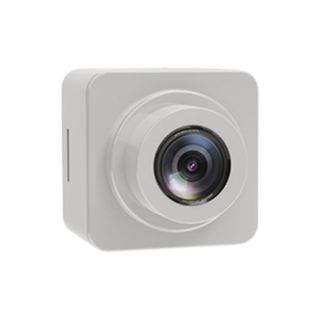
Portable full color life recorder for night vision
Contact UsThe Portable full-color Night Vision Recorder is a multi-functional recording device that combines cutting-edge optical technology and intelligent AI algorithms, breaking through the limitation of tra
-
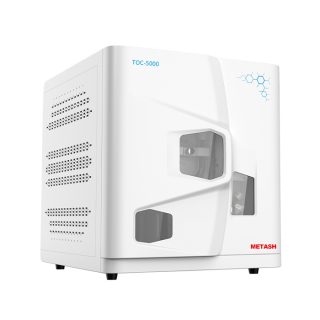
TOC-5000 RN/RD Total Organic Carbon Analyzer for Water Analysis
Contact UsAuto sample dilution, auto acid-adding and auto gas purging (only TOC-5000 RD).METASH unique NDIR detector, German made light source, higher sensitivity and stability, longer service time.
-
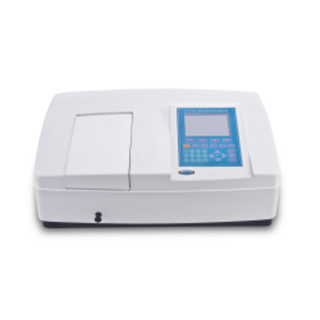
UV-6100 series UV Visible Spectrophotometer
Contact Us3 kinds of bandwidth configuration meets your different requests.
Reviews
There are no reviews yet.