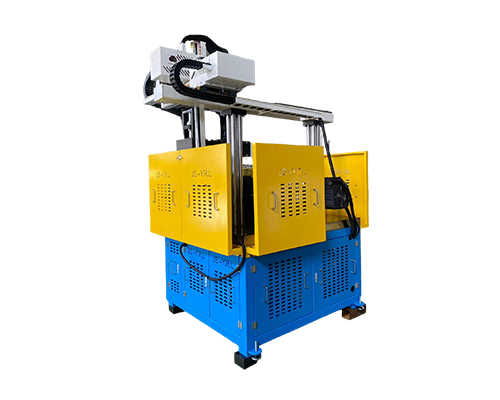
High Precision Single-Sided Forming Machine Dn50 Cnc Pipe Upsetting Machine For Custom-Made
High precision Single-sided DN50 CNC pipe upsetting machine Equipped with a continuous transfer feeding mechanism, the machine integrates automatic loading, precision positioning, synchronized forming, and automatic unloading in a single workflow. Minimizes manual intervention, Reduces operational errors, Eliminates idle waiting time. Ideal for automated production lines and unmanned manufacturing cells, Supports smart factory integration.
In tube processing, production efficiency depends on more than machine speed. Manufacturers also need consistent dimensions, reliable forming quality, flexible tooling, and stable operation over long production runs. When both ends of a tube require forming, processing each end separately can increase cycle time, handling work, and the risk of dimensional inconsistency.
A dual-side tube forming machine addresses these challenges by processing both tube ends simultaneously in a single cycle. Combined with a rigid machine frame, precision positioning, and a quick-change die system, this configuration can help manufacturers improve throughput while maintaining forming accuracy.
1. Simultaneous Forming for Higher Productivity
One of the main advantages of dual-side forming is that both tube ends can be processed at the same time. Compared with sequential single-end processing, this arrangement reduces repeated positioning and handling, helping shorten the overall production cycle.
Closed-loop control supports consistent movement and positioning during forming. When properly configured, the system helps maintain symmetry between the two ends and reduces the risk of offset or uneven forming.
For manufacturers producing components that require matched tube ends, consistent forming quality can also reduce the need for rework and additional inspection. However, the final result depends on the tube material, tooling design, forming parameters, and machine setup.
2. A Heavy-Duty Frame for Stable Operation
Machine rigidity is essential when forming metal tubes, especially during continuous production. A frame that flexes excessively under load can affect dimensional accuracy, tool alignment, and repeatability.
The machine described here features a reinforced welded frame with stress-relief heat treatment and a total weight of approximately 5.5 tons. This heavy-duty construction is designed to resist deformation and reduce vibration during operation.
Precision linear guideways and servo-driven positioning systems support controlled movement and repeatable positioning. Together, these features provide a stable foundation for consistent forming results.
For buyers evaluating tube forming equipment, it is worth reviewing not only the frame design but also the machine's alignment accuracy, repeatability, and performance under actual production loads.
3. Flexible Processing and Quick Die Changes
Production requirements often vary by tube diameter, wall thickness, and product design. Equipment that can accommodate different specifications helps manufacturers manage product changes without excessive downtime.
This machine is designed to process tubes with diameters below 50 mm and wall thicknesses from 0.5 to 2.5 mm. It is suitable for short- to medium-length tube applications, subject to the specific workpiece and tooling requirements.
A quick-change die system helps reduce the time needed to switch between production tasks. This is particularly useful for manufacturers handling multiple product types or small- to medium-sized batches.
Before purchasing, manufacturers should confirm the supported tube materials, forming shapes, length range, die compatibility, and changeover procedure to ensure the machine matches their actual production needs.
4. Short Cycle Times with Consistent Quality
The stated standard cycle time is approximately 8–12 seconds per piece. This provides a useful reference when assessing potential production capacity, although actual output will depend on the forming process, workpiece specifications, loading and unloading time, and inspection requirements.
High-speed operation is valuable only when forming quality remains stable. Tool condition, servo settings, material consistency, and routine maintenance all influence the number of acceptable parts produced per shift.
By combining simultaneous forming, rigid construction, and controlled positioning, a dual-side tube forming machine can help manufacturers improve throughput while reducing avoidable handling and rework.
5. What Should Manufacturers Consider Before Buying?
When comparing tube forming machines, buyers should look beyond headline cycle times. Important evaluation points include:
-
Forming accuracy: Check dimensional tolerances and symmetry requirements for the finished tube.
-
Material compatibility: Confirm that the machine can process the intended tube materials and wall thicknesses.
-
Production capacity: Evaluate the full cycle, including loading, unloading, and tooling changes.
-
Tooling flexibility: Determine how quickly dies can be changed and whether custom tooling is available.
-
Long-term reliability: Review maintenance access, spare parts availability, and support for troubleshooting.
-
Sample testing: Where possible, provide actual workpieces and validate forming quality before finalizing the machine configuration.
These checks help ensure that the equipment delivers practical production benefits rather than speed alone.
Conclusion
A dual-side tube forming machine can help manufacturers increase productivity by forming both tube ends in one cycle, maintaining stable positioning, and simplifying changeovers between different products. Its heavy-duty frame and servo-driven movement also support consistent operation in demanding production environments.
For manufacturers seeking to reduce handling time, improve forming consistency, and accommodate varied tube specifications, evaluating a machine's forming range, cycle time, tooling flexibility, and repeatability is an important step toward selecting the right equipment.
The most effective solution is one validated against real workpieces and production conditions, with forming quality and long-term operating stability considered alongside output speed.
Related products
-
OPTIMIZING CROSS CUT SAW MAXCUT F18S+SENSIT 005
Contact UsHigh speed optimization Timber cutting optimizing Cross-cut saw and precision cutting
Automation production line. -
Used NSC Schlumberger GN6 Gilling Machine
Contact UsYear: 1986
Spinning production line
Mixed belt: GN6 solid ball forming machine barrel
One needle: GN6 cylinder diameter 700 * 1000mm, 1 head and 1 cylinder, self leveling
Two needles: GN6 cylinder diameter 700 * 1000mm, one head and one cylinder
Three needles: GN6 cylinder diameter 600 * 1000mm, 2 heads and 2 cylinders
According to your requirements, we can transform it into a size suitable for your production needs! -
LFQ1300 Micro Computer Controlling Slitting Machine
Contact UsLFQ1300 Micro Computer Controlling Slitting Machine
-
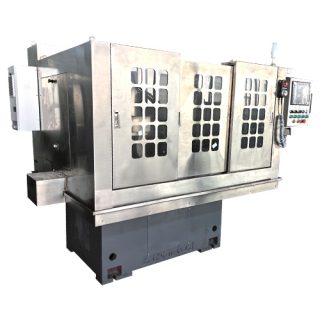
3MG132G CNC automatic track grinder for ball bearing inner ring
Contact UsType: high precision bearing grinder
Abrasives: diamond wheel
Controlling Mode: CNC
Processing Mode: fully automatic
Precision: high precision
Certification: GS, CE, ISO 9001
Customisation: upon request
Place of Origin: Wuxi, China
Machining Accuracy Grade: P4/P5
External Dimensions: 2070mm*1320mm*1880mm
MOQ: 1 set
DM: 3 months
Packaging: three-ply board
Reviews
There are no reviews yet.