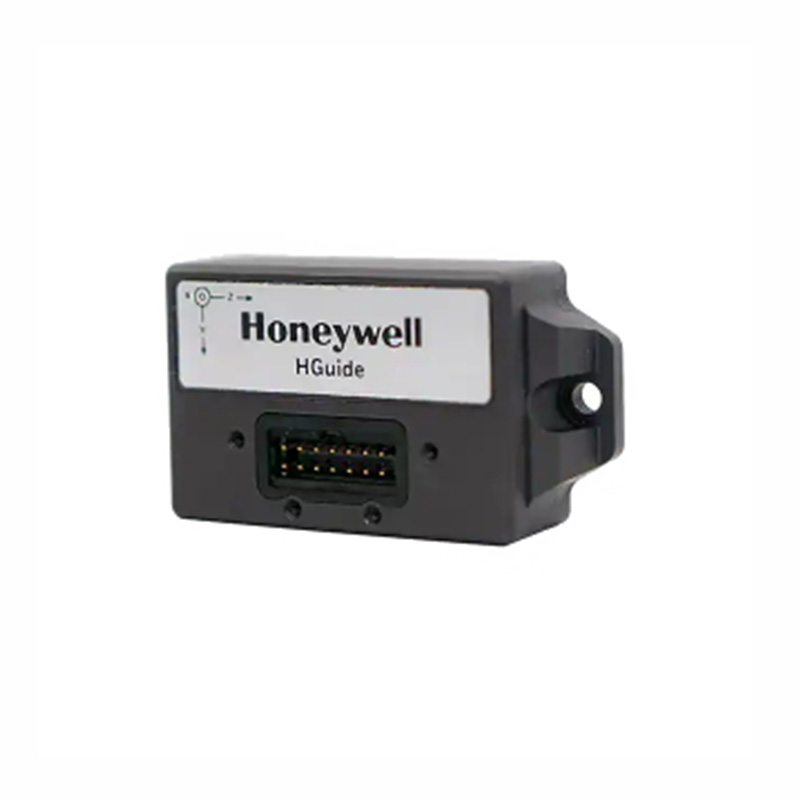
HGUIDE i300 MEMS Inertial Measurement Unit
The HGuide i300 is a high-performance
MEMS-based inertial measurement IMU designed to meet the needs of applications
in a variety of markets, including agriculture, AUVs, industrial equipment, robotics, mapping, stabilization platforms, transportation, drones, and unmanned ground vehicles. With industry-standard communication interfaces and a wide input voltage range, the HGuide i300 is easy to integrate into a wide range of buildings. Extremely small size, light weight and low power consumption
Accurate motion and orientation data are becoming increasingly important across modern industrial systems. Drones, autonomous vehicles, robotics, surveying equipment, marine platforms, and industrial machines all need reliable information about movement, acceleration, and angular rate to support navigation, stabilization, and control.
For these applications, an inertial measurement unit (IMU) must deliver more than basic motion sensing. It needs to combine accuracy, reliability, compact dimensions, low power consumption, and flexible system integration.
The Honeywell HGuide i300 IMU is designed around these requirements. As a compact MEMS-based inertial measurement unit, the i300 combines proven inertial sensing technology with a small form factor and configurable communication options, making it suitable for a wide range of land, air, and offshore applications.
A Compact IMU for Space-Constrained Systems
One of the most practical features of the HGuide i300 is its compact design.
The unit measures approximately 42 × 28 × 14 mm, with a volume of about 17 cm³ (1 in³). This makes it suitable for equipment where internal installation space is limited.
Compact size can be particularly valuable in applications such as:
-
UAVs and drones
-
Robotics
-
Autonomous underwater vehicles
-
Surveying and mapping equipment
-
Stabilized platforms
-
Industrial machinery
-
Marine equipment
-
Transportation systems
-
UGVs
In these systems, designers often need to integrate multiple sensors and processing components within a limited enclosure. A smaller IMU can simplify mechanical integration while leaving more space for other electronics.
Low Power Consumption for Mobile Equipment
Power consumption is another important consideration for mobile and battery-powered platforms.
The HGuide i300 has a typical power consumption of approximately 0.5 watts. This low-power characteristic can be useful for applications where energy efficiency directly affects operating time, thermal management, or system architecture.
For drones, robotics, autonomous vehicles, and other mobile equipment, reducing the power requirements of individual sensors can help engineers allocate more energy to propulsion, communication, computing, or other mission-critical functions.
The i300 also supports supply voltages from +5.0 to +36 VDC, providing flexibility for integration into different electrical architectures.
Three-Axis Inertial Measurement for Navigation and Control
An IMU typically combines gyroscopes and accelerometers to provide information about an object's angular motion and linear acceleration.
The HGuide i300 offers a gyro operating range of ±490°/s on all axes and an accelerometer operating range of ±16g on all axes.
These measurement ranges allow the unit to support applications involving dynamic movement, orientation monitoring, stabilization, and control.
When combined with navigation algorithms, GNSS, or other external sensors, IMU data can contribute to a broader positioning and navigation solution.
This makes the i300 useful not only as a standalone inertial sensor but also as a component within a larger navigation architecture.
Designed for Demanding Operating Conditions
Industrial equipment can encounter vibration, shock, temperature variation, and other environmental challenges.
The HGuide i300 is specified for an operating temperature range of approximately -40°C to +85°C, allowing it to operate across a broad range of industrial environments.
Its vibration specifications include random vibration from 20 to 2000 Hz at 2.2 g RMS under MIL-STD-810G, while sinusoidal vibration is specified from 10 to 2000 Hz at 2 g peak.
The unit is also designed to withstand shock conditions, with a specification of 40g for 11 ms according to MIL-STD-810G.
These characteristics can be valuable when the IMU is installed on platforms exposed to mechanical vibration or sudden movement.
Flexible Communication Interfaces
Sensor integration can become complicated when an IMU does not match the communication architecture of the host system.
The HGuide i300 supports multiple communication interfaces, including:
-
RS-422
-
5V TTL
-
CAN
Its asynchronous baud rate is configurable, with 921.6 kbps specified as the default.
This communication flexibility allows system designers to select an interface that is compatible with the existing control or data-acquisition architecture.
The unit also provides a configurable data rate, with 300 Hz nominal output. Depending on the application and configuration, this can provide the measurement frequency required for motion-control and navigation systems.
Suitable for Navigation, Stabilization, and Robotics
The application range of a compact industrial IMU is broad.
Drones and UAVs
Unmanned aerial vehicles require continuous information about angular motion and acceleration for flight control and stabilization. A compact, low-power IMU can be integrated into the flight-control architecture without adding significant weight or power requirements.
Robotics
Robotic systems use inertial data to monitor movement, orientation, and dynamic behavior. The i300 can serve as an inertial sensing component in mobile robots, autonomous platforms, and industrial robotic equipment.
Surveying and Mapping
Surveying and mapping platforms often combine inertial sensors with positioning technologies. IMU data can help maintain orientation information and support motion estimation when integrated with other navigation sensors.
Marine and AUV Applications
Marine equipment and autonomous underwater vehicles operate in environments where stable motion information is important. An inertial sensor can provide continuous angular-rate and acceleration measurements for navigation and platform control.
Stabilized Platforms
Camera systems, antennas, optical equipment, and other payloads may require stabilization during movement. In these applications, inertial measurements can be used by control systems to detect unwanted motion and support stabilization algorithms.
Configurable Data and Filtering Options
Different applications have different requirements for sensor output.
A navigation system may require high-frequency motion data, while another industrial application may prioritize filtered and stable measurements.
The HGuide i300 supports configurable options for output data rate and filtering. This allows system designers to adapt the sensor configuration according to application requirements rather than relying on a single fixed operating mode.
Multiple communication protocols also provide additional flexibility when integrating the IMU into different system architectures.
Proven MEMS Technology for Industrial Integration
The HGuide i300 is based on MEMS inertial sensing technology developed from Honeywell's broader experience in inertial sensor design.
Honeywell has decades of experience in inertial sensing, calibration, compensation, and sensor development. This background is particularly relevant for applications where measurement consistency and long-term reliability are important.
For system manufacturers, selecting an IMU is not simply a matter of comparing measurement ranges. Factors such as sensor stability, environmental performance, communication compatibility, calibration, size, and power consumption can all affect the final system design.
The i300 addresses these considerations in a compact package.
Key Specifications at a Glance
The main characteristics of the HGuide i300 include:
| Parameter | Typical Characteristic |
|---|---|
| Size | 42 × 28 × 14 mm |
| Volume | Approximately 17 cm³ / 1 in³ |
| Weight | Approximately 35 g |
| Power Consumption | 0.5 W |
| Operating Temperature | -40°C to +85°C |
| Data Rate | 300 Hz nominal, configurable |
| Gyro Range | ±490°/s, all axes |
| Accelerometer Range | ±16g, all axes |
| Supply Voltage | +5.0 to +36 VDC |
| Communication | RS-422, 5V TTL, CAN |
| Default Baud Rate | 921.6 kbps |
| Bandwidth | Up to 200 Hz at 90° phase / 400 Hz at -3 dB, output-dependent |
| Shock | Up to 40g, 11 ms, MIL-STD-810G |
Specifications may vary according to product configuration and application requirements, so engineers should confirm the exact configuration before integration.
What Should Engineers Consider When Selecting an IMU?
Before choosing an inertial measurement unit, engineers should evaluate the complete application rather than focusing on a single specification.
Important considerations include:
Measurement range: The gyro and accelerometer ranges should cover the maximum expected platform dynamics.
Sensor accuracy and stability: Bias characteristics and noise performance can affect long-term navigation and control results.
Size and weight: Compact dimensions are particularly important for drones, robotics, and embedded systems.
Power consumption: Low power can be important for battery-powered platforms and systems with strict thermal constraints.
Communication interface: The IMU should be compatible with the host controller and existing communication architecture.
Environmental conditions: Temperature, vibration, and shock requirements should match the actual operating environment.
Output configuration: Data rate and filtering options should meet the requirements of the navigation or control algorithm.
Taking these factors into account can help reduce integration challenges and improve overall system performance.
Conclusion
The Honeywell HGuide i300 IMU combines compact MEMS inertial sensing, low power consumption, flexible interfaces, and broad environmental capabilities in a small package.
With a volume of approximately one cubic inch, 0.5 W typical power consumption, ±490°/s gyro range, ±16g accelerometer range, configurable 300 Hz nominal data output, and support for RS-422, TTL, and CAN interfaces, the i300 can be considered for a wide range of embedded inertial sensing applications.
From drones and robotics to marine equipment, surveying systems, stabilized platforms, transportation, and industrial machinery, the right IMU can provide an important foundation for navigation, guidance, stabilization, and control.
For engineers developing compact and reliable motion-sensing systems, evaluating the HGuide i300 according to the specific application environment, accuracy requirements, communication architecture, and mechanical constraints is a practical starting point for successful system integration.
Related products
-
-
HGUIDE i300 MEMS Inertial Measurement Unit
Contact UsThe HGuide i300 is a high-performance
MEMS-based inertial measurement IMU designed to meet the needs of applications
in a variety of markets, including agriculture, AUVs, industrial equipment, robotics, mapping, stabilization platforms, transportation, drones, and unmanned ground vehicles. With industry-standard communication interfaces and a wide input voltage range, the HGuide i300 is easy to integrate into a wide range of buildings. Extremely small size, light weight and low power consumption -
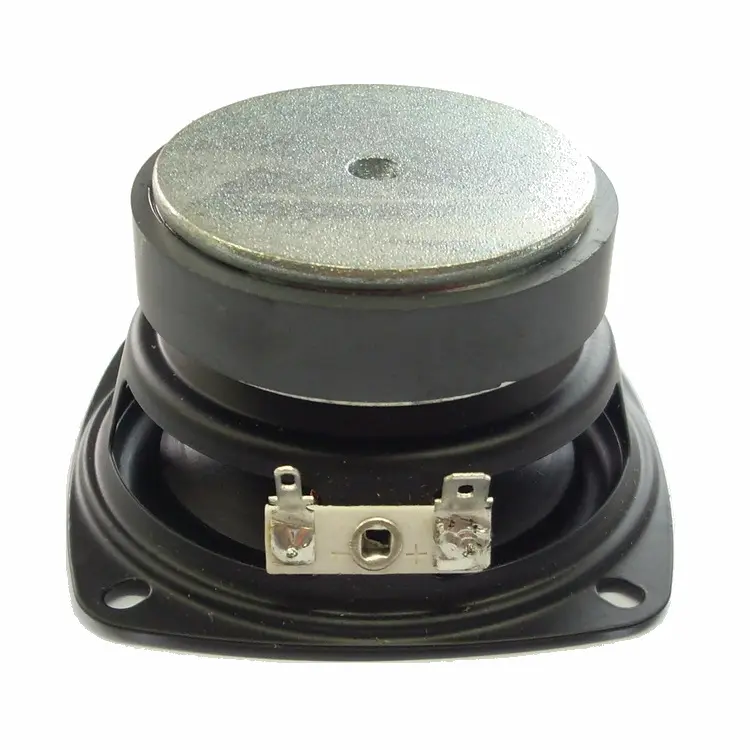
Factory 3 inch 4 ohm_8 ohm 15w full range speaker 3 inch full range speaker $2.94-$4.40
Contact Us3″ (76mm) 15W 4Ω Full-Range Multimedia Speaker – Resonant Frequency (F₀): 106Hz, Frequency Response: up to 20kHz
Factory 3 Inch 4Ω/8Ω 15W Full Range Speaker -
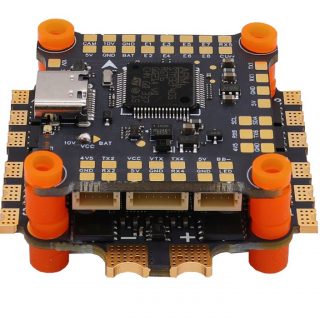
HAKRC 50A F4 Fly Tower
Contact UsHAKRC 45A F4V2 flying tower is equipped with BLS 45A four-in-one ESC and F405 flight control, Installation hole spacing of 30.5 * 30.5mm.
Reviews
There are no reviews yet.