
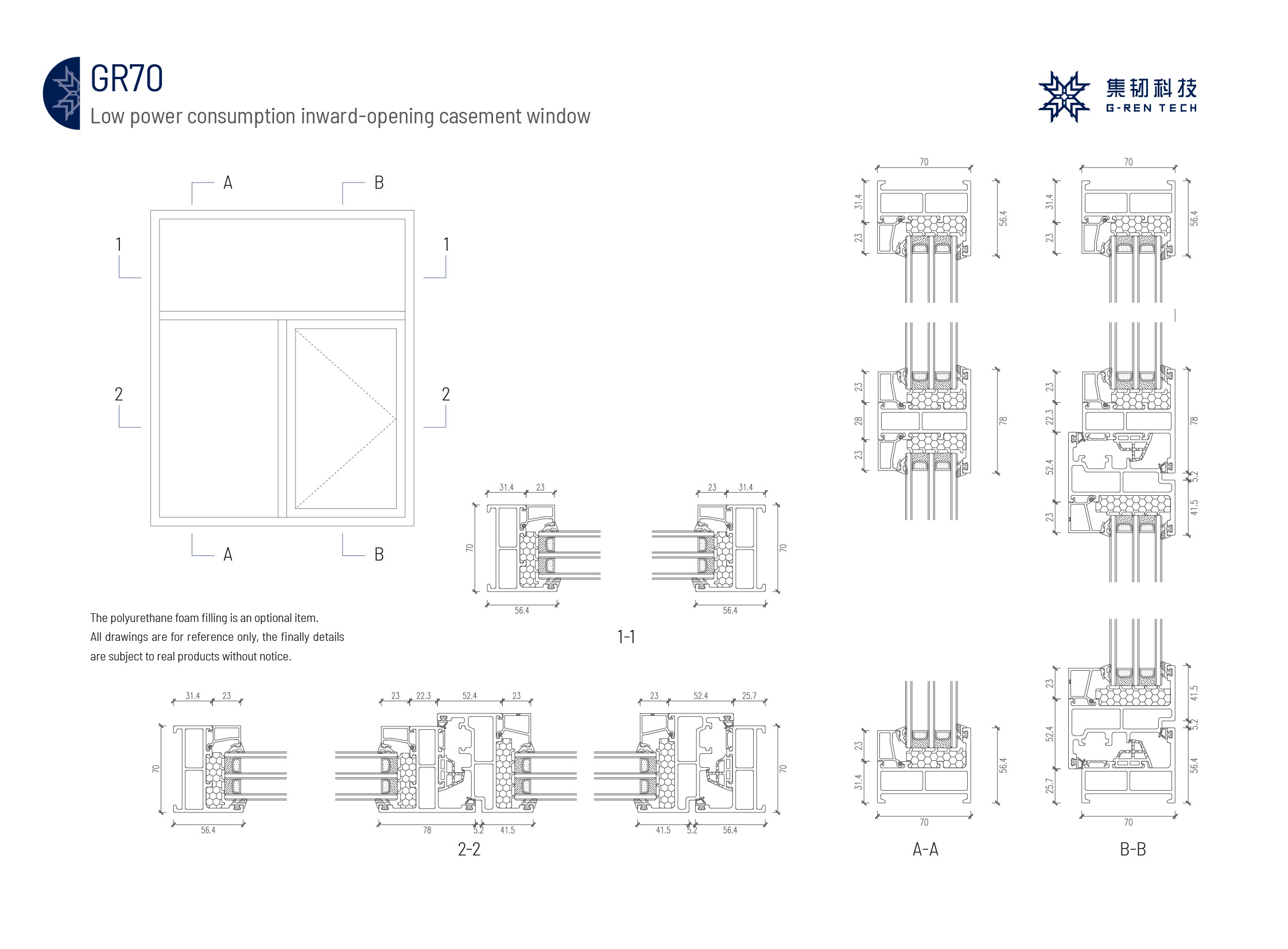
GR70 Low power consumption inward-opening casement window
Fiberglass reinforced polyurethane composite material is the high-performance composite material based on 20% polyurethane (PU) and 80% fiberglass (GF).
PU fiberglass material combines the excellent toughness, fatigue resistance, impact resistance and processing flexibility of polyurethane resin, as well as the high strength, high rigidity and stability of fiberglass.
Material selection has a direct influence on the strength, thermal performance, durability, and service life of modern door and window systems. Aluminum, steel, and PVC have traditionally been widely used for frames and structural components, but increasingly demanding applications are creating a need for materials that can combine high mechanical strength with low weight, thermal insulation, and corrosion resistance.
Fiberglass reinforced polyurethane, commonly referred to as PU-GFRP, is one composite material attracting attention in this area. By combining polyurethane resin with glass fiber reinforcement, the material integrates the toughness and processing flexibility of PU with the strength and dimensional stability provided by fiberglass.
The GR70 inward-opening casement window is an example of how this type of composite material can be applied to modern door and window systems.
What Is PU-GFRP Composite Material?
PU-GFRP is a fiberglass-reinforced polyurethane composite generally formulated with approximately 20% polyurethane (PU) and 80% fiberglass (GF).
The two components perform different but complementary functions. Polyurethane contributes toughness, impact resistance, fatigue resistance, and processing flexibility, while fiberglass provides high strength, rigidity, and structural stability.
Through manufacturing processes such as pultrusion and winding, the reinforcement can be distributed within the polymer matrix to create profiles with controlled mechanical properties and geometry.
This combination allows PU-GFRP to achieve a balance that is difficult to obtain with conventional single-material solutions.
High Strength with a Relatively Low Weight
One of the key reasons composite materials are being considered for door and window applications is their strength-to-weight ratio.
Compared with conventional structural materials, PU-GFRP offers high bending and tensile performance while maintaining relatively low density. The supplied material comparison lists a density of approximately 2.2 g/cm³, compared with around 7.8 g/cm³ for steel and 2.7 g/cm³ for aluminum alloy.
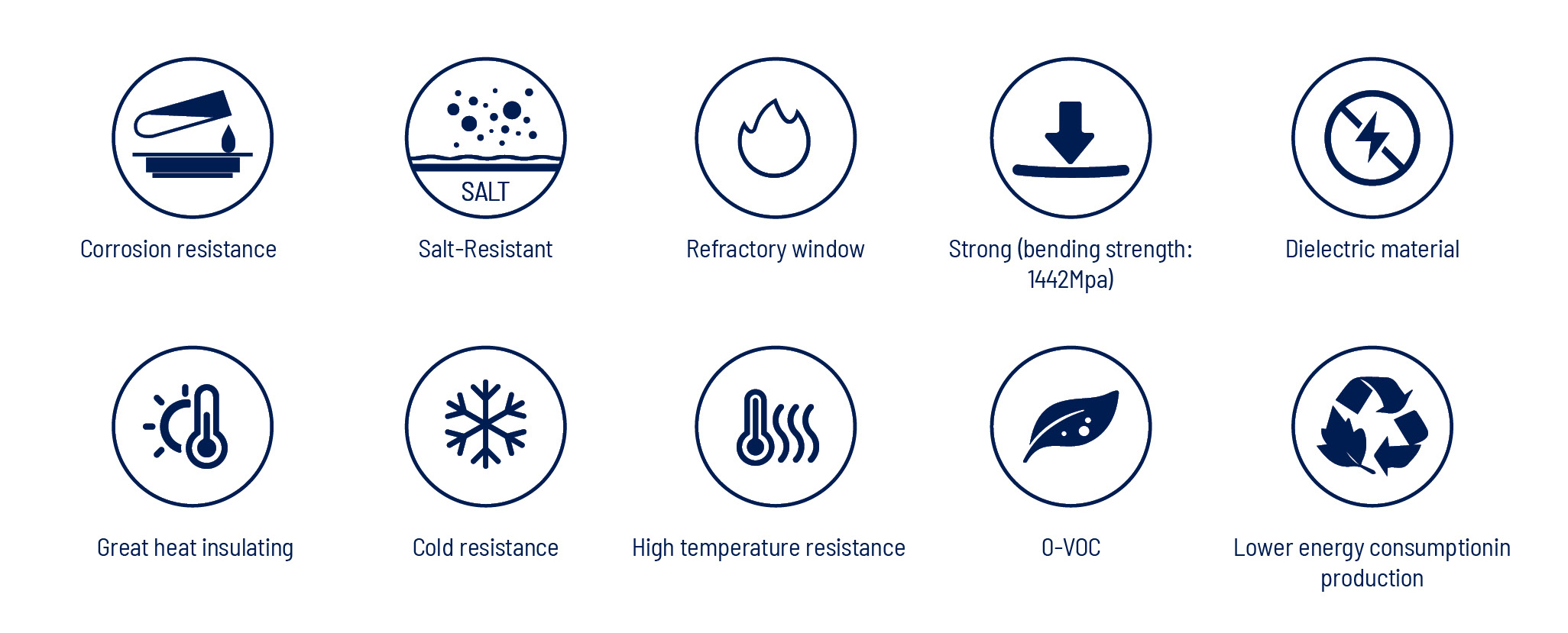
More importantly, the listed bending strength of PU-GFRP reaches approximately 1442 MPa, with a bending modulus of about 44 GPa. Its tensile strength is listed at approximately 1220 MPa.
These characteristics can allow designers to develop lightweight profiles without relying solely on increased material thickness to achieve structural requirements.
For large windows, curtain wall systems, or structures where frame weight is an important consideration, reducing component weight can also simplify transportation, handling, and installation.
Thermal Insulation Is Another Important Advantage
Thermal performance is becoming increasingly important in modern building envelope design.
Metals such as aluminum have relatively high thermal conductivity, which means that metal window frames can require additional thermal-break structures to reduce heat transfer.
The supplied comparison gives PU-GFRP a thermal conductivity of approximately 0.114 W/m·K, significantly lower than the listed values for aluminum and steel.
This low thermal conductivity can make fiberglass-reinforced polyurethane attractive for applications where the frame itself needs to contribute to thermal insulation.
For door and window systems, material selection should still be evaluated as part of the complete assembly. Glass specification, seals, frame geometry, hardware, installation details, and thermal bridges all influence the final thermal performance of the finished window.
Excellent Resistance to Corrosion
Windows and exterior building components may be exposed to moisture, salt spray, pollutants, cleaning chemicals, and other corrosive conditions.
Traditional steel can require protective coatings to limit corrosion, while aluminum can also experience surface degradation under certain environmental conditions.
PU-GFRP has strong resistance to common corrosive environments, including exposure to acid, alkali, and salt according to the supplied material data.
This characteristic makes the material suitable for applications where long-term exposure to harsh environmental conditions is a concern.
Potential applications include coastal buildings, industrial facilities, chemical environments, transportation infrastructure, and other projects where conventional metal profiles may require additional corrosion-protection measures.
Low Thermal Expansion Supports Dimensional Stability
Another important property for window frame materials is dimensional stability.
Temperature changes cause materials to expand and contract. If different components in a building envelope have significantly different expansion behavior, repeated thermal cycling can place stress on joints, seals, and connections.
The listed linear expansivity of PU-GFRP is approximately 0.5 × 10⁻⁵ K⁻¹, which is relatively low compared with the listed values for aluminum alloy and PVC.
This characteristic can contribute to dimensional stability under changing temperatures.
For door and window systems, maintaining stable dimensions is particularly important for the long-term performance of moving components, seals, and frame connections.
Design Flexibility Beyond Conventional Profiles
Material performance is only one part of a modern window system. Designers also need flexibility in appearance and functionality.
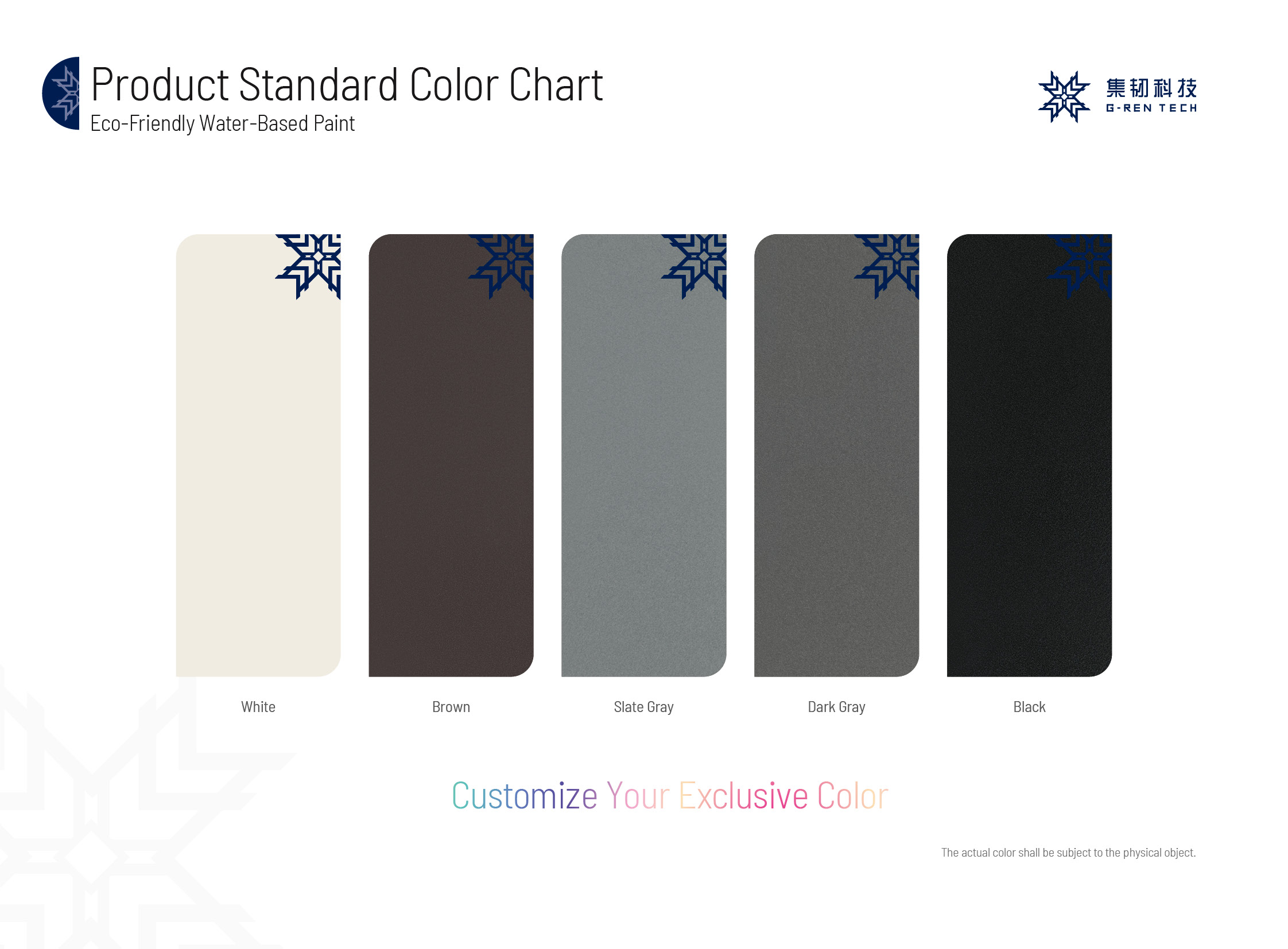
PU-GFRP allows material formulations to be adjusted according to specific requirements. Depending on the formulation and manufacturing process, properties such as hardness, elasticity, color, and surface texture can be customized.
This provides opportunities for manufacturers to develop profiles for different architectural styles and performance requirements.
Instead of relying on a limited range of standard metal finishes, composite profiles can potentially be engineered around both structural and aesthetic requirements.
GR70 Inward-Opening Casement Window Application
The GR70 inward-opening casement window demonstrates how PU-GFRP composite technology can be incorporated into a practical architectural product.
An inward-opening casement design provides a familiar operating configuration for residential, commercial, and architectural applications while allowing the composite frame material to contribute to the overall performance of the window.
The use of PU-GFRP can provide several material-level advantages:
-
High mechanical strength
-
Reduced structural weight
-
Low thermal conductivity
-
Resistance to acid, alkali, and salt exposure
-
Good dimensional stability
-
Flexible surface and color design
-
Potential suitability for demanding outdoor environments
The actual performance of a completed window, however, depends on the entire system rather than the frame material alone. Hardware, glass, gaskets, drainage, sealing, installation, and structural design should all be considered during project evaluation.
PU-GFRP Compared with Conventional Materials
The supplied comparison highlights several differences between PU-GFRP and commonly used materials.
| Property | Aluminum Alloy | Steel | R PVC | PU-GFRP |
|---|---|---|---|---|
| Density (g/cm³) | 2.7 | 7.8 | 1.4 | 2.2 |
| Bending Strength (MPa) | 170–230 | 200–500 | 70–110 | 1442 |
| Bending Modulus (GPa) | 68 | 200 | 2.2–5 | 44 |
| Tensile Strength (MPa) | 200–300 | <670 | 35–52 | 1220 |
| Thermal Conductivity (W/m·K) | >150 | 36–54 | 0.14 | 0.114 |
| Corrosion Resistance | Poor | Poor | Average | Excellent |
These values illustrate why PU-GFRP is being considered as an alternative material for applications requiring a combination of structural performance, insulation, and environmental resistance.
Material data should always be interpreted according to the applicable testing standards, formulation, fiber content, production process, and actual product configuration.
Where Can PU-GFRP Be Used?
The potential applications of fiberglass-reinforced polyurethane extend well beyond windows.
The material can be considered for:
Door and Curtain Wall Systems
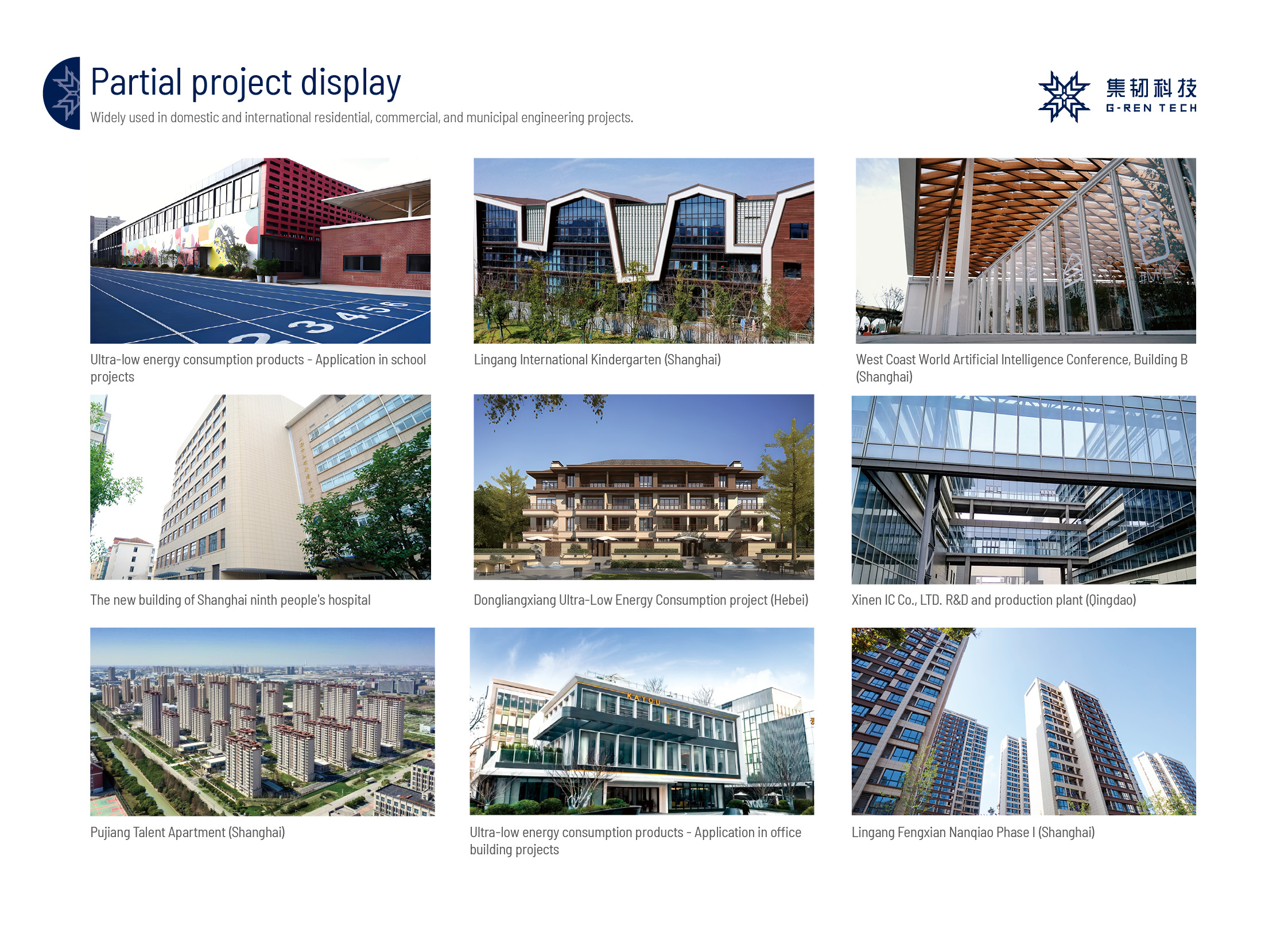
Profiles with high strength, low thermal conductivity, and corrosion resistance can be used in architectural envelope applications.
Wind Energy Equipment
The combination of strength, weight reduction, and environmental resistance makes composite materials relevant to wind-energy components.
Photovoltaic and New Energy Equipment
PU-GFRP can be evaluated for structural and support components where electrical insulation, durability, and low weight are important.
New Energy Vehicles
Composite profiles can provide weight-saving opportunities while maintaining structural performance for selected vehicle components.
Medical and Engineering Equipment
The material's combination of mechanical properties, design flexibility, and corrosion resistance can support specialized equipment applications.
Aerospace and Other Precision Applications
Where weight, strength, dimensional stability, and material performance are critical, advanced composite materials can provide an alternative to conventional materials for appropriately engineered components.
What Should Buyers Consider When Selecting PU-GFRP Profiles?
Before selecting a PU-GFRP door or window system, buyers should look beyond headline strength figures.
First, confirm the fiber content and material formulation, because these factors directly influence mechanical and thermal properties.
Second, evaluate the profile design and reinforcement direction. Composite materials can have direction-dependent mechanical behavior, so the profile structure needs to match the expected loads.
Third, consider the complete window system, including glazing, hardware, seals, drainage, fasteners, and installation methods.
Environmental conditions should also be reviewed. Projects in coastal or industrial areas may place greater emphasis on corrosion resistance, while energy-efficient buildings may prioritize thermal conductivity and thermal-bridge control.
Finally, ask for relevant test data and confirm that the stated performance values correspond to the actual product configuration rather than a generic material specification.
Conclusion
PU-GFRP represents an important development in composite material technology for modern door and window systems. By combining polyurethane with fiberglass reinforcement, it can offer high strength, relatively low weight, low thermal conductivity, corrosion resistance, dimensional stability, and considerable design flexibility.
For architectural products such as the GR70 inward-opening casement window, these characteristics provide an alternative approach to conventional aluminum, steel, and PVC frame materials.
As building projects increasingly demand better thermal performance, durability, lightweight structures, and customized design, PU-GFRP composites can provide manufacturers and designers with another material option for developing high-performance door, window, curtain wall, and other structural systems.
Related products
-
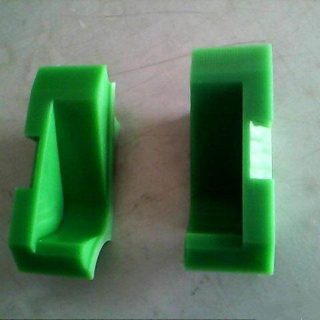
Ultra High Molecular Weight Polyethylene UHMW-PE
Contact UsWith an ultra-high molecular weight of 3 to 7 million, it has extremely high impact resistance and maintains a high impact energy absorption rate and high strength modulus under high stress.
-
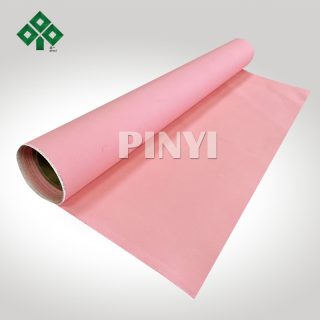
Acrylic coated fiberglass cloth
Contact UsProduct Details:• Place of Origin: Jiangsu China• Brand Name: Pinyi• Certification: ISO 9001, SGSPayment & Shipping Terms:• Minimum Order Quantity: 100 Meter
-
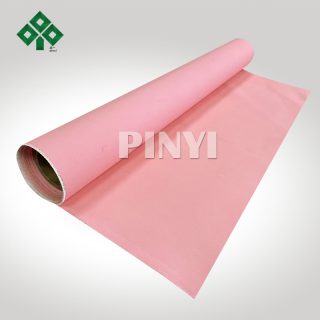
Acrylic coated fiberglass cloth
Contact UsProduct Details:• Place of Origin: Jiangsu China• Brand Name: Pinyi• Certification: ISO 9001, SGSPayment & Shipping Terms:• Minimum Order Quantity: 100 Meter
-
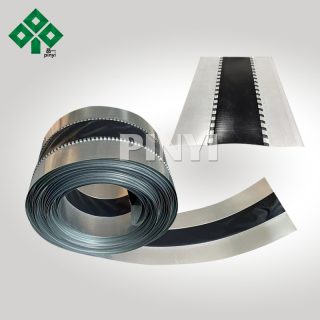
Factory Ductwork Flexible Connections HVAC Systems Parts Flexible Duct Connector with Shockproof
Contact UsProduct Details:• Place of Origin: Jiangsu China• Brand Name: Pinyi• Certification: ISO 9001, SGSPayment & Shipping Terms:• Minimum Order Quantity: 10 pcs
Reviews
There are no reviews yet.