Custom Robotic Welding Cells: Applications in the E-Bike Industry
The electric bicycle (e-bike) industry has experienced rapid growth, driven by increasing demand for efficient, eco-friendly, and cost-effective transportation.
The electric bicycle (e-bike) industry has experienced rapid growth, driven by increasing demand for efficient, eco-friendly, and cost-effective transportation. As production volumes rise, manufacturers are focusing on improving welding precision, structural consistency, and manufacturing efficiency.
Custom robotic welding cells have become a key solution in e-bike production lines, enabling high-quality welding of frames and components while ensuring repeatability and productivity in large-scale manufacturing.
What Are Custom Robotic Welding Cells?
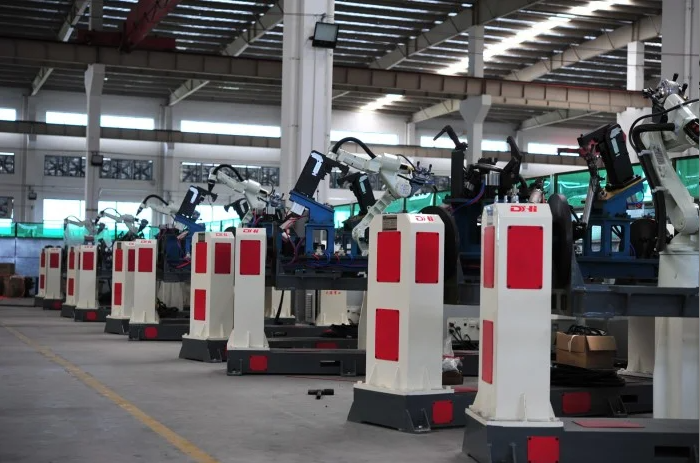
Custom robotic welding cells are automated welding systems designed to perform precise and repetitive welding tasks using industrial robotic arms.
These systems typically include robotic manipulators, welding power sources, fixtures, safety enclosures, and control software. They are configured specifically according to product geometry and production requirements.
In the e-bike industry, they are commonly used to weld aluminum and steel frames with consistent accuracy and minimal variation.
Importance of Welding in E-Bike Manufacturing
Welding is a critical process in e-bike production because the frame directly affects structural strength, safety, and riding performance.
Each frame must withstand dynamic loads, vibration, and environmental stress during operation. Therefore, welding quality must remain stable and uniform across all production batches.
Robotic welding systems help ensure that every weld joint meets strict consistency and structural integrity requirements.
Applications in E-Bike Frame Production
Robotic welding cells are widely used in the fabrication of e-bike frames, including main triangle structures, rear triangles, and joint assemblies.
The automation system ensures precise welding of tubular structures, maintaining alignment and dimensional accuracy throughout the process.
This results in uniform frame geometry, which is essential for stability, comfort, and overall riding performance.
Welding of Aluminum and Steel Components
E-bike frames are commonly made from aluminum alloys or high-strength steel, each requiring specific welding parameters.
Robotic welding cells are programmed to adjust welding speed, current, and heat input based on material properties.
This ensures strong and clean weld seams while minimizing deformation and maintaining material integrity across different frame designs.
Precision and Repeatability in Production
One of the key advantages of robotic welding cells is their ability to deliver highly repeatable welds across large production runs.
Each welding cycle follows the same programmed path, ensuring consistent weld penetration, bead shape, and structural quality.
This level of precision is particularly important in e-bike manufacturing, where uniformity directly impacts product reliability and safety.
Integration with Production Lines
Custom robotic welding cells are often integrated into automated e-bike production lines to streamline manufacturing workflows.
They can be connected with material handling systems, positioning fixtures, and conveyor lines to support continuous production.
This integration helps maintain steady output rates while reducing manual handling and improving overall production efficiency.
Quality Control in Robotic Welding
Quality control is an essential part of robotic welding operations in the e-bike industry.
Inspection systems are used to verify weld quality, including joint strength, bead consistency, and dimensional accuracy.
By maintaining strict process control, manufacturers ensure that each frame meets required performance and safety standards.
Advantages in E-Bike Manufacturing
Custom robotic welding cells provide several operational advantages in e-bike production environments.
They improve welding consistency, reduce manual labor, and support high-volume manufacturing with stable output quality.
Additionally, they enhance production efficiency by reducing cycle times and ensuring continuous operation with minimal interruptions.
Conclusion
Custom robotic welding cells play a significant role in modern e-bike manufacturing by delivering precise, repeatable, and efficient welding solutions for frame production. Their ability to maintain consistent quality across aluminum and steel structures makes them an essential part of automated production systems.
By integrating robotic welding technology into manufacturing lines, e-bike producers achieve reliable structural performance and stable production efficiency across diverse product designs.
Related products
-
Ribbed Wire Drawing Machine
Contact UsRibbed Wire Drawing Machine , Wire rib drawing machine, Ribbed Wire Rolling Machine suitable for the production of smooth or ribbed low, medium and high carbon steel wire, copper wire…
-
Vacuum Feeding Tank
Contact UsThe vacuum feeding tank is the core component of the EB furnace melting system. responsible for feeding raw materials (such as titanium sponge, titanium residue or titanium alloy waste) into the melti
-
Casting part
Contact UsMachining Equipment:CNC lathe/Wire cutting/Surface grinder/Milling maching latheDrilling machining/Horizontal saw.
-
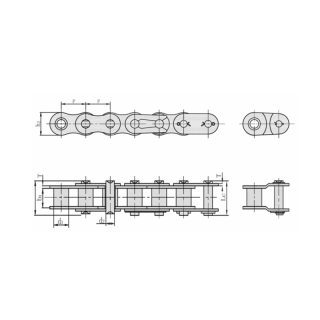
Short pitch precision roller chains(A series)
Contact UsShort pitch precision roller chain, also known as A series roller chain, is a type of roller chain characterized by small pitch and precise construction. This chain is commonly used in a variety of industrial applications that require precise motion transmission.
Reviews
There are no reviews yet.