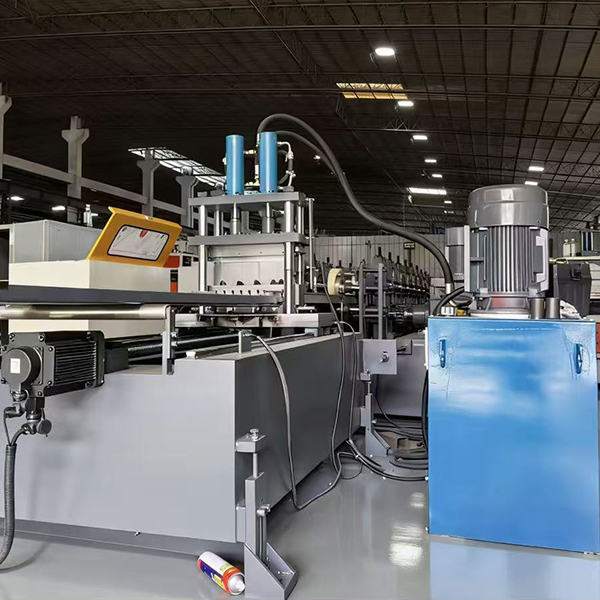
Cold Bending Forming Equipment for Building Steel Formwork
High-Performance Steel Formwork Roll Forming Machine for Precision Panel Production
Key Advantages and Performance Features
Designed for manufacturing durable steel formwork panels, this steel formwork roll forming machine integrates precision forming technology, automated punching, and continuous cutting into one production system. It is suitable for processing high-strength steel materials while maintaining consistent panel geometry and surface quality.
-
Excellent Forming Stability and Panel Flatness: The reinforced machine structure and precision forming process help produce steel formwork panels with accurate dimensions, consistent profiles, and minimal surface deformation.
-
High-Speed Continuous Production: Operating at speeds of up to 20–35 m/min, the production line incorporates a servo tracking flying shear system to maintain continuous processing without stopping the forming operation for each cut.
-
Wear-Resistant Cr12MoV Rollers: Forming rollers are manufactured from Cr12MoV alloy steel and undergo precision machining and vacuum heat treatment to improve hardness, wear resistance, and service life.
-
Integrated Automated Production: From coil feeding and sheet leveling to servo punching, roll forming, and automatic cutting, the complete line connects multiple processing stages to improve production efficiency and workflow consistency.
Main Components of the Steel Formwork Production Line
The complete steel formwork panel roll forming line consists of several coordinated units, each performing a specific function throughout the manufacturing process.
1. Heavy-Duty Hydraulic Decoiler
Available with 5T or 10T loading capacity, the hydraulic uncoiler provides stable steel coil feeding. It accommodates thick and high-strength metal strips, helping maintain a consistent material supply during continuous production.
2. Multi-Roller Leveling System
The leveling section uses multiple rollers to correct coil curvature and reduce residual material stress. This helps improve strip flatness before the steel enters the punching and forming stages.
3. CNC Servo Punching Unit
Equipped with a high-tonnage punching system, this section processes customized edge holes and connecting slots according to panel design requirements. The servo-controlled operation supports accurate positioning and flexible hole pattern arrangements.
4. Main Roll Forming Section
The forming machine incorporates 22–26 forming stations. Through progressive deformation across multiple roller groups, flat steel strips are shaped into rigid formwork profiles while maintaining consistent dimensions along the panel length.
5. Servo Tracking Flying Shear
The hydraulic flying cutting system follows the moving material during operation, allowing finished panels to be cut to the required length without interrupting the production line. This arrangement supports efficient output and accurate cutting.
6. Automatic Discharge and Stacking Table
After cutting, completed steel formwork panels are transferred to the discharge and stacking section. The collection system helps organize finished products while reducing unnecessary handling and the risk of surface scratches.
Industrial Applications
This automatic steel formwork roll forming equipment is developed for manufacturers supplying reusable steel formwork components to the construction industry.
-
High-Rise Residential and Commercial Construction: Produces steel panels used in concrete wall, floor slab, and column formwork systems for building projects.
-
Infrastructure and Civil Engineering: Suitable for manufacturing metal formwork components used in bridge piers, tunnel construction, hydraulic dams, and other infrastructure applications.
-
Modular and Prefabricated Construction: Supports the production of standardized steel formwork panels and reusable components for modular building systems.
Technical Specifications
| Specification | Technical Parameters |
|---|---|
| Applicable Materials | Cold Rolled Steel, Hot Rolled Steel, Galvanized Steel Strip |
| Material Yield Strength | ≤350–550 MPa |
| Material Thickness | 2.0–4.0 mm |
| Feeding Strip Width | 300–800 mm |
| Production Speed | 20–35 m/min |
| Forming Stations | 22–26 |
| Roller Material | Cr12MoV Alloy Steel, Hardened and Vacuum Heat-Treated |
| Cutting System | Hydraulic Servo Tracking Flying Shear |
| Control System | Siemens / Delta PLC with Touch Screen |
| Total Motor Power | Approximately 55–75 kW |
Frequently Asked Questions
Q1: Can the steel formwork roll forming machine process relatively thick steel sheets?
Yes. The production line is designed with reinforced machine stands and high-torque gearboxes to accommodate steel materials with thicknesses of up to 4.0 mm. It can process the specified high-strength steel sheets for heavy-duty formwork panel production.
Q2: Can the machine produce panels with different widths and punching configurations?
Yes. The equipment can be configured with adjustable roller stands or quick-change tooling to accommodate different panel profiles. Its CNC servo punching unit also supports customized hole spacing and connecting slot arrangements according to production requirements.
Q3: Is overseas installation and technical training available?
Yes. Our engineering team provides international on-site installation, equipment commissioning, and operator training services. Customers can also receive ongoing technical support to assist with equipment operation and maintenance.
With integrated feeding, leveling, punching, forming, and cutting functions, this steel formwork roll forming production line provides a coordinated manufacturing solution for construction formwork suppliers seeking consistent panel quality and efficient production.
Related products
-
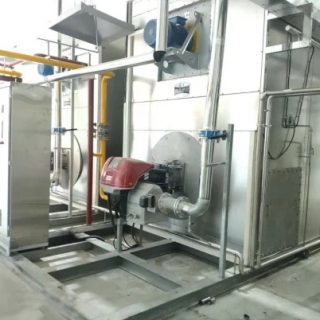
Hot Air Drying Equipment
Contact UsIndirect hot blast stove is a device that transmits heat to the air through indirect heating, mainly used for industrial heating and air conditioning.
-

Aluminum pipe
Contact UsUpipe Aluminum Alloy Piping System provides advanced, corrosion-resistant solutions optimized for compressed air, vacuum, and inert gas applications.
-

Gas-water heat exchanger
Contact UsWith the rebound consequences of human destruction of nature, such as Greenhouse Effect, air pollution, glacier melting and acid rain, as well as Chai Jing’s in-depth analysis of environmental pollution problems, prompted the department to start various provinces and cities to regulate the issue of waste discharge. Among them, the emission of flue gas is a more prominent and obvious problem of environmental protection and energy saving. The resulting gas heat exchanger has this effect.
-

Power Piping
Contact UsType finned tube heat exchanger elements maintain a high capacity for heat transfer, possess superior self-cleaning properties and retain the ability to effect flue gas waste heat recovery in boiler renovations.
Reviews
There are no reviews yet.