

Clinical Laboratory Batch Testing Analyzer Guide 2026
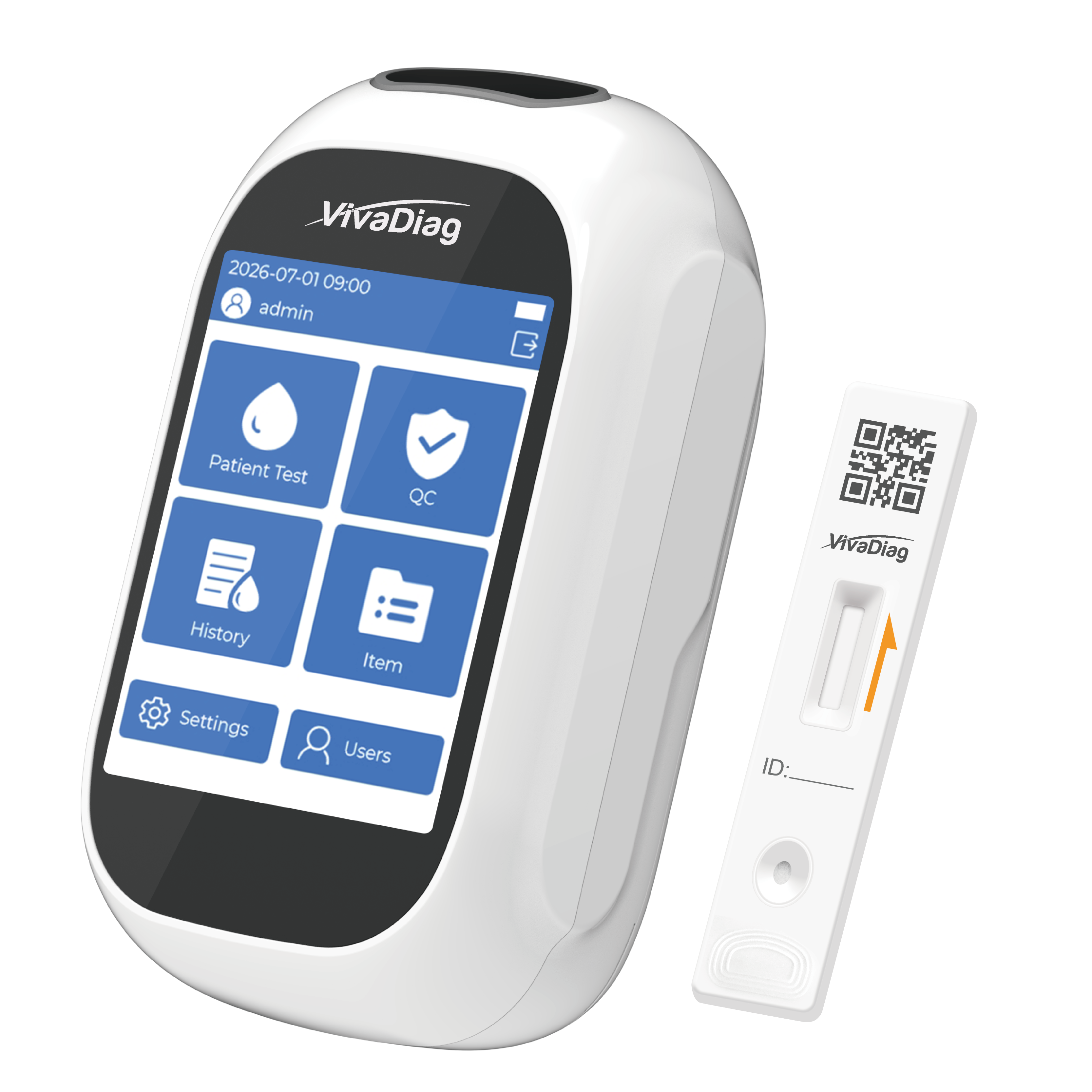
VivaDiag VIM3000 is a benchtop FIA analyzer for professional batch testing. It works with compatible VivaDiag FIA kits and has a built-in thermal printer.
Choosing a Point-of-Care Immunoassay Analyzer for Clinical and Batch Testing Needs
Clinical laboratories, primary care practices, and emergency care settings share a common challenge: delivering accurate quantitative diagnostic results without the delays, large sample volumes, and infrastructure demands of centralized laboratory testing. For organizations evaluating a fluorescence immunoassay (FIA) analyzer to support batch testing workflows, understanding the technical specifications, regulatory status, and ecosystem compatibility of available systems is essential before making a purchasing decision. This guide outlines the key evaluation criteria buyers should consider, drawing on the specifications and capabilities of VivaChek Biotech (Hangzhou) Co., Ltd., a manufacturer of IVDR-certified point-of-care diagnostic systems under the VivaDiag brand.
Why Traditional Lab-Bound Testing Falls Short
Traditional fluorescence immunoassay testing has historically been constrained by laboratory-bound instruments, large sample volume requirements, long turnaround times, and high operational costs. These constraints limit access to timely diagnostics at the point of care, particularly in settings where patients cannot wait for results to return from a central laboratory. Buyers seeking an analyzer for batch or routine clinical testing should therefore prioritize systems that balance throughput, portability, and regulatory compliance.
Core Specifications to Evaluate
When comparing analyzer options for clinical laboratory or point-of-care batch testing, buyers should examine several technical dimensions:
-
Test menu breadth: A broader parameter menu reduces the need for multiple instruments. VivaChek’s VivaDiag Portable FIA Analyzer VIM300H supports 39 venous-blood parameters and more than 20 capillary-blood-ready parameters, covering inflammatory, cardiac, diabetes, tumor marker, and hormone testing categories.
-
Sample volume requirements: Lower sample volume reduces patient burden and simplifies collection logistics, particularly for fingerstick whole blood workflows. As an example from VivaChek’s product line, the VivaDiag Prostate Specific Antigen (PSA) Test Kit (FIA) requires only 20 μL of sample, supporting both fingerstick and venipuncture collection.
-
Turnaround time: Faster results support same-visit clinical decisions. The PSA Test Kit delivers quantitative results in 15 minutes.
-
Data memory and connectivity: For batch or multi-session testing environments, result storage capacity and connectivity options matter. The VIM300H analyzer stores up to 10,000 results and offers USB, Wi-Fi, and optional Bluetooth connectivity for data management and record keeping.
-
Portability and battery life: Facilities running testing across multiple sites or shifts benefit from analyzers that do not require constant access to power. The VIM300H weighs 370 g, measures 146 x 77.6 x 55.5 mm, and operates on a removable, rechargeable lithium battery for up to 10 hours of continuous use.
-
Measuring range: A wider measuring range supports detection across a broader clinical spectrum. The PSA Test Kit measuring range spans 0.1–100 ng/mL for serum/plasma and 0.37–100 ng/mL for whole blood.
Regulatory Compliance: A Non-Negotiable Criterion
For buyers operating in Europe or supplying European markets, regulatory certification is a central purchasing consideration. VivaChek’s PSA Test Kit is IVDR-certified for professional use and carries CE Marking with Notified Body Identification Number 0344, issued by DEKRA. The company holds an EU Quality Management System Certificate under Regulation (EU) 2017/746 on In Vitro Diagnostic Devices, Annex IX Chapter I and III. These certifications confirm that the manufacturing processes and product design meet the regulatory requirements applicable to in vitro diagnostic devices intended for use by clinical laboratory professionals.
Buyers evaluating analyzers for batch testing should verify that both the hardware (analyzer) and the disposable test kits used with it carry equivalent and compatible certifications, since professional-use diagnostic systems typically require the full pairing of analyzer and reagent kit to be validated together.
Precision and Reliability Considerations
Precision data should be a standard part of any analyzer evaluation. VivaChek reports intermediate precision coefficients of variation (CV) for its PSA Test Kit of 4.97% at low concentration, 4.05% at medium concentration, and 4.69% at high concentration. Buyers comparing systems should request similarly detailed precision data across concentration ranges, rather than relying on single-point performance claims, since clinical decisions often depend on accuracy at both low and high analyte concentrations.
Matching the Analyzer to the Testing Environment
Different clinical settings have different operational priorities, and VivaChek’s current and prior-generation analyzer models illustrate how form factor trade-offs affect suitability:
The VIM300H, the current-generation model, is designed for diversified clinical settings including primary healthcare (GP clinics, community health centers, township and rural clinics, walk-in care facilities) and emergency or pre-hospital care (ambulances, mobile medical units, emergency department triage, urgent care centers). Its 3.97-inch color touch screen, unit conversion capability, and operation temperature range of 5–40°C make it adaptable to a range of indoor clinical environments.
The prior-generation VIM3000 model, by comparison, weighs 1.8 kg and includes a 7-inch color touch screen with a built-in thermal printer and Ethernet port (RJ-45) connectivity, making it more suited to fixed-location laboratory settings that require wired network integration and in-unit printing.
The VIM220H, an earlier compact model at 165 g with a 1.54-inch LCD display, prioritizes minimal size and weight over display size and connectivity options, illustrating a trade-off buyers should weigh depending on whether portability or data features are the higher priority for their testing volume and setting.
Sample Type Flexibility
Buyers running batch testing across varied patient populations should also confirm sample type flexibility. VivaChek’s analyzer platform supports whole blood, serum, plasma, urine, hair, and other sample types, with the ID Card coding system enabling parameter-specific calibration for each test kit used with the analyzer.
Evaluating Kit Contents and Workflow
Beyond the analyzer itself, buyers should review what is included with each test kit to assess true per-test workflow efficiency. The VivaDiag PSA Test Kit (FIA), for instance, includes 25 test devices, 25 buffer tubes, 25 safety lancets, 25 alcohol prep pads, 25 x 20 μL pipettes, 25 x 75 μL pipettes, and 1 ID Card per kit, supporting a complete fingerstick-to-result workflow without requiring additional consumables for most testing scenarios.
Conclusion: Aligning Specifications with Clinical Need
Selecting a clinical laboratory or point-of-care batch testing analyzer requires weighing test menu breadth, sample volume requirements, turnaround time, regulatory certification, precision data, and physical form factor against the specific demands of the testing environment. VivaChek Biotech (Hangzhou) Co., Ltd., through its VivaDiag brand, offers a documented example of how these factors come together in an IVDR-certified, professional-use fluorescence immunoassay system—built around the VIM300H analyzer and its associated test kits such as the PSA Test Kit (FIA)—for buyers serving European priority markets including Germany, France, Italy, Spain, and the UK, as well as the broader global market. Buyers are encouraged to request full technical documentation and certification records directly from manufacturers before finalizing any purchasing decision.
Related products
-
ESR Tube
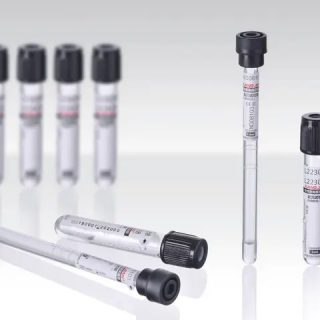
Contact UsESR Tube is applicable to various Automated Erythrocyte Sedimentation Rate Analyzers. Due to little volume and negative pressure inside the tube, it needs some time for blood collection.
-

4-Vinylphenol
Contact Us【Synonyms】:4-Hydroxystyrene 【CAS No.】:2628-17-3 【Formula】:C8H8O 【Molecular Weight】:120.15 【Appearance】:Liquid, clear colorless to orange, slightly miscible with water
-
-
Reviews
There are no reviews yet.