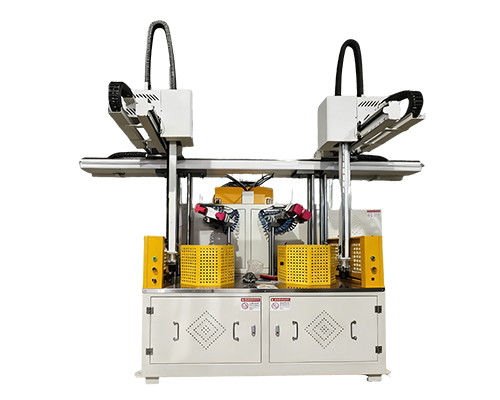
140 Vertical Type Multi-Station Tube Reducing Machine
YANRUILIN SCX-140 Tube End Forming Machine | The Reliable Solution for Medium-Diameter Tube Forming
The YANRUILIN SCX-140 tube end forming machine is designed to provide stable and precise forming for medium-diameter tube fittings. Engineered for performance, it is an ideal choice for applications requiring consistent, high-quality tube end shaping.
Tube end forming is an important manufacturing process for industries that use metal pipes in connection, fitting, fluid transfer, structural, and piping applications. As tube diameters increase, maintaining consistent forming quality becomes more challenging. The machine needs sufficient forming force, stable tooling, accurate positioning, and a production cycle suitable for batch manufacturing.
The YANRUILIN SCX-140 vertical dual-station tube end forming machine is designed for medium-diameter metal tube processing. Its vertical configuration combines hydraulic forming power, servo-driven control, dedicated tooling, and dual-station operation to support a range of pipe-end forming requirements.
With a processing range covering tubes up to 140 mm in outside diameter, the SCX-140 is intended for applications such as municipal pipeline components, construction pipe fittings, industrial piping, and other medium-diameter tube assemblies.
Designed for Medium-Diameter Metal Tubes
One of the most important considerations when selecting a tube end forming machine is whether its working range matches the actual tube dimensions used in production.
The SCX-140 is designed for metal pipes with an outside diameter range of approximately 30–140 mm, with the detailed technical specification supporting wall thicknesses within the applicable forming range. Pipe lengths can range from 50 to 2000 mm.
The machine can accommodate different pipe geometries, including:
-
Straight pipes
-
T-branch pipes
-
45-degree elbow pipes
-
90-degree elbow pipes
-
Other compatible metal tube configurations
This flexibility makes the machine suitable for manufacturers handling more than one pipe geometry or producing different end-forming components within the same production environment.
Multiple Tube End Forming Processes
Different piping systems require different connection geometries. A production machine therefore needs to support the forming processes required by the final component design.
The SCX-140 can be configured for processes such as:
-
Single press fitting
-
Double press fitting
-
Ring pressing
-
Profile expanding
-
Profile reducing
-
Tube end tension forming
The forming principle uses a tensioning mold and a conical mold. The fitting is pulled through the forming tooling multiple times to achieve the required tensioning effect, helping the inner cavity of the mold correspond with the final pipe geometry.
This forming approach is particularly relevant when manufacturers need repeatable tube-end profiles without relying heavily on secondary machining operations.
Hardened Tooling for Consistent Forming
Tooling quality directly influences the surface condition and dimensional consistency of formed pipe ends.
The SCX-140 uses Cr12MoV or SKD11 tool steel for its molds. The tooling is quenched to a hardness above 56 HRC, according to the supplied specifications.
A properly processed mold can provide the hardness and surface condition needed for repeated forming operations. Smooth tooling surfaces also help reduce the risk of burrs and unwanted marks during the forming process.
For manufacturers running repeated production batches, tooling durability is particularly important because excessive wear can gradually affect the dimensional consistency of formed components.
Dual-Station Configuration for Batch Production
The dual-station design is one of the key features of the SCX-140.
Two forming stations can support parallel processing arrangements, allowing operators to improve machine utilization during batch production. Depending on the production process and workpiece configuration, one station can be loaded or unloaded while another forming operation is being completed.
The practical benefit is not simply a higher theoretical speed. Production efficiency also depends on loading time, unloading time, mold changes, inspection, material handling, and operator workflow.
For manufacturers processing repeated batches of similar tube components, a dual-station configuration can provide a more efficient production arrangement than a single-station machine.
Hydraulic Power Combined with Servo Control
The SCX-140 combines a hydraulic forming system with a servo motor and driver rated at 15.4 kW.
Hydraulic power provides the forming force required for medium-diameter metal tubes, while servo control can support more precise control of machine movement and processing parameters.
The hydraulic system includes components such as:
-
KHG1-50-01R-VPC hydraulic pump
-
Pressure sensor
-
Directional valve
-
Pressure holding valve
-
Solenoid relief valve
-
25 MPa pressure gauge
-
Custom hydraulic oil tank
-
Hydraulic filtration system
The machine also uses internal and external hydraulic cylinders with specified bore and stroke dimensions.
For tube forming, stable hydraulic pressure is important because inconsistent forming force can influence the final geometry of the workpiece. Pressure monitoring and controlled hydraulic operation therefore form an important part of the overall machine design.
PLC Control and Touchscreen Operation
The machine is equipped with a PLC control system and a 10-inch touchscreen.
A centralized control interface can make it easier for operators to monitor and adjust machine parameters during production. It also provides a practical platform for managing the forming sequence and coordinating the hydraulic and servo systems.
For factories transitioning from conventional manual processes to more controlled production, a PLC-based system can help standardize operating procedures and reduce dependence on manual adjustment.
The machine can also be equipped with additional safety and automation-related components according to the customer's configuration requirements.
Quick Mold Change and Setup
Mold replacement time can have a significant impact on production efficiency, particularly when a factory produces multiple tube specifications.
The supplied specification indicates a mold change and debugging time of approximately 5–10 minutes under the specified conditions.
The machine startup and preheating time is approximately 20 seconds, while the forming cycle is listed in the range of approximately 12–45 seconds per end, depending on the specific process and workpiece.
Actual cycle time should be confirmed according to tube material, diameter, wall thickness, forming geometry, tooling configuration, and production process.
Forming Accuracy and Quality Control
Dimensional consistency is one of the main requirements in tube end forming.
The detailed specification lists a dimension tolerance of ±0.2 mm, while the initial product description refers to tighter forming accuracy under specific configurations. For production planning, manufacturers should confirm the guaranteed tolerance for the exact tube, mold, and forming process before placing an order.
The machine can also produce pipe projection rings with a height range of 0–25 mm per side, depending on the tooling and forming requirements.
For manufacturers producing connection components, maintaining consistent end dimensions is important because the formed section may directly affect subsequent assembly, pressing, sealing, or connection operations.
Compact Machine Footprint
Despite its forming capacity, the SCX-140 maintains a relatively compact footprint of:
2350 × 1900 × 1900 mm
The machine weighs approximately 3200 kg.
Its vertical configuration can provide useful flexibility when planning workshop layouts. Compared with some horizontal forming arrangements, a vertical machine can offer an alternative equipment orientation for factories with specific floor-space or material-handling requirements.
The specified workbench height is approximately 1.15 m, which also provides a defined working position for loading and unloading.
Cooling and Power Requirements
The machine can be equipped with air cooling or water cooling.
For water-cooled operation, the workshop needs an appropriate circulating water system capable of supporting continuous production. The supplied cooling fan specification is 1490-380V.
The standard supply voltage is listed as:
380 V, 50 Hz
Manufacturers should confirm the actual electrical configuration before installation, particularly when the machine is being exported to a region with different industrial power standards.
Proper cooling and hydraulic system maintenance are also important for maintaining stable machine performance during extended production cycles.
Manual Loading with Automation Potential
The standard configuration uses manual loading and unloading.
This provides a straightforward starting point for factories where production volumes or product variations do not yet justify full automation.
At the same time, the machine can be considered as part of a broader automated production line. With suitable modifications and interfaces, tube forming equipment can be integrated with robotic loading, unloading, material transfer, inspection, or downstream assembly systems.
This makes the SCX-140 suitable for manufacturers that want to begin with semi-automatic operation and gradually expand their production automation.
Safety Features for Production Operations
Safety is another important consideration for hydraulic tube forming equipment.
The machine can be fitted with a grating protector, providing an additional protective measure around the operating area.
The supplied product information also indicates a normal-use service guarantee of 50,000 operating cycles when the machine is equipped with the specified dedicated molds and protective configuration.
As with any industrial forming equipment, actual service life depends on material selection, tooling maintenance, hydraulic system condition, operating frequency, installation quality, and adherence to recommended maintenance procedures.
Applications of the SCX-140
The combination of medium-diameter processing capability and multiple forming processes allows the SCX-140 to be used in several industrial sectors.
Potential applications include:
Municipal Pipeline Components
Tube end forming can be used to produce components for municipal water, drainage, and other piping systems where consistent connection geometry is required.
Construction Pipe Components
Construction-related piping often requires different tube-end configurations for connection and installation. A flexible forming machine can support manufacturers producing multiple component types.
Industrial Piping
Industrial pipe assemblies may require expanding, reducing, pressing, or ring-forming processes. The SCX-140 can be configured according to the required tube geometry and tooling.
Metal Tube Fitting Production
Manufacturers producing tube fittings and connection components can use the dual-station structure to support repetitive batch production.
What Should Buyers Consider Before Choosing a Tube End Forming Machine?
Before purchasing a medium-diameter tube end forming machine, buyers should evaluate the entire production requirement rather than focusing only on maximum tube diameter.
Important questions include:
-
What is the actual tube outside diameter and wall thickness?
-
What pipe materials will be processed?
-
Which forming processes are required?
-
What is the required cycle time per component?
-
How many parts are expected per shift?
-
How frequently will molds need to be changed?
-
Is manual loading sufficient, or is robotic automation required?
-
What dimensional tolerance is required for the finished tube end?
-
What hydraulic and electrical infrastructure is available?
-
What tooling material and hardness are required for the production volume?
These factors help determine whether a machine is properly matched to the manufacturing process.
Conclusion
The YANRUILIN SCX-140 is designed as a vertical dual-station tube end forming solution for medium-diameter metal pipes. Its processing range, hydraulic forming system, servo-driven configuration, hardened Cr12MoV or SKD11 tooling, PLC control, touchscreen interface, and compact footprint provide a practical foundation for batch tube processing.
For manufacturers working with straight pipes, branch pipes, elbow pipes, and other compatible metal tube components, the machine can support multiple forming processes while providing opportunities for improved production consistency and future automation.
The most important step before equipment selection is to match the machine with the actual tube material, diameter, wall thickness, forming geometry, tolerance, production volume, and automation requirements. With the correct tooling and process configuration, a vertical dual-station forming machine can become an important part of a stable and repeatable tube processing line.
Related products
-
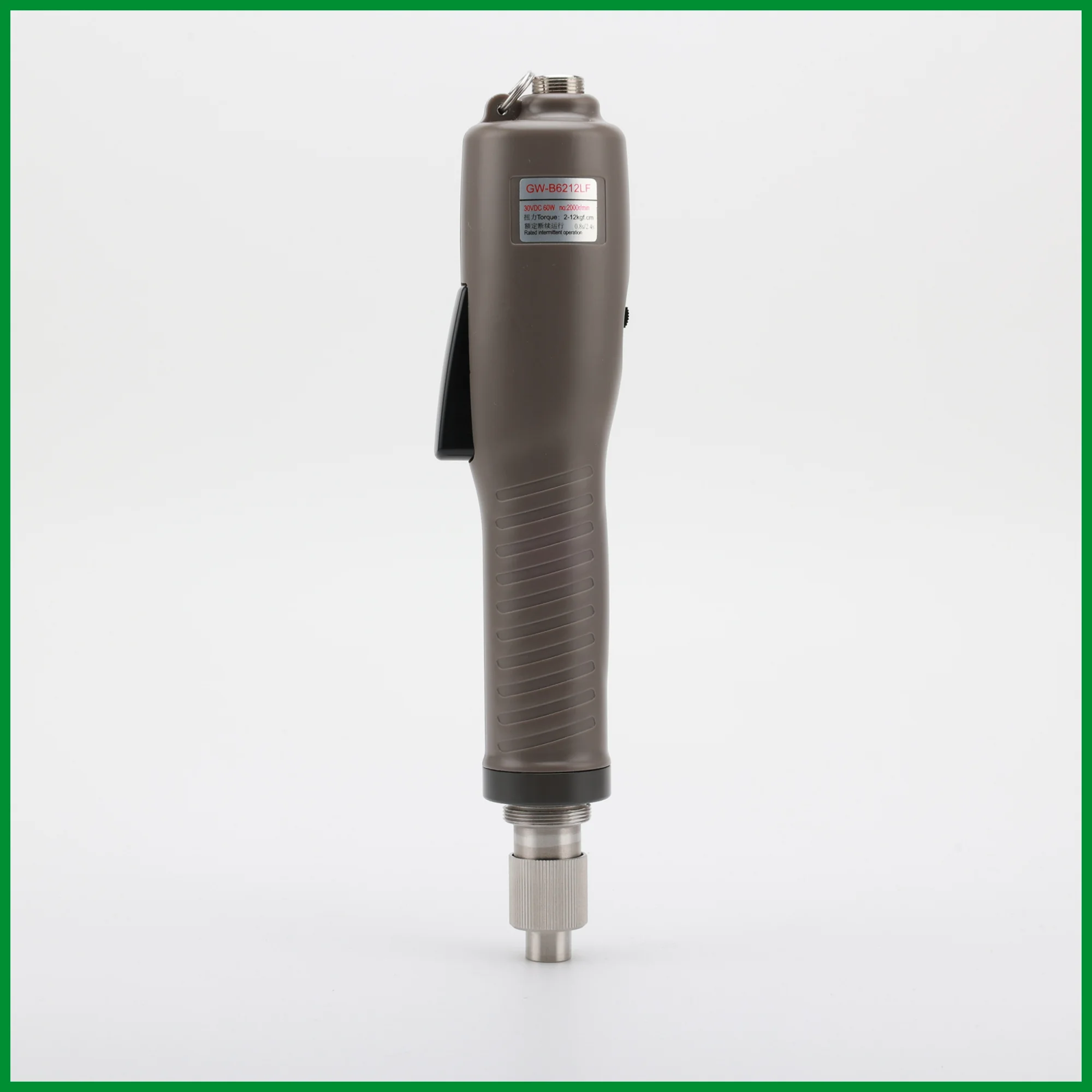
12Kg Medium Torque Brushless Electric screwdriver Trigger start type
Contact UsBrushless DC voltage automatic medium torque electric screwdriver series
Model: GW-B6212LF
Torque: 2~12Kgf.cm
Free Speed: HI 2000 / LO 1500 r.p.m -
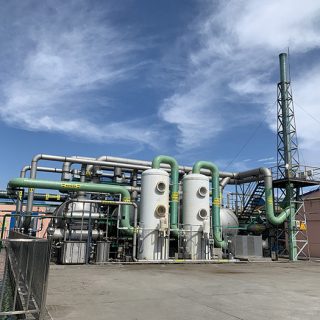
High-efficiency activated carbon attachment device
Contact UsHigh-efficiency activated carbon attachment device can quickly absorb pollutants in exhaust gas. The exhaust gas containing pollutants is powered by a fan and enters the activated carbon adsorber under negative pressure.
-
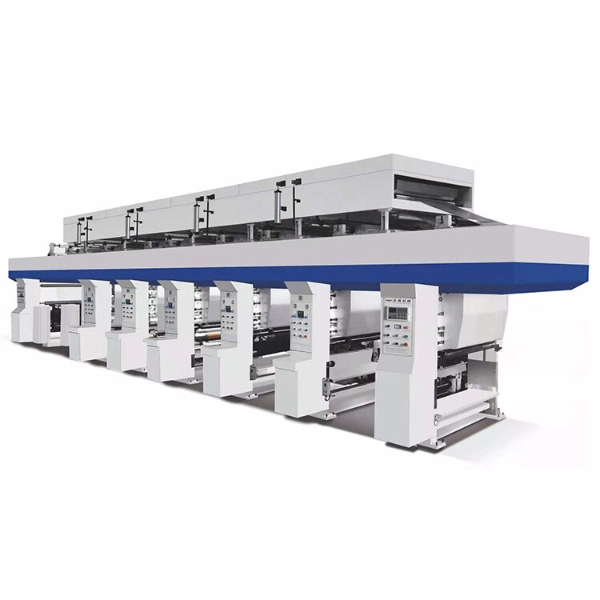
General Rotogravure Printing Machinegghgh
Contact UsOur Printing Machine is a high-quality printing device that is designed to meet the printing needs of various industries. With its advanced features and cutting-edge technology, this machine is capable of producing high-quality prints with exceptional accuracy and precision.Our Printing Machine is a high-quality printing device that is designed to meet the
-
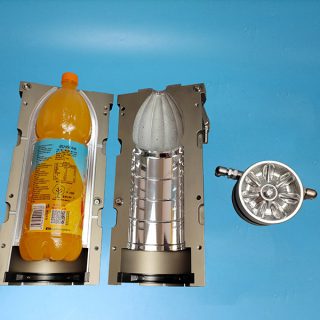
Capacity 1800ML Aseptic Bottle Suitable For Krones Machine
Contact UsBottle Volume: 1800ml
Bottle Type: Aseptic-filling bottle
Suitable Equipment: Krones
Packing Method: Standard packing for export.
Reviews
There are no reviews yet.