
5 Common Aggregate Crushing Plant Problems and Practical Fixes
Leimeng Group provides crushing, screening, sand-making and washing equipment for mining, quarrying, aggregate production and construction waste recycling.
What to check before changing equipment—and where Leimeng Group can help.
The jaw crusher keeps stopping. One aggregate stockpile is always short. Wear parts need replacing more often, but saleable output has barely improved.
For a quarry operator, these problems raise a practical question: can the existing plant be improved, or is different equipment needed?
Leimeng Group supplies crushing, screening, feeding and sand-making equipment, alongside complete plant solutions. For an upgrade discussion, the useful starting point is your current equipment, material and production records. These help establish whether the next step involves operating adjustments, maintenance work or a change to the plant configuration.
Below are five common problems and the checks that can help narrow down the cause.
1. Unstable Feeding and Repeated Primary Crusher Blockages
A crusher that alternates between running empty and receiving sudden surges of material will struggle to maintain steady production.
Before increasing the feed rate, record when interruptions occur. Does the problem follow an oversized rock, a large loader bucket or a change to wetter material?
Check the maximum feed size against the crusher’s recommended limits. Inspect the hopper, feeder and discharge arrangement for places where material accumulates.
Start with these checks:
-
Are oversized pieces reaching the crushing chamber?
-
Is the feeder delivering material consistently?
-
Are clay and wet fines building up?
-
Can the discharge conveyor carry material away?
Adjusting the loading routine and feeder rate may help. Where suitable, a grizzly feeder or separate scalping screen can remove material that does not need to pass through the primary crusher.
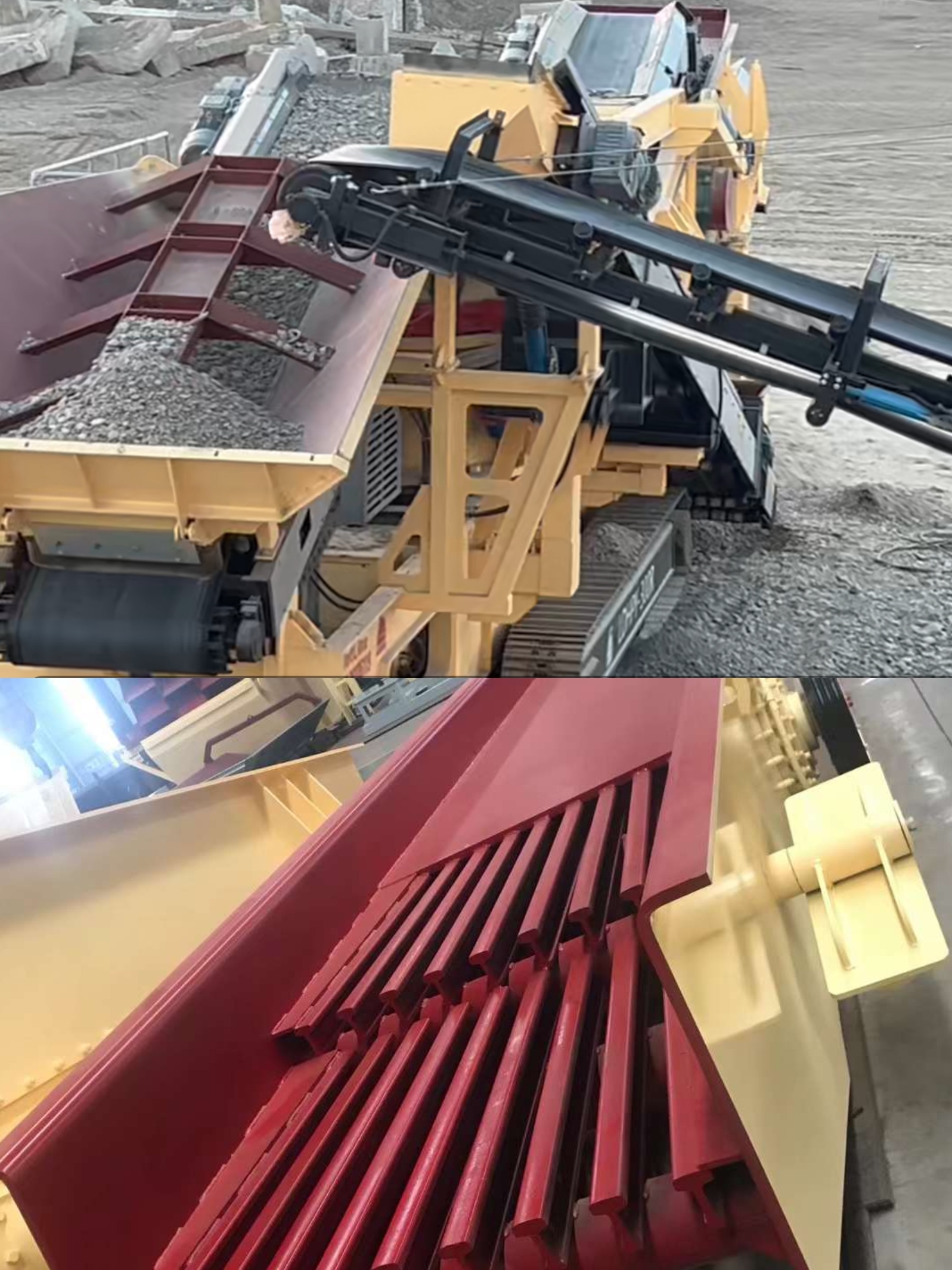
Sticky clay requires closer assessment. A grizzly may not separate it effectively, while washing introduces additional requirements for water supply, drainage and material handling.
Leimeng Group’s equipment range includes vibrating feeders and PE and GC series jaw crushers. When discussing a replacement or new installation, provide the feed-size range and material conditions alongside your capacity target. The feeder and jaw crusher need to be considered together, including how the jaw discharge will feed the next stage.
Clear blockages only under the equipment’s prescribed isolation and maintenance procedures.
2. Poor Aggregate Shape or Inconsistent Grading
A stockpile can contain enough tonnes and still fail to meet the buyer’s specification.
First identify the problem precisely. Excess flaky particles, too many fines and incorrect grading require different checks.
Take representative samples of the finished products. Compare the results with the required specification, then work back through the process.
| Product problem | What to investigate first |
|---|---|
| Too many flaky particles | Feed distribution, chamber selection, crusher settings and liner condition |
| Incorrect grading | Screen openings, damaged or blocked media, return material and stockpile mixing |
| Excess fines | Fines already present in the feed and fines generated during processing |
A VSI crusher may help where additional shaping or manufactured sand production is required. However, adding another crushing stage also changes the product distribution, power demand and wear costs.
Leimeng Group supplies cone crushers, VSI sand makers and vibrating screens. This allows the project discussion to cover both crushing and product classification. Share your grading results and particle-shape requirements before deciding whether the plant needs an additional shaping stage.
The key question is: which part of the current process is preventing the product from meeting specification?
Screen decks and openings should then be selected around the required products and material load. A three-deck screen is an option for some applications, not a standard answer for every aggregate plant.
3. High Wear-Part Costs and Frequent Replacement Stops
A replacement interval tells only part of the story.
Two sets of liners may last the same number of operating hours while processing very different tonnages. Compare wear-part cost with the amount of saleable material produced, and include the downtime and labour required for each change.
Before ordering a different material grade, gather:
-
The crusher model and current wear-part references.
-
Material type and available abrasiveness information.
-
Approximate tonnes processed per set.
-
Photos showing the wear pattern.
-
Replacement time and any access difficulties.
Uneven wear deserves particular attention. Feeding conditions, chamber selection and operating settings should be reviewed alongside the wear-part material.
Jaw plates, cone liners and impact crusher blow bars perform different duties. A recommendation for one component should not automatically be applied to another. Thicker parts or a higher manganese content are not universal solutions.
For clients using Leimeng equipment, these records give the technical team a more useful starting point than a general report that “the liners wear too quickly.”
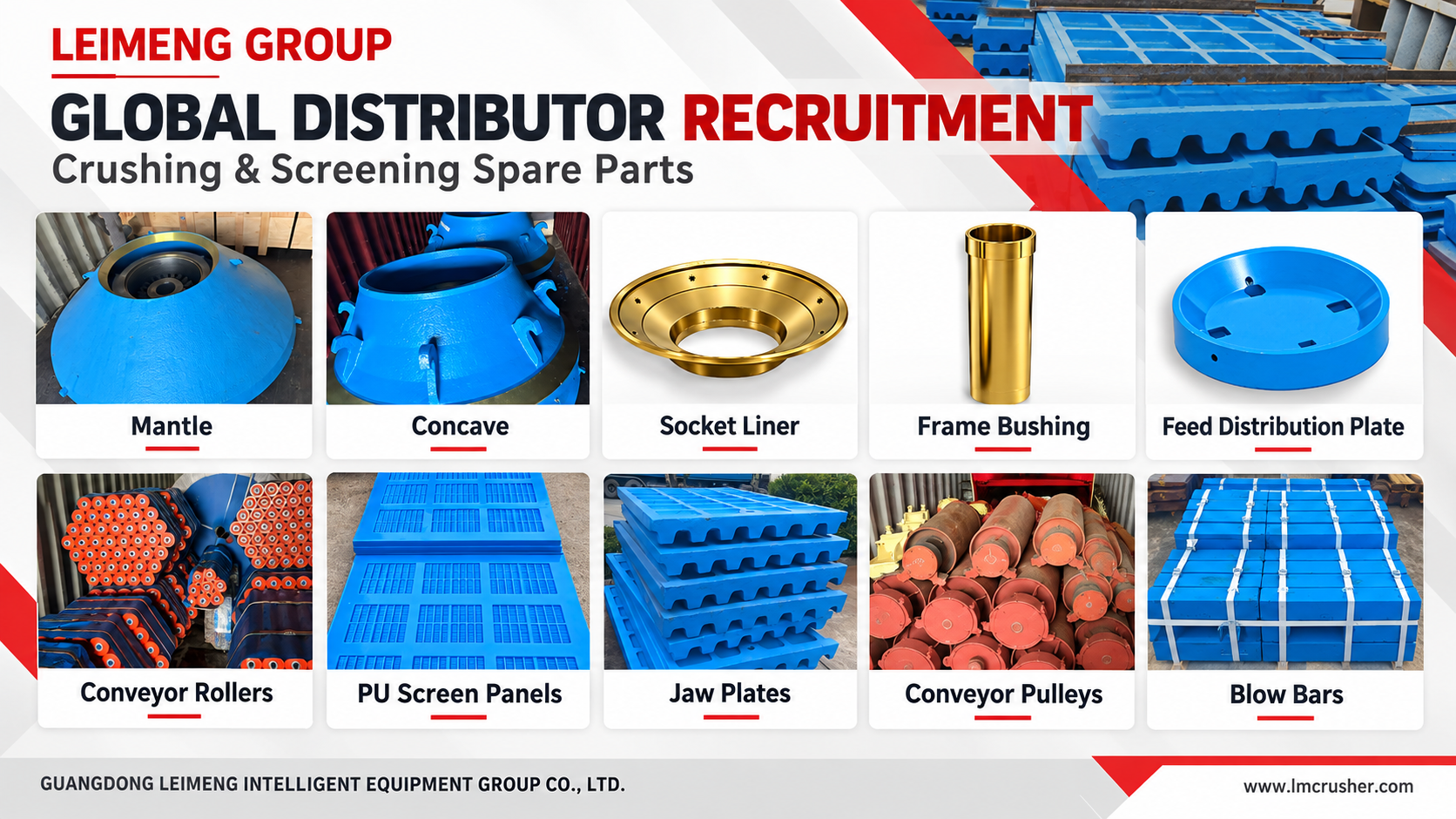
If the cause is unclear, Leimeng Group provides free remote assistance during equipment use. Alarm information, operating readings and safely recorded photos or videos can support the discussion. If an issue cannot be effectively resolved remotely, we will arrange for personnel to visit the site and investigate, with visit arrangements and applicable terms confirmed for the situation.
Keep spare-parts planning separate from troubleshooting. Confirm the correct references, current lead times and which items should be held on site before the next replacement becomes urgent.
4. Relocation Takes Too Much Time and Money
A move can interrupt production well beyond the time spent transporting the machines.
Dismantling, loading, ground preparation, reconnecting equipment and preparing stockpile areas all affect when the next site can begin producing.
Start by defining the movement requirement. Moving equipment within a quarry is different from transferring it between distant projects.
Compare:
-
Frequency and distance of relocation.
-
Access and transport restrictions.
-
Expected operating period at each location.
-
Ground conditions and utility arrangements.
-
Dismantling, setup and lost production time.
Leimeng Group offers tracked mobile crushing and screening plants, wheeled mobile plants, modular solutions and fixed plant equipment. These options can be discussed against the same operating plan.
Tracked equipment may suit projects requiring frequent movement. Other projects may benefit from wheeled or modular arrangements, while a long-term operation may favour a fixed installation.
Mobile equipment can reduce permanent foundation requirements, but suitable ground conditions and site preparation remain necessary. Some applications use integrated units; others require separate crushers, screens and conveyors.
Ask for the proposed transport and setup scope before comparing prices. No single relocation frequency determines the best configuration for every site.
5. The Crusher Has Capacity, but the Plant Cannot Use It
Material builds up before the screen. A conveyor runs at its limit. Oversize material keeps returning for another pass.
These are reasons to review the whole circuit before purchasing a larger crusher.
Check where material accumulates and when it happens. Does the restriction appear with wetter feed, a different product specification or an increase in returned material?
Review these points together:
-
Feed rate and distribution across the screen.
-
Screen media condition and separation performance.
-
Conveyor and transfer-point capacity.
-
Oversize return flow.
-
Crusher settings and required product sizes.
In a closed circuit, equipment handling both fresh feed and returned material must be assessed for the combined load.
For illustration, a conveyor carrying 150 tonnes per hour of fresh feed and 50 tonnes per hour of returned material handles 200 tonnes per hour. Actual equipment sizing requires the flows and operating conditions of the specific plant.
A buffer hopper may help manage short-term variations. It will not remove a continuing restriction farther down the line.
Because Leimeng Group supplies crushers, vibrating screens, feeders and conveyors, an upgrade enquiry can cover the equipment connections and material flow as well as an individual machine. Send the current equipment list and a simple process diagram, marking where material accumulates.
The proposed change should identify what can remain, what needs modification and what additional information is required before selection.
6. Measure the Result of Each Change
A useful improvement should show up in production records.
Track saleable output by size, product quality, downtime and operating costs. Where practical, assess one adjustment at a time under comparable feed conditions.
A short daily log can include:
-
Material processed and noticeable changes in moisture or clay.
-
Operating hours and reasons for stoppages.
-
Output by finished product size.
-
Wear-part changes and maintenance work.
-
Settings or equipment changes made during the shift.
Leimeng Group provides installation guidance and personnel training to help clients prepare for equipment use. For an upgrade, discuss the training arrangements alongside the installation work so operators understand the requirements of the new configuration.
Keep these records after commissioning. They provide a basis for future maintenance and technical discussions.
7. Start with the Problem You Need to Solve
You do not need a complete engineering report to begin an upgrade enquiry.
Send Leimeng Group your:
-
Project location and raw material.
-
Current equipment and maximum feed size.
-
Current output and target capacity.
-
Required finished product sizes.
-
Main production or maintenance problem.
Photos, grading results, wear records and a rough layout can make the discussion more specific.
If your plant repeatedly blocks, tell us where. If one product is in short supply, tell us which size. If wear costs are rising, share the replacement interval and approximate tonnes processed.
Visit Leimeng Group to discuss the checks, equipment options and support relevant to your plant.
Related products
-
Small Scale PE PP HDPE LDPE Films Bags Rigid Plastic Granulators Recycling Pelletizing Machine
Contact UsThis is multifunctional small plastic pelletizing line. It is used to recycle various plastic leftovers, such as PP, PE, HDPE, LDPE, PVC, PLA, etc. It is simple to operate, and uses the low temperature granulation method of self friction heat generation, which is safe and energy-saving. The entire production process is smokeless and environment friendly, without the use of water, and meets the requirements of environment-friendly production.
-
Optimizing Cross Cut Saw MAXCUT CS15/15XL
Contact UsMAX CUT CS15/15XL, as a relatively practical type of cross cut saw, it is designed for the bending timber, such as rubber wood.
-
MA-(0.8~4MM)×1300MM Steel Coil Slitting Equipment
Contact UsMA-(0.8~4MM)×1300MM Steel Coil Slitting Equipment can process the slitting of the coil with different sizes to small strips for processing various kinds of metal coil materials.
-
Dry type transformer
Contact UsSafe, fireproof, non-polluting, can be run directly in the load center; using domestic advanced technology, high mechanical strength, strong short-circuit resistance, small partial discharge, good thermal stability, high reliability, long service life; low loss, low noise , obvious energy saving effect, maintenance-free
Reviews
There are no reviews yet.