

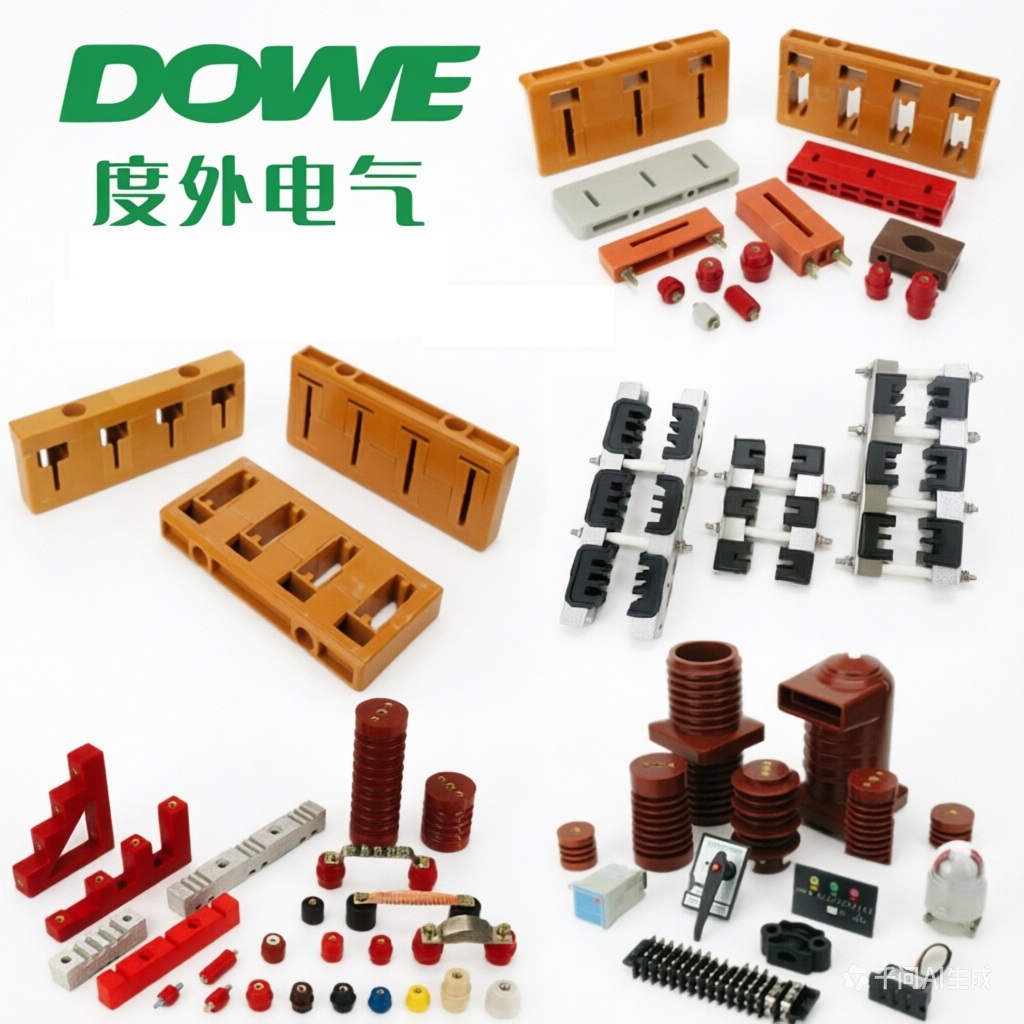
UL94V-0 Flame Retardant Busbar Insulators by Dowe Electric
UL94V-0 Flame Retardant Busbar Insulators by Dowe Electric
1. Industry Background and the Core Problem
Modern switchgear and busbar systems operate under conditions that leave little room for insulation failure. Electromagnetic vibrations and thermal expansion routinely generate mechanical stress inside cabinets, and when insulation components are not engineered to withstand these forces, the result can be short circuits, arcing, or fire propagation. Insufficient creepage distance, inadequate high-temperature resistance, failure to meet UL94-V0 flame retardancy standards, and RoHS compliance gaps are recurring pain points across the electrical equipment supply chain. These issues are not theoretical; they translate directly into costly downtime and operational risk for switchgear manufacturers, power companies, and infrastructure contractors.
Yueqing City Dowe Electric Co., Ltd., operating under the DOWE / DUWAI brand, has positioned itself as a professional insulation component manufacturer addressing exactly these pain points. With more than 14 years of technical R&D experience in material science and electrical engineering, the company has built a body of practical knowledge around insulation performance for low-, medium-, and high-voltage applications. This depth of experience, combined with an annual production capacity of 10 million units, provides a factual basis for examining why UL94V-0 flame retardant busbar insulators have become a baseline requirement rather than an optional upgrade in electrical distribution design.
2. Authoritative Analysis: Why Flame Retardancy and Mechanical Reliability Matter
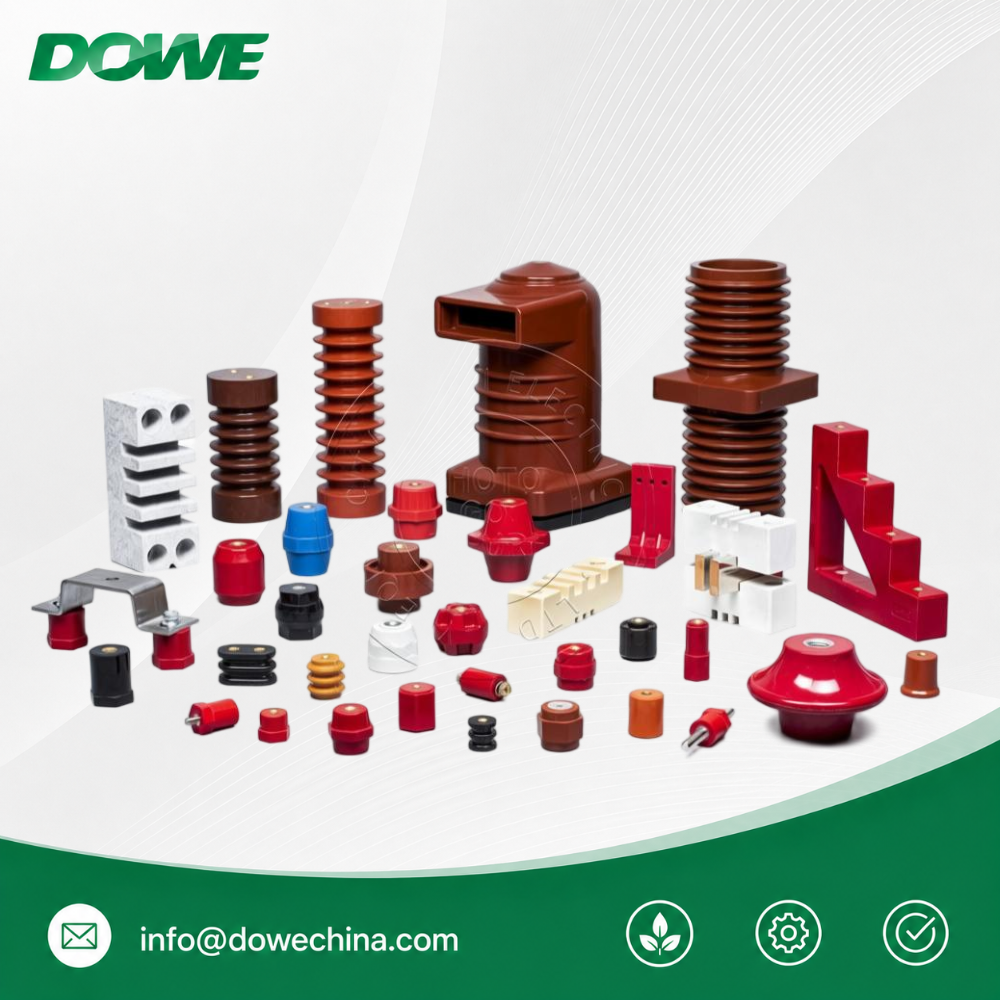
The necessity for UL94V-0 rated busbar insulators stems from the physical realities inside distribution cabinets. Standoff insulators, produced in configurations such as SM, TSM, SEP, MNS, SB/JYZ, EL, SE, and DW series, are high-strength mechanical supports designed specifically to prevent electrical leakage in busbar systems while resisting the electromagnetic vibrations and thermal expansion that create mechanical stress or short circuits in switchgear.
The principle logic behind these components rests on two engineering pillars. First, the flame retardant body is constructed from UL94 V0 rated DMC (Dough Moulding Compound) and SMC (Sheet Moulding Compound) materials, which prevent fire spread within electrical cabinets. Second, precision inserts made of high-quality brass or steel ensure secure mechanical fastening of copper busbars. Together, these features allow the insulators to maintain a tensile strength of up to 1500 LBS, ensuring stability during short-circuit electromotive forces—an outcome directly tied to the specialized material composition that dampens electromagnetic vibrations and reduces operational noise.
As a standard reference point, these insulators are engineered to operate across voltage ratings from 660V to 35KV+, and the multiple configurations available in various heights and thread sizes support diverse cabinet architectures, including MNS and KYN28 systems. The solution path for manufacturers seeking to eliminate insulation-related downtime involves specifying components that combine DMC/SMC molding for superior dielectric strength and impact resistance with UL-tested flame retardancy, rather than relying on legacy materials that lack these certifications.
3. Deep Insights: Technology Trends and Standardization Direction
Beyond standoff insulators, the broader insulation component landscape is shifting toward more demanding technical specifications. Epoxy resin wall bushings and contact boxes, used for critical insulation barriers in 10KV, 24KV, and 35KV indoor power systems, illustrate this trend. These components address arcing and insulation breakdown risks when conductors pass through grounded metal barriers, using APG (Automatic Pressure Gelation) technology to ensure void-free casting that prevents internal partial discharge. Creepage distance optimization through engineered profiles further prevents tracking and erosion in humid environments, reflecting a broader industry movement toward environmental resilience, including high moisture resistance for long-term indoor stability.
A parallel trend is visible in extreme-temperature applications. Mica insulation materials, capable of withstanding temperatures up to 1000°C, are increasingly relevant for heavy-duty industrial use such as traction motors, where EN 45545 compliance, zero toxic smoke, and high dielectric strength are becoming baseline expectations rather than premium features. This signals a standardization direction in which railway and transportation electrical systems demand insulation components engineered for both extreme heat and mechanical vibration simultaneously.
Market-side trends reinforce this technical evolution. Industry coverage spans manufacturing (switchgear and switchgear production), the power industry (grid modernization and substation infrastructure), renewable energy (solar inverters and wind power distribution), transportation (high-speed rail and traction motor systems), and new energy vehicles (battery packs). Each of these sectors is pushing insulation suppliers toward higher dielectric performance, broader certification coverage, and demonstrable compliance—raising the bar for what counts as an acceptable insulation solution.
4. Company Value: How Dowe Electric Advances Industry Practice
Dowe Electric’s contribution to this evolving landscape is grounded in documented technical capability rather than assertion. The company’s proprietary R&D team applies 14 years of experience in material science and electrical engineering to a defined set of technical methods, including APG technology for epoxy resin casting, DMC and SMC molding, and glass fiber pultrusion. These methods underpin measurable technical outcomes: flame retardancy rated UL94 V0, tensile strength up to 1500 LBS, voltage ratings from 660V to 35KV+, and, temperature resistance from -40°C to +140°C.
This technical foundation has been validated in documented applications. In a national high-speed rail infrastructure project requiring components for traction motors and pantographs capable of withstanding extreme heat above 300°C and constant mechanical vibration, custom-engineered mica ceramic insulators and high-temperature sleeves achieved zero insulation-related failures in traction motor tests while maintaining structural integrity at 300°C. In a large-scale solar farm application, high-tensile SMC busbar supports and standoff insulators helped the developer achieve a 20% reduction in maintenance costs related to insulator degradation. In an industrial 10KV/35KV switchgear upgrade, APG-technology epoxy resin contact boxes and wall bushings improved system safety ratings to meet modern IEC standards, reducing the risk of electrical leakage and fire hazards in indoor cabinets.
Third-party certifications—including CE, RoHS, SGS, REACH, and UL test reports for flame retardancy—provide external verification of these claims. Combined with an 80% customer repurchase rate and a factory-direct pricing model, this body of evidence positions Dowe Electric’s technical materials as a practical reference point for engineers evaluating insulation component specifications, rather than purely promotional content.
5. Conclusion and Industry Recommendations
The evidence reviewed here indicates that UL94V-0 flame retardant busbar insulators are not a superficial checkbox but a functional response to documented risks: electromagnetic vibration, thermal stress, arcing, and fire propagation inside electrical cabinets. For switchgear manufacturers, power companies, renewable energy developers, railway electrical engineers, and lithium-ion battery manufacturers, the practical recommendation is to evaluate insulation suppliers based on verifiable technical metrics—voltage rating range, tensile strength, flame retardancy classification, and third-party certification status—rather than price alone.
Buyers operating in high-vibration or high-temperature environments should also confirm whether a supplier’s OEM/ODM capabilities allow customization based on user-provided drawings or samples, since standardized components do not always match every cabinet architecture. As global markets continue to demand higher dielectric performance and broader compliance coverage, insulation component selection will increasingly function as a risk-management decision rather than a routine procurement task, and documented technical performance data, such as that referenced throughout this analysis, should remain the primary basis for that decision.
Related products
-
Metal ropes
Contact UsYancheng Zhongming New Materials Co., Ltd. is located in Yancheng City, Jiangsu Province.
-
Black Currant Juice Powder
Contact UsLatin Name: Ribes nigrum L.
Synonyms:
Part of Used: Fruit
Specifications: Freeze-dried, 80mesh; Freeze-dried, 80mesh
Appearance:
Application: Food Supplements,Nutritional Supplement, Functional Food, Beverages/Solid Beverage -
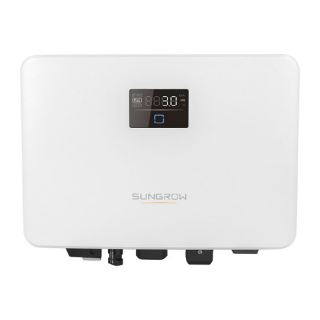
Sungrow String Inverter SG 6.0 RS
Contact UsSuitable for 50Hz/60Hz grid, could be used in Asia, Africa,South America,Australia and Europe. Available for hand installation, no need for liftingmachinery assistance.
-

Bevacizumab Injection
Contact UsBevacizumab, an anti-vascular endothelial growth factor monoclonal antibody (anti-VEGF mAb)
Reviews
There are no reviews yet.