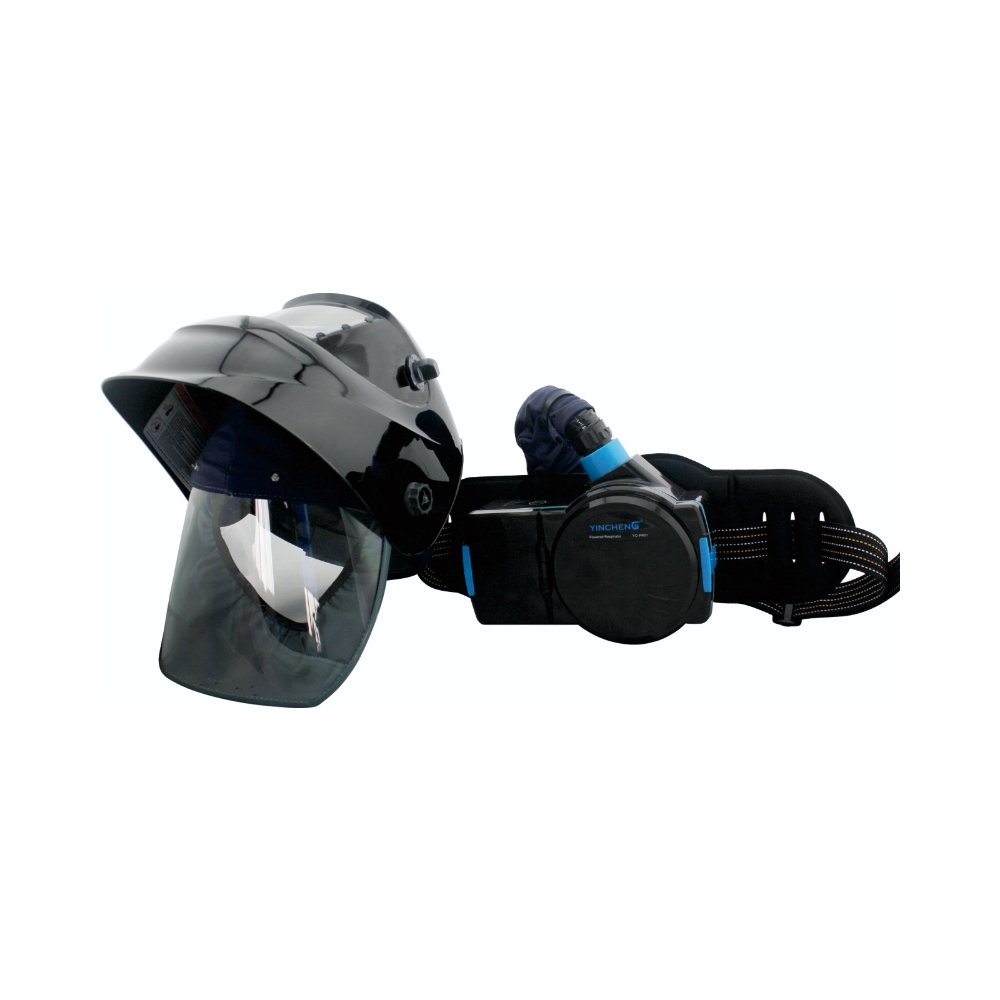
YC-PR01-FR HOOD Powered Air Purifying Respirator
Color Blue,Black
Package size 58*43*43cm, 2 pcs/carton
Certification EN12941
“Perfect Breathing Protection
filtration efficiency of 99.97%, to protect the health of the lungs from the inhalation of toxic solid particles, smoke and dust.
Intelligent & Stable Air Supply
adjust the power automatically according to the blockage of the air filter, to ensure the stable and clear air supply.
Welding Helmet & Air Hood Can Be Used Separately
except the welding industry, our PAPR can also be adopted in other industries (such as spraying), which need the fresh air.
In industrial environments where airborne hazards and fire risks exist at the same time, conventional respiratory protection is often no longer enough. Workers in welding shops, oil refineries, chemical plants, construction sites, and heavy manufacturing facilities face a combination of dust, fumes, sparks, heat, and potentially toxic airborne particles every day.
As safety regulations continue to tighten and employers place greater emphasis on worker comfort and long-term compliance, powered air purifying respirator (PAPR) systems are becoming a preferred solution across multiple industries.
Among the latest developments in industrial respiratory protection, flame-resistant hood PAPR systems stand out for combining respiratory filtration, continuous airflow technology, and heat-resistant protection into a single integrated solution.
The Growing Challenge of Industrial Respiratory Safety
Traditional respirators have long been used to protect workers from airborne contaminants. However, in many demanding work environments, conventional masks create several operational limitations:
-
Breathing resistance during extended wear
-
Heat buildup and discomfort
-
Fogging and reduced visibility
-
Poor compatibility with helmets or protective clothing
-
Air leakage caused by improper fit
-
Worker fatigue after long shifts
In environments involving sparks, combustible dust, or chemical exposure, these issues become even more critical.
This is why many industrial operations are transitioning toward powered air purifying respirator systems that provide both enhanced protection and improved usability.
What Is a Flame-Resistant PAPR System?
A flame-resistant powered air purifying respirator is an advanced respiratory protection system designed to deliver filtered air continuously through a powered fan unit while simultaneously protecting the wearer from heat and flame exposure.
Unlike passive respirators that rely on the user’s breathing effort, a PAPR system actively pushes purified air into the hood, creating a continuous positive pressure environment.
This approach offers several major advantages:
-
Reduced breathing fatigue
-
Improved protection against airborne leakage
-
Better comfort during extended use
-
Enhanced visibility and airflow
-
Increased worker compliance
For industries where workers operate for hours under physically demanding conditions, these benefits can significantly improve both safety and productivity.
Why Continuous Positive Pressure Matters
One of the most important features of modern PAPR systems is Continuous Positive Pressure (CPP) technology.
In a standard respirator, negative pressure is created during inhalation, meaning air can potentially enter through small gaps if the mask fit is imperfect.
A PAPR system works differently.
The powered fan continuously supplies filtered air into the hood, maintaining positive internal pressure. This helps prevent contaminated outside air from entering the breathing zone.
The result is:
-
More stable respiratory protection
-
Reduced inhalation resistance
-
Improved user comfort
-
Better protection during movement and long shifts
For workers performing physically demanding tasks such as grinding, welding, or demolition, this technology greatly reduces respiratory strain.
The Importance of Flame-Resistant Protection
Many industrial environments involve not only airborne hazards but also fire or heat exposure.
Industries such as:
-
Oil and gas
-
Welding and metal fabrication
-
Petrochemical processing
-
Electrical maintenance
-
Heavy manufacturing
often require workers to wear flame-resistant protective equipment.
Modern FR hood PAPR systems integrate flame-resistant materials directly into the hood structure, eliminating the need for multiple overlapping protective layers.
High-performance FR fabrics designed to meet standards such as NFPA 70E and ASTM F1506 provide protection against:
-
Sparks
-
Flash fire hazards
-
Heat exposure
-
Arc-related risks
At the same time, the full-coverage hood design protects the:
-
Head
-
Neck
-
Face
-
Shoulders
This integrated approach simplifies PPE management while improving mobility and comfort.
Why Comfort Directly Impacts Safety Compliance
One of the biggest challenges in workplace safety is ensuring that workers consistently wear protective equipment correctly.
Heavy, restrictive, or uncomfortable respirators often lead to:
-
Reduced wear time
-
Improper fitting
-
Frequent removal during work
-
Lower compliance rates
Modern lightweight PAPR systems are specifically engineered to address these issues.
Features such as:
-
Balanced weight distribution
-
Adjustable head straps
-
Soft neck seals
-
Moisture-wicking interior materials
-
Low-noise brushless fans
help workers remain comfortable throughout long shifts.
When protective equipment feels easier to wear, compliance naturally improves.
Visibility and Situational Awareness Matter
In industrial operations, limited visibility can create serious safety risks.
Workers frequently operate around:
-
Heavy machinery
-
Moving equipment
-
Elevated structures
-
High-temperature materials
-
Confined spaces
A modern PAPR hood equipped with a wide-angle anti-fog visor helps maintain clear visibility under demanding conditions.
High-impact polycarbonate visors with anti-scratch and anti-fog coatings provide:
-
Wider field of vision
-
Reduced visual distortion
-
Better environmental awareness
-
Improved operational precision
This becomes especially important during welding preparation, maintenance work, inspection tasks, and hazardous material handling.
Long Battery Life Supports Continuous Operations
Industrial operations rarely stop after a few hours.
Respiratory protection systems must support extended work periods without frequent interruptions.
Modern PAPR systems now use rechargeable lithium-ion battery technology capable of providing:
-
Up to 8 hours of standard operation
-
12+ hours with extended battery configurations
-
Fast USB-C charging capability
-
Battery status indicators for monitoring power levels
This extended runtime helps reduce downtime and supports multi-shift operations.
Common Industrial Applications
Welding and Metal Fabrication
Workers are exposed to:
-
Welding fumes
-
Grinding dust
-
Heat and sparks
-
Metal particulates
PAPR systems provide respiratory protection while maintaining comfort during prolonged fabrication tasks.
Oil and Gas Operations
Refineries, drilling sites, and pipeline maintenance environments often contain:
-
Combustible gases
-
Chemical vapors
-
Harsh weather conditions
-
Fire hazards
Flame-resistant respiratory systems provide dual protection in these demanding environments.
Construction and Demolition
Construction workers frequently encounter:
-
Silica dust
-
Concrete particles
-
Asbestos risks
-
Chemical coatings
Positive-pressure airflow systems help reduce exposure while improving wearability during physically intensive work.
Chemical Manufacturing
Chemical processing facilities require protection from:
-
Hazardous particulates
-
Airborne contaminants
-
Solvent vapors
-
Corrosive environments
Dual-filter systems combining HEPA and activated carbon filtration offer broader protection coverage.
Why Integrated Protection Systems Are the Future
Industrial safety equipment is evolving toward integrated solutions rather than separate standalone protective devices.
A modern FR hood PAPR system combines:
-
Respiratory protection
-
Flame resistance
-
Eye and face protection
-
Continuous airflow comfort
-
Extended operational capability
into one streamlined platform.
This integration reduces equipment complexity while improving worker mobility and operational efficiency.
As industrial standards continue to evolve, companies are increasingly prioritizing protective systems that not only meet compliance requirements but also improve real-world usability.
Conclusion
High-risk industrial environments demand more than basic respiratory protection. Workers today require equipment that delivers reliable filtration, flame resistance, long-term comfort, and operational durability under demanding conditions.
Flame-resistant powered air purifying respirator systems represent a major advancement in workplace safety technology by combining continuous positive-pressure airflow, high-efficiency filtration, and integrated heat-resistant protection into a single lightweight solution.
For industries focused on improving worker safety, reducing fatigue, and maintaining compliance in hazardous environments, advanced PAPR systems are quickly becoming an essential part of modern industrial operations.
Related products
-
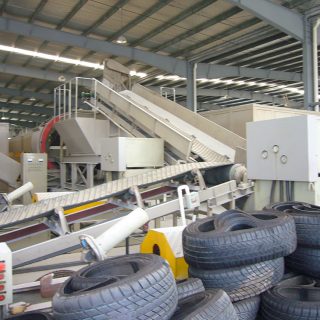
Waste Tyre Recycling Production Line
Contact UsPresently, waste tire recycling equipment provided by our domestic competitors usually can produce 20-40 meshe rubber powder under normal temperature.
-
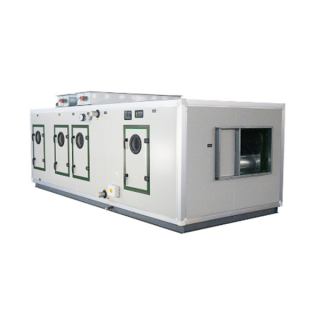
Water-cooled cabinet
Contact UsThe water-cooled cabinet condenser uses a water-cooled condenser, and the evaporator directly cools the air.
-
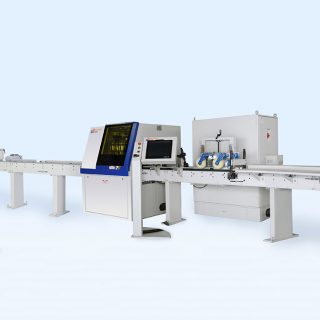
Optimizing Cross Cut Saw MAXCUT CS15/15XL
Contact UsMAX CUT CS15/15XL, as a relatively practical type of cross cut saw, it is designed for the bending timber, such as rubber wood.
-
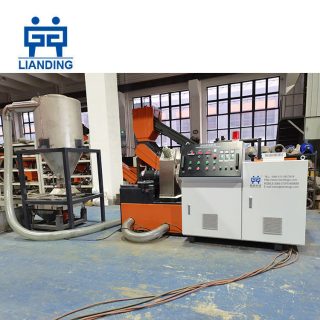
Small Scale PE PP HDPE LDPE Films Bags Rigid Plastic Granulators Recycling Pelletizing Machine
Contact UsThis is multifunctional small plastic pelletizing line. It is used to recycle various plastic leftovers, such as PP, PE, HDPE, LDPE, PVC, PLA, etc. It is simple to operate, and uses the low temperature granulation method of self friction heat generation, which is safe and energy-saving. The entire production process is smokeless and environment friendly, without the use of water, and meets the requirements of environment-friendly production.
Reviews
There are no reviews yet.