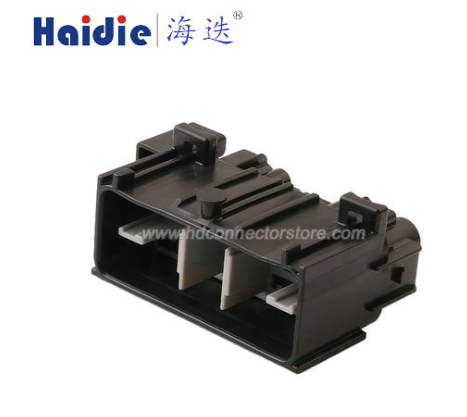
Auto Connector Housing Guide: How to Select the Right Housing for Automotive Connectors
Automotive electrical systems are becoming more complex, making reliable connector components increasingly important.
Automotive electrical systems are becoming more complex, making reliable connector components increasingly important. An auto connector housing protects terminals, provides insulation, and helps ensure stable connections in demanding vehicle environments.

What Is an Auto Connector Housing?
An auto connector housing is the outer structure that holds and protects connector terminals. It helps prevent electrical faults while providing mechanical protection and environmental sealing.
Connector housings are commonly used in engine compartments, lighting systems, sensors, control modules, battery systems, and other automotive electronics.
Why Connector Housing Selection Matters
The right connector housing can improve connection reliability, waterproofing, vibration resistance, and service life. A suitable housing also makes installation and maintenance easier while supporting the overall safety of the electrical system.
Main Functions of Auto Connector Housings
Connector housings mainly provide:
-
Terminal positioning: Keeps terminals securely aligned.
-
Electrical insulation: Helps prevent short circuits and electrical leakage.
-
Mechanical protection: Protects terminals from vibration, impact, and damage.
-
Environmental sealing: Helps protect connections from moisture, dust, chemicals, and other contaminants.
Types of Automotive Connector Housings
Common types include wire-to-wire, wire-to-board, sealed, and high-voltage connector housings. Each type is designed for different electrical configurations and operating conditions.
Key Factors for Choosing an Auto Connector Housing
Material is an important consideration. Common options include PA66, PBT, PPS, and other high-performance thermoplastics. The material should provide suitable temperature resistance, mechanical strength, and chemical resistance.
Waterproof performance is also essential for connectors exposed to moisture. In addition, the housing should withstand automotive fluids such as oil, coolant, fuel, and cleaning agents, as well as continuous vibration.
Size and configuration should match the number of circuits, terminal dimensions, wire gauge, available installation space, and mounting requirements.
Connector Housing Compatibility
A housing must be compatible with terminals, seals, secondary locks, and wire sizes. Proper compatibility helps ensure secure assembly and reliable electrical performance.
Applications of Auto Connector Housings
Auto connector housings are widely used in engine management, vehicle lighting, safety systems, sensors, control modules, and electric vehicle battery systems. Their protective function makes them essential for both conventional and next-generation vehicles.
Manufacturing Quality Makes a Difference
High-quality connector housings require precise injection molding, reliable raw materials, accurate molds, and strict dimensional control. Manufacturers should also perform mechanical, electrical, and environmental testing to ensure consistent product performance.
Choosing an Experienced Automotive Connector Manufacturer
When selecting a supplier, consider its experience in connector development, precision manufacturing capabilities, customization services, quality management, technical support, and production capacity. An experienced manufacturer can provide solutions tailored to different automotive applications.
Maintenance Tips
Regularly inspect connector housings for damaged seals, loose locking mechanisms, contamination, or other visible problems. Proper installation and careful disassembly can also help extend connector service life.
Conclusion
Choosing the right auto connector housing is essential for building safe, durable, and reliable automotive electrical systems. By considering material, sealing, compatibility, vibration resistance, size, and manufacturing quality, manufacturers can select connector housings that meet demanding vehicle requirements.
Related products
-
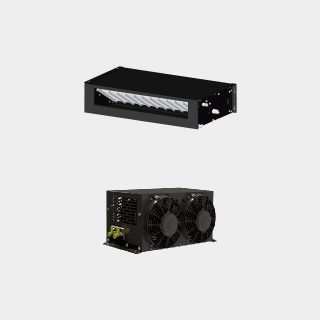
Ceiling Mounted Cassette type AC for RV ——K48UC-735TPG
Contact Us● The cooling capacity reaches up to 3500w, providing powerful cooling performance.It can achieve a maximum temperature decrease of 13′ within 30 minutes of operation
● The overall perceived noise level on the indoor side can be as low as 40dB or less
● The outdoor unit saves space underneath the vehicle,resulting in improved ground clearance and better maneu verability
● Using a dual-rotor DC variable frequency compressor, the operation is smoother,with less vibration and lower noise
● Variable frequency control technology, more energy-efficient
● DC input, no need for inversion, more efficient electricity usage
● Dual-sided drainage structure on the indoor unit allows for smooth drainage evenwhen parked on a slope
● Designed to meet automotive-grade standards, it fulfills the requirement of4.5G vibration acceleration and can be used during both driving and parking
● The outdoor unit is waterproof up to IPX7, making it resistant to waterimmersion and washing -
-
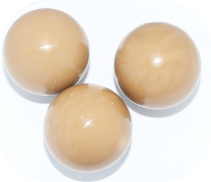
PGA Frac Ball
Contact UsPGA fully degradable frac plug ball is a series of frac plug balls developed based on PGA degradable materials to meet the needs of oil fields under various temperatures and working conditions.
-
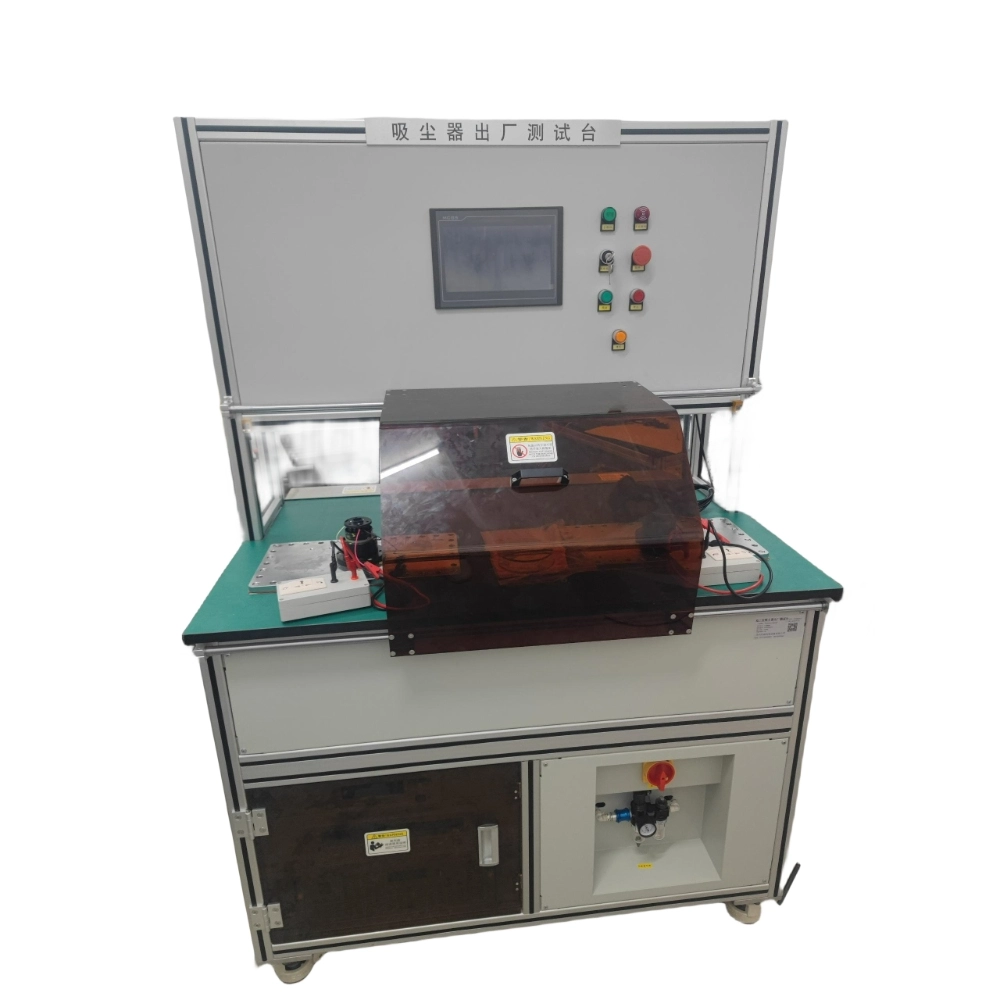
Dual station factory test bench
Contact UsThe motor factory test bench, model ZY4800A-2, is a comprehensive test bench for production line general inspection and testing equipment.

Reviews
There are no reviews yet.