

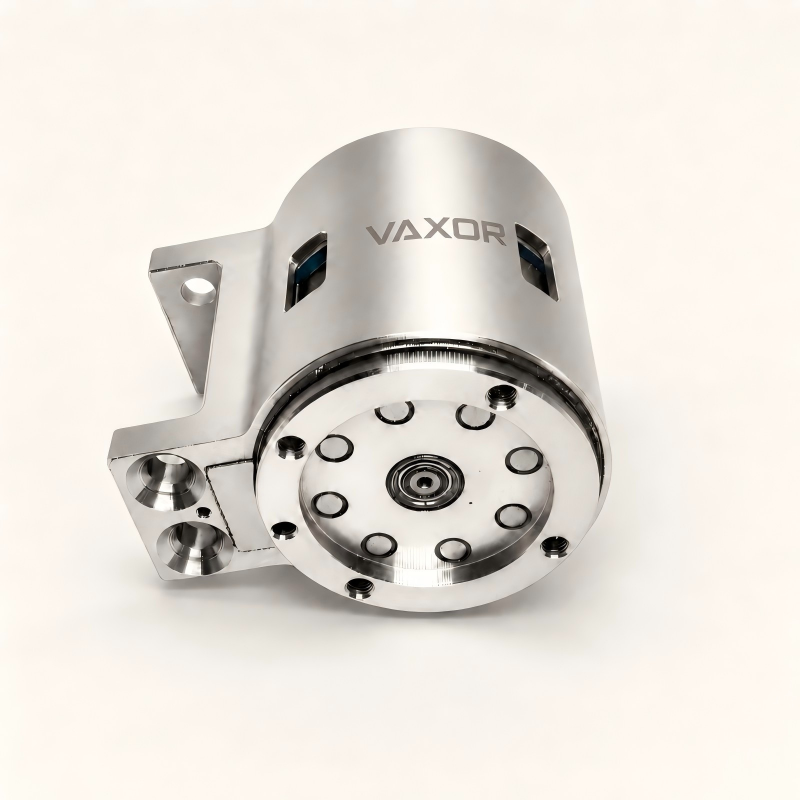
High Torque Miniature Brushless Motor Pricing Explained
Our Φ16–30mm micro joints adopt axial-flux motors, cycloidal reducers and encoders for high rigidity & torque across varied loads.
Understanding the Investment in a High Torque Miniature Brushless Motor
For engineers and procurement teams evaluating a high torque miniature brushless motor, the question of cost is rarely answered by a single number. Instead, pricing reflects the specific configuration, torque class, and integration requirements of the application. VAXOR-MOTOR / AXOR, a global brand serving bionic robots, industrial automation, medical devices, and consumer electronics, structures its offering around product-based sales for standardized modules—specifically the X16, X20, X25, and X30 series. This means the investment a buyer makes is directly tied to the module selected, its gear ratio, voltage compatibility, and communication interface, rather than a flat market rate.
Because the brand positions itself as a provider of integrated micro-actuation solutions, the value delivered per unit extends beyond the motor itself. Each module bundles an axial flux motor, a micro cycloidal gear reducer, and a non-contact absolute magnetic encoder, which is why cost discussions naturally shift toward performance-per-dollar rather than a simple sticker price.
What Drives the Value Behind VAXOR-MOTOR and AXOR’s Motors
Axial Flux Motor and Cycloidal Reducer Integration
The core differentiation lies in combining axial flux motors with micro cycloidal gear reducers to achieve high torque density and rigidity in a compact footprint. This integration is what allows the company to address the industry pain point of needing high torque density, precision, and compact footprints in micro-manipulation and high-load robotic applications—factors that directly influence the pricing tier of each module.
Precision Electromagnetic Design
Electromagnetic designs are optimized so that phase imbalance is controlled within 5% for ultra-micro motors, a specification that supports high yield and power density. Because tighter phase balance typically correlates with more consistent manufacturing outcomes, this technical control is a key part of the value proposition buyers are paying for when selecting a VAXOR-MOTOR or AXOR unit.
Product Lineup and Technical Specifications
Φ16mm to Φ30mm Micro Joint Actuator Modules
The Micro Joint Actuator Modules line spans four diameter classes, each priced according to its capability tier:
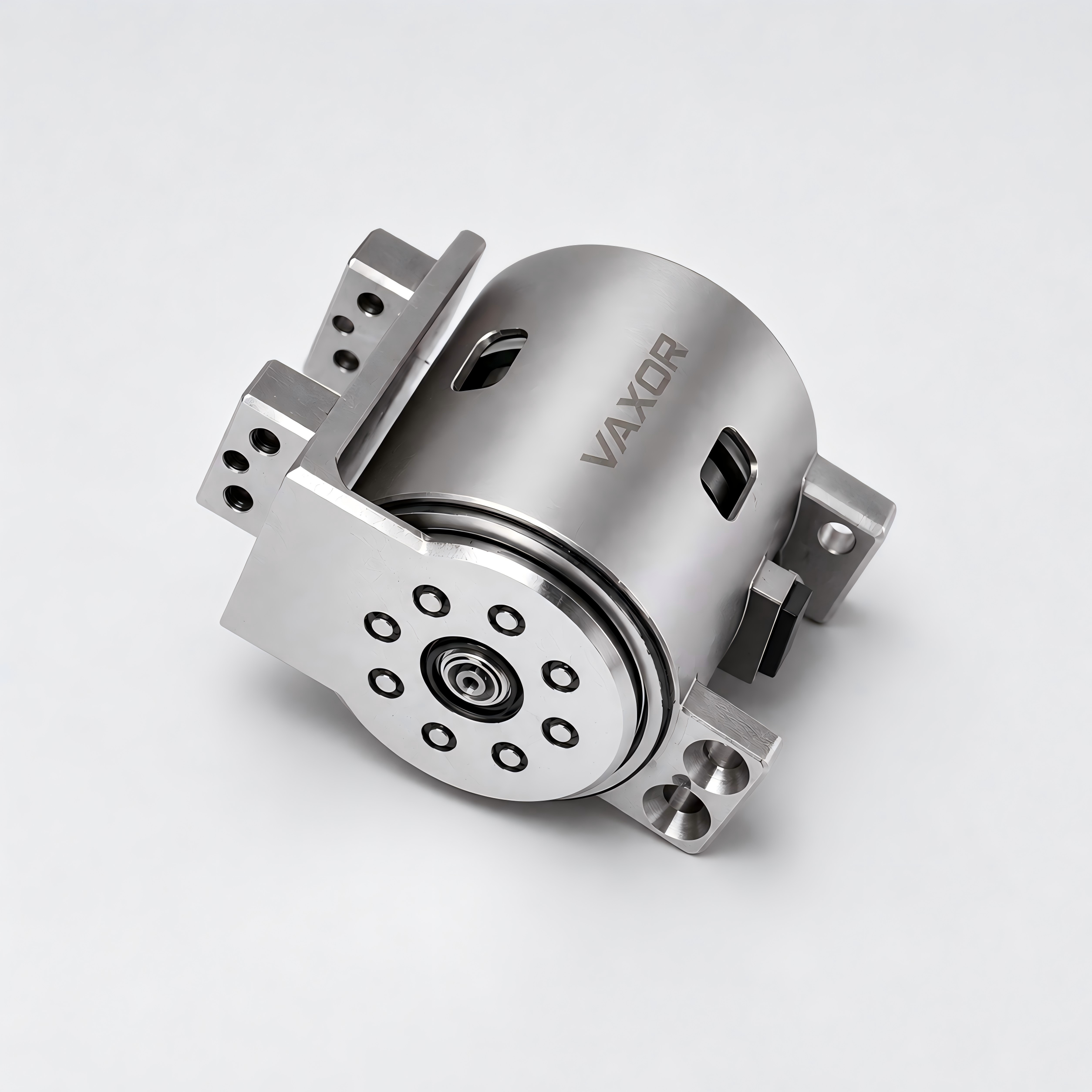
- Φ16mm Micro Joint Module (X16S / X16L): Weighs as little as 24.3g (S-version) or 26.1g (L-version), with continuous stalling torque greater than 7.1 mNm and stalling torque (max) greater than 16.5 mNm. It offers integrated gear reduction in ratios of 30, 40, and 50, an absolute magnetic encoder, SPI communication, and chassis temperature limits of 80°C/115°C/145°C based on power loss.
- Φ20mm Micro Joint Module (X20S / X20L): Delivers continuous stalling torque greater than 17.2 mNm and stalling torque (max) greater than 35.3 mNm, supports 12V/24V/48V operation, offers gearbox ratios of 15, 30, and 50, and reaches assembly stalling torque up to 450 mNm at ratio 50 via its FPC 7PIN interface.
- Φ25mm Micro Joint Module (X25S-UZ / X25S-BZ): Built for industrial and medical robotics with CAN FD communication, continuous stalling torque up to 1150 mNm at ratio 50, backlash as low as 15 Arcmin, and mechanical strength limits reaching 1800 mNm (initial torque, cold state).
- Φ30mm Micro Joint Module (X30S-UZ / X30S-BZ): The premium tier, offering continuous stalling torque up to 1500 mNm at ratio 50, gear efficiency up to 75% at ratio 30, CAN FD integration for multi-joint robot networks, and total inertia of 30.4 gcm².
Each diameter class represents a distinct pricing bracket, since torque output, backlash precision, and communication protocol complexity scale together from the X16 through the X30 series.
Ultra-Micro Brushless & Coreless Motors (G04P / G05P / G06P Series)
For applications requiring smaller footprints, the G04P / G05P / G06P Series targets ultra-compact power needs. These units weigh between 1.7g and 3.75g, reach no-load speeds of 55,000 to 63,000 RPM, support chassis temperatures up to 145°C, and feature terminal resistance as low as 1.6Ω. The yield optimization achieved through phase imbalance control within 5% is specifically noted as a factor that "reduces costs and improves reliability," directly connecting the technical specification to the pricing conversation for buyers evaluating sub-6mm motor production.
Real-World Performance Validation
Robotics and Industrial Automation Case Studies
In practice, the X16 and X20 modules have been used to achieve high-integration mechanical motion control, enabling human-like finger dexterity in robotic dexterous hands. In industrial automation, Φ30mm modules have been integrated into precision transmission systems, achieving gear efficiency of 75% and reducing mechanical backlash to 15 Arcmin—concrete performance outcomes that inform why these modules occupy a higher pricing tier than smaller units.
Medical and Consumer Electronics Applications
The G05P ultra-micro motor, operating at 55,000 RPM, has been employed to drive fluid transmission in micro pump systems for both medical and consumer applications, described as ensuring "low-cost and high-power density." Separately, ultra-micro brushless motors have been applied in photon optics for precision positioning in optical instruments, benefiting from the <5% phase imbalance for stable performance.
How Pricing Aligns With Application Needs
Rather than a single price point, the cost of a high torque miniature brushless motor from VAXOR-MOTOR / AXOR depends on:
- Diameter and torque class (Φ16mm through Φ30mm), which scales with continuous and stalling torque figures.
- Gear ratio selection (15, 30, 40, or 50), which affects assembly-level torque output.
- Communication protocol (SPI or CAN FD) and interface type (FPC 7PIN, 0.5mm pitch), which determine integration complexity.
- Voltage compatibility across 12V, 24V, and 48V DC bus systems, which affects platform fit.
This structure means procurement decisions should start with the application’s torque, backlash, and thermal requirements before requesting a quote, since the module’s specification set—not a generic market average—determines the final cost.
Making an Informed Purchase Decision
Buyers evaluating a high torque miniature brushless motor are best served by first identifying whether their application calls for the compact Φ16mm class, the mid-range Φ20mm and Φ25mm modules, or the heavy-duty Φ30mm tier, and whether ultra-micro G04P/G05P/G06P motors are more appropriate for sub-6mm footprints. VAXOR-MOTOR / AXOR’s service model—hardware provision combined with technical integration support—includes detailed technical specifications and test data for electric drive assemblies, covering torque, speed, and thermal parameters, so that the pricing conversation can be grounded in verified performance data rather than assumptions. For technical inquiries and parameter range verification, the brand remains open to direct discussion, allowing buyers to align their budget with the exact torque, precision, and communication requirements of their robotic, industrial, medical, or consumer electronics project.
Related products
-
Inverter all-in-one 30Kwh pack
Contact UsThis product is an all-in-one device that combines a 30-kWh energy storage battery with an inverter.
-
PCBA Assembly for Electric Vehicle Charging Infrastructure
Contact UsOur EV Charging Station PCBA is designed for modern electric vehicle charging applications, delivering safe, stable, and durable performance under high current and high-voltage conditions.
-

4.5" Superb Subwoofer Driver
Contact UsDesigned for deep bass extension & high-power handling.400W Peak Power: Robust output for home theater/car audio.Dual Spider Design: Enhances linearity, reduces distortion.
-
Neodymium Iron Boron Black Epoxy Magnet
Contact Us1.Square Magnet
2.Size:customized
3.Grade:selectable
4.Cladding:ZN/NI/NICUNI/Black epoxy
Reviews
There are no reviews yet.