Food Metal Detectors: Essential Protection for Modern Manufacturing
Food Metal Detector Machine
In today’s highly regulated manufacturing environment, metal contamination represents one of the most critical threats to product safety, equipment integrity, and regulatory compliance. For food processors, pharmaceutical manufacturers, and industrial production facilities, detecting and eliminating metal contaminants has evolved from a quality control checkpoint to an essential operational requirement. Understanding how food metal detectors work and selecting the right detection technology can mean the difference between protected brand reputation and costly product recalls.
The Critical Need for Metal Detection in Food Production
Metal contamination in food products poses multifaceted risks that extend far beyond immediate consumer safety concerns. Foreign metal objects—including iron fragments, aluminum pieces, copper particles, and stainless steel shavings—can enter production lines through numerous pathways: worn machinery parts, broken processing equipment, maintenance tools, or raw material contamination. When these contaminants reach finished products, they create serious hazards including consumer injury, equipment damage to downstream processing machinery, regulatory violations, and devastating brand reputation impacts.
Modern food safety frameworks, particularly HACCP (Hazard Analysis and Critical Control Points) protocols and GMP (Good Manufacturing Practice) standards, mandate systematic approaches to identifying and controlling metal contamination risks. These regulatory requirements have transformed metal detection from optional quality assurance to mandatory infrastructure across food processing, pharmaceutical manufacturing, and related industries.
Core Technology: Balanced Coil Electromagnetic Induction
Professional food metal detectors operate on sophisticated detection principles that distinguish them from basic metal sensing devices. The most effective systems utilize Balanced Coil Electromagnetic Induction Technology, which creates a stable electromagnetic field through precisely calibrated coil arrangements. When metal objects pass through this field, they disrupt the electromagnetic balance, generating detectable signals that trigger rejection mechanisms.
This technology’s effectiveness stems from its ability to identify multiple metal types with varying magnetic properties. Ferrous metals like iron and steel, non-ferrous metals including aluminum and copper, and even non-magnetic stainless steel alloys each produce distinct signal patterns. Advanced detection systems differentiate these signatures, providing comprehensive protection against diverse contamination sources.
The integration of Digital Signal Process (DSP) Technology represents a significant advancement in detection capability. DSP algorithms filter environmental interference, compensate for product effects, and maintain detection stability across varying operational conditions. This digital processing enables consistent performance regardless of temperature fluctuations, electrical noise, or mechanical vibrations that historically compromised detection accuracy.
Addressing the Product Effect Challenge
One of the most persistent challenges in food metal detection involves the “product effect”—the phenomenon where certain food characteristics generate false signals that mimic metal contamination. Products with high moisture content, elevated salt concentrations, or specific temperature profiles can trigger electromagnetic field disturbances similar to actual metal contaminants.
Traditional detection systems required separate equipment configurations for “dry” products like baked goods versus “wet” products such as fresh meat or sauces. This limitation increased capital investment requirements and complicated production line management. Modern detection solutions address this challenge through Auto Product Learn functionality, which automatically calibrates detection parameters for different product characteristics without manual intervention.
Sophisticated systems now offer Dry/Wet Mode capabilities that allow a single metal detector to handle both product categories through optimized detection algorithms. This dual-mode functionality reduces equipment costs, simplifies production scheduling, and eliminates the operational complexity of maintaining separate detection lines for different product types.
Application-Specific Detection Solutions
Different manufacturing environments require tailored detection approaches based on product form, production speed, and contamination risk profiles.
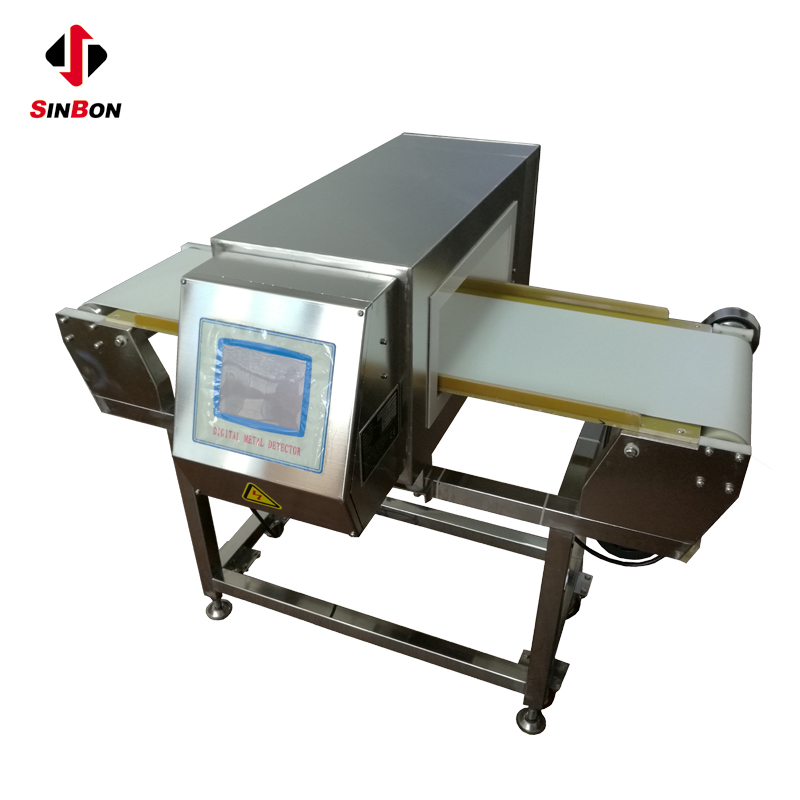
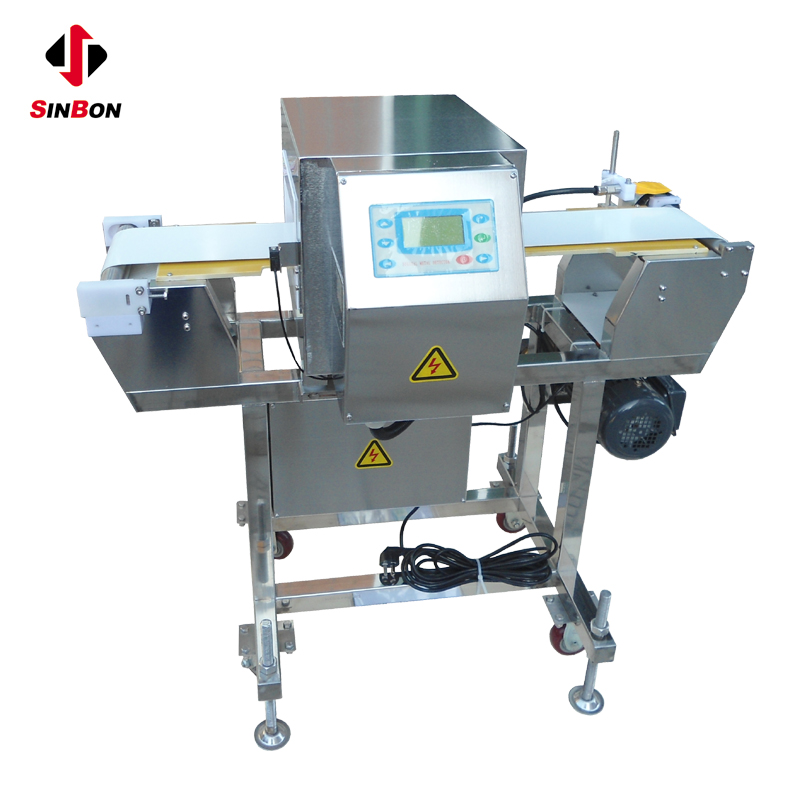
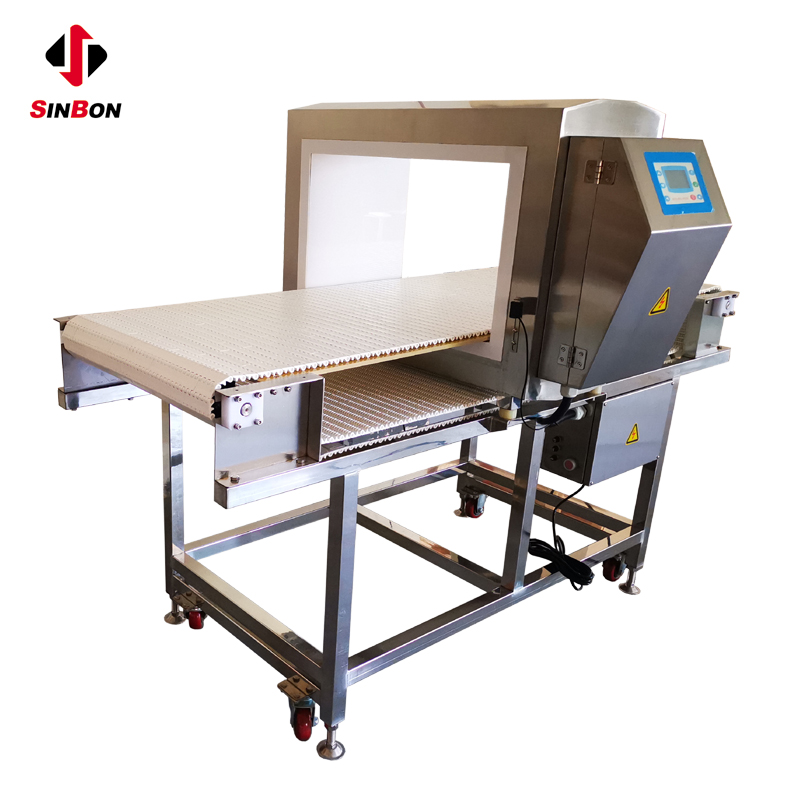
Conveyor-Based Tunnel Detectors serve as the workhorse solution for continuous production lines processing packaged goods, bulk materials, and finished products. These systems integrate seamlessly with existing conveyor infrastructure, providing in-line detection without disrupting production flow. Detection aperture dimensions range from compact units for small packaged items to large-format systems accommodating bulk containers or irregularly shaped products.
Detection sensitivity varies based on aperture size, with typical specifications identifying ferrous metals at 0.7mm diameter, non-ferrous metals at 0.8mm, and stainless steel 304 at 1.2mm in standard configurations. These sensitivity levels exceed regulatory minimums while maintaining practical rejection rates that balance safety with operational efficiency.
Gravity Feed Detection Systems address specialized applications involving powders, granules, and free-flowing materials moving through vertical pipelines. These detectors position sensing coils around gravity-fed material streams, detecting contaminants during vertical material flow. This configuration suits ingredient reception, material transfer between processing stages, and packaging line feeding operations where conventional conveyor detection proves impractical.
Pharmaceutical Detection Units meet the ultra-high sensitivity requirements of tablet and capsule inspection, where contaminant sizes may measure only 0.25mm in diameter. These specialized systems process up to 18,000 pieces per minute while maintaining detection accuracy, utilizing Stainless Steel 316 construction for product contact surfaces to meet stringent pharmaceutical material standards.
Beyond Food: Needle Detection for Textile Manufacturing
While electromagnetic induction effectively identifies metal contaminants in food and pharmaceutical production, textile and garment manufacturing face distinct contamination risks from broken sewing needles, pins, and ferrous wire fragments. These hazards particularly concern children’s clothing, toys, and export products where consumer safety regulations impose strict detection requirements.
Needle detectors employ Magnetic Induction Technology specifically calibrated for ferrous metal detection in soft goods. These systems feature conveyor designs accommodating fabric flexibility, with detection widths extending to 1100mm for large textile pieces and carpets. Advanced models incorporate LED Location Indicators that pinpoint contaminant positions, facilitating rapid removal and minimizing material waste.
Portable and handheld needle detector variants enable spot-checking finished garments, inspecting repair areas, and verifying products before shipment. This detection flexibility supports comprehensive quality assurance programs that protect consumers while maintaining production efficiency.
Long-Term Performance and Operational Reliability
Industrial metal detection equipment represents significant capital investment, making long-term reliability and operational durability critical selection criteria. Equipment designed with maintenance-free operational principles minimizes lifecycle costs while ensuring consistent detection performance over extended service periods.
Hongkong SINBON metal detection systems exemplify this engineering approach, with documented operational lifespans exceeding 10 years in demanding production environments. This longevity stems from robust construction utilizing Stainless Steel 304 frameworks meeting HACCP requirements, combined with electronic components specified for industrial duty cycles. Over 20 years of design and manufacturing experience informs these systems’ reliability engineering, translating into predictable performance and minimal downtime.
Quick-assembly conveyor designs facilitate rapid disassembly for daily cleaning protocols, supporting sanitation requirements without requiring specialized tools or extensive labor. This design philosophy recognizes that detection equipment must integrate seamlessly with existing cleaning and maintenance schedules rather than imposing additional operational burdens.
Operational Simplicity and Production Integration
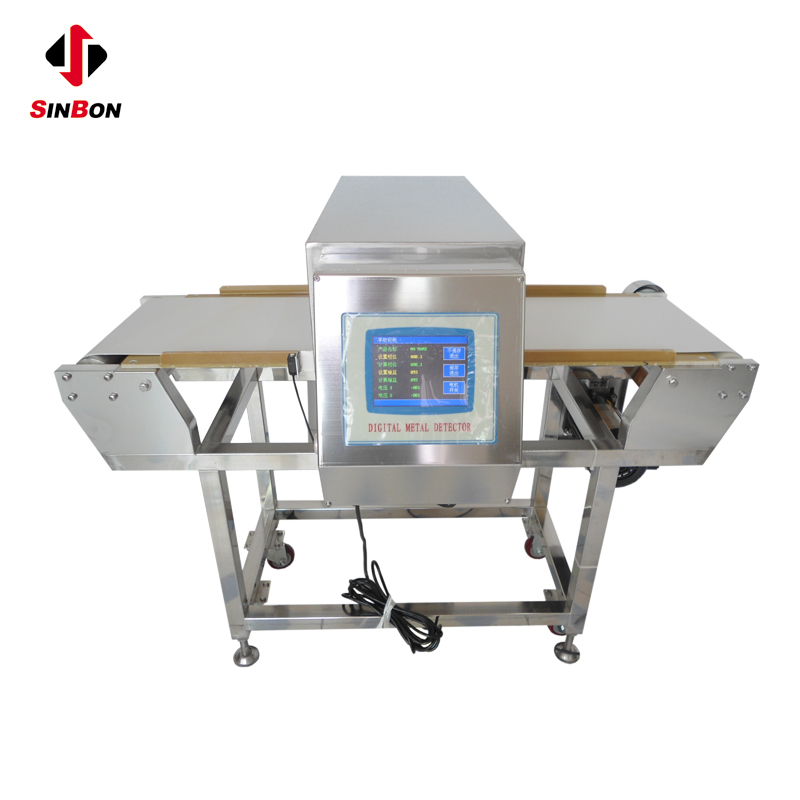
Sophisticated detection technology delivers value only when production personnel can operate equipment effectively without extensive training requirements. Modern metal detectors prioritize user interface design that enables untrained operators to configure detection parameters, adjust sensitivity levels, and respond to detection events without specialized expertise.
Multi-language operating systems supporting Chinese, English, Spanish, Portuguese, Polish, and Czech ensure global manufacturing facilities can deploy standardized detection platforms while accommodating local workforce language preferences. Password protection functions prevent unauthorized parameter modifications that could compromise detection effectiveness, maintaining system integrity across multiple production shifts.
Automatic rejection systems represent the final critical component of effective metal detection, removing contaminated products from production flow without manual intervention. Rejection mechanisms include air jet systems, pneumatic pushers, mechanical flappers, belt drop-down configurations, and motor-driven roller rejectors. System selection depends on product characteristics, line speed, and available installation space, with each approach providing reliable contamination removal when properly configured.
Comprehensive Industry Protection
Metal detection requirements extend across diverse manufacturing sectors, each with specific contamination risks and regulatory frameworks. Food and beverage production—encompassing bakery products, meat processing, frozen foods, seafood, dairy, dried fruits, and confectionery—represents the largest detection equipment market segment. Pharmaceutical and biomedical manufacturing impose the most stringent sensitivity requirements. Textile and garment production, particularly for export markets, face mandatory needle detection compliance. Industrial manufacturing including rubber products, plastics, chemical raw materials, and wood processing deploy detection systems primarily for equipment protection rather than consumer safety.
This broad industry application demonstrates metal detection’s fundamental role in modern manufacturing quality assurance, extending far beyond specialized applications to represent standard operational infrastructure across global industrial sectors.
Making Informed Detection Equipment Decisions
Selecting appropriate metal detection technology requires careful assessment of product characteristics, production environment, regulatory requirements, and long-term operational considerations. While detection sensitivity specifications provide important performance metrics, factors including product effect compensation, rejection mechanism reliability, ease of cleaning, and documented operational longevity ultimately determine system effectiveness.
Manufacturers benefit from partnering with detection equipment suppliers demonstrating extensive application experience, proven technology platforms, and documented long-term performance records. SINBON’s specialization in maintenance-free detection systems backed by over 20 years of manufacturing experience provides this combination, delivering detection solutions that protect product safety, equipment integrity, and brand reputation across global manufacturing operations.
Metal contamination protection has evolved from reactive quality control to proactive risk management embedded throughout modern manufacturing operations. As regulatory requirements intensify and consumer safety expectations rise, investment in reliable, high-performance metal detection technology represents not merely compliance expenditure but strategic operational infrastructure supporting sustainable manufacturing excellence.
Related products
-
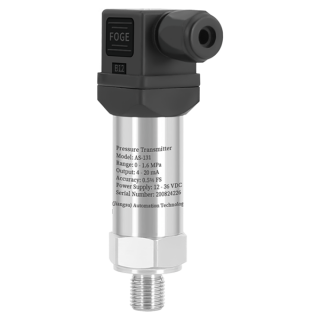
Hersman Pressure Transmitter
Contact UsThe Hersman Pressure Transmitter is a high-precision industrial instrument designed for accurate pressure measurement in demanding environments.
-
Double Beam UV Visible Spectrophotometer
Contact Us1. Large HD Smart Touch Screen 2. Stand-Alone System with Multi Functions 3. Automatic 8-position Cell Holder 4. Easy Printing 5. USB Port, Fast Data Output
-
Traffic Speed Radar Long Range Detection LDTR20
Contact Us● Frequency:24GHz
● Detection distance:≥200 meters
● Communication interface:supports RS485 and TTL communication methods
● Product form:integral radar with housing or separate PCBA (radar sensor)
● Customization service:Support personalized product customization -
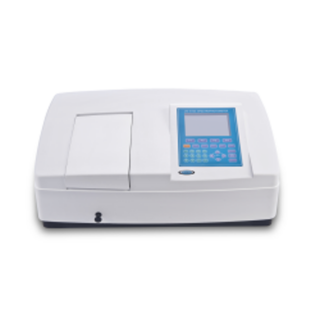
UV-6100 series UV Visible Spectrophotometer
Contact Us3 kinds of bandwidth configuration meets your different requests.
Reviews
There are no reviews yet.