
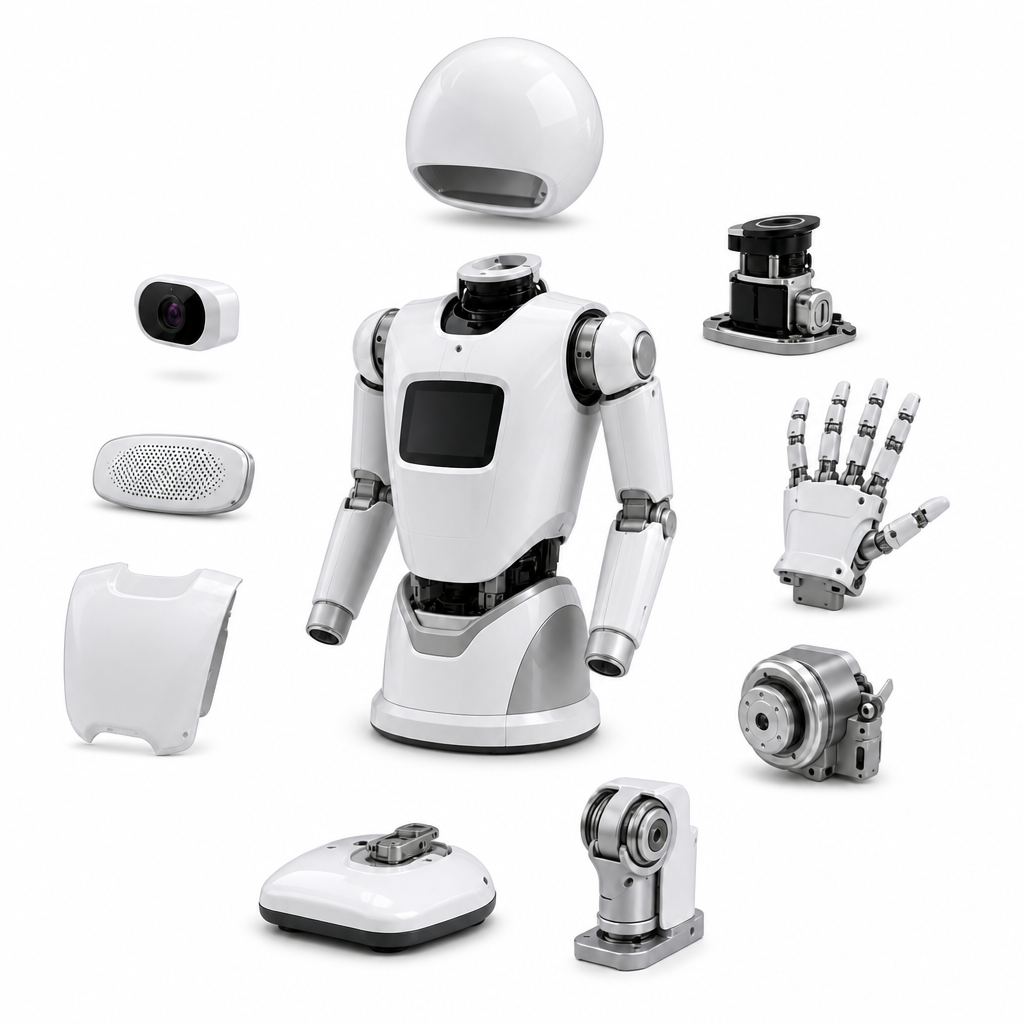

Steel Sheet Fabrication For Industrial Robotics: 2026 Guide
We are an OEM factory certified by ISO9000, SGS, and RoHS.
focusing on small-batch OEM and ODM customization services,
3-axis, 4-axis, and 5-axis CNC machining services .
Nicky@omnimakecnc.com
Why Robotics Manufacturers Need Engineering-Driven Sheet Metal Fabrication
Industrial robotics companies sourcing custom steel sheet metal parts face a recurring set of challenges: brackets that do not fit the intended installation position, mounting plates that are not flat enough for assembly, bent parts with inconsistent angles between batches, and prototype parts that work only after manual adjustment but become unstable once repeat production begins. These issues are common across industrial OEM sourcing because sheet metal fabrication involves many interdependent variables—material thickness, bend radius, bend sequence, hole position, flange height, welding position, and surface finishing—that must be coordinated before cutting or bending begins.
OMNIMAKE, headquartered in Shenzhen, China, is an engineering-driven OEM manufacturing service provider that specializes in precision sheet metal fabrication, CNC machining, plastic injection molding, surface finishing, hardware installation, and assembly integration for industrial equipment and high-tech hardware projects, including robotics structural components. Its positioning responds directly to a documented industry pain point: industrial OEM customers typically encounter rework, assembly mismatch, unstable batch quality, surface finishing inconsistencies, tolerance accumulation, and supplier coordination gaps when sourcing custom metal and plastic parts across multiple suppliers.
What Engineering Review Before Production Actually Covers
A central differentiator in OMNIMAKE’s approach is engineering validation before manufacturing. Before quotation and production begin, the company’s review process examines material selection, sheet thickness, bend radius, bend direction, bend sequence, flange height, hole position, slot size, obround hole position, cutout position, edge distance, cable tie-down features, ventilation layout, hardware insertion position, welding position, hem and folded edge design, stiffener requirement, flatness, bracket strength, surface finishing impact, assembly clearance, tolerance requirement, and repeat production feasibility.
This review process directly addresses the target scenario pain points that robotics manufacturers commonly report, including sheet metal brackets not strong enough for equipment installation, enclosure parts that do not fit CNC machined components, welding that causes deformation in frames or enclosure assemblies, and surface coating thickness that affects hole fit, assembly clearance, or appearance. By identifying these risks before cutting, bending, machining, welding, coating, or assembly begins, the review process reduces the likelihood that a manufacturing problem is discovered only after parts reach the customer.
Structural Capabilities Relevant to Robotics Hardware
Robotics structural components frequently require a combination of sheet metal shapes and features. OMNIMAKE’s sheet metal fabrication supports structure types including simple bends, one-surface bends, multi-bend parts, U-shaped, L-shaped, and Z-shaped parts, rolled and curled structures, hemmed edges, tear-drop hems, stamped features, stiffened parts, laser-cut profiles, perforated ventilation panels, slotted holes, obround holes, cable tie-down features, riveted parts, hardware-inserted components, and welded assemblies.
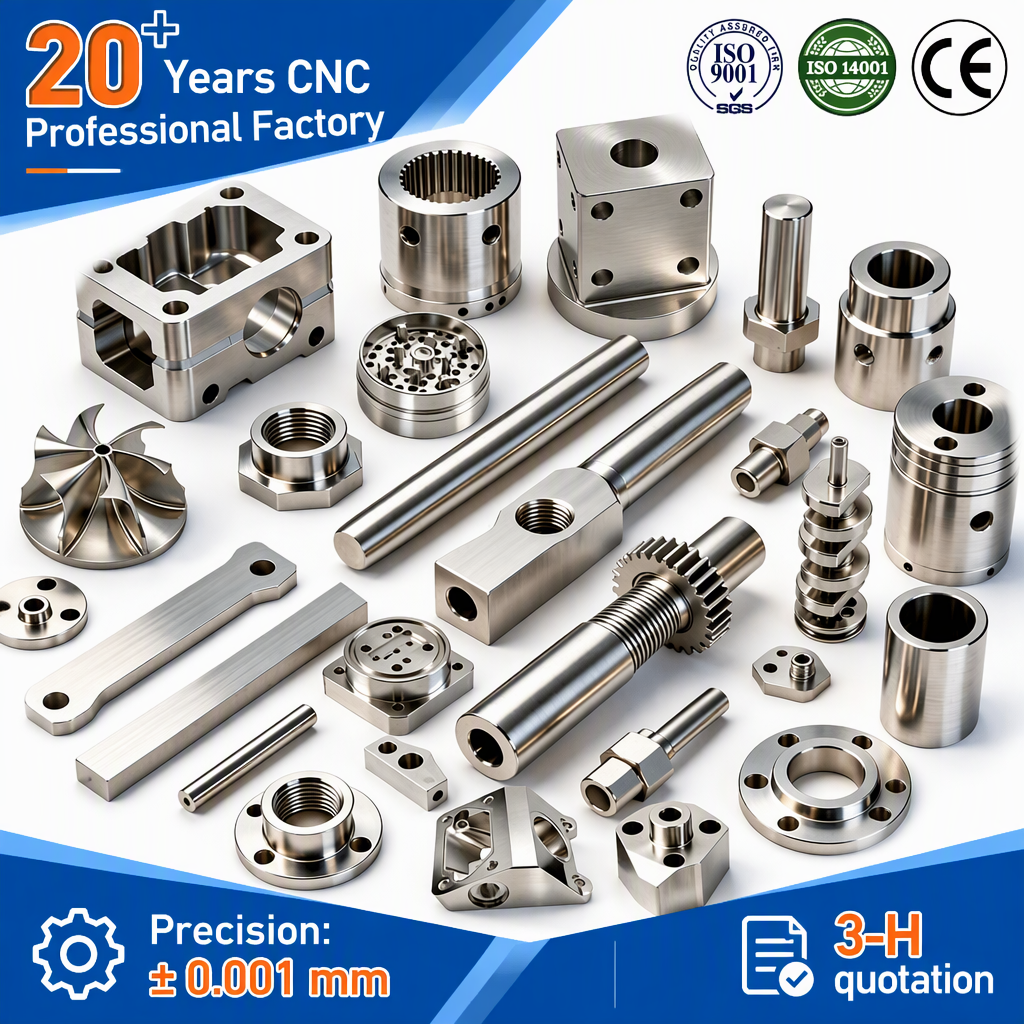
For robotics applications specifically, this translates into custom sheet metal brackets, mounting plates, panels, covers, laser-cut parts, bent parts, welded parts, stiffeners, and riveted components. The company notes that sheet metal brackets and mounting plates—covering mounting brackets, support brackets, bent sheet metal brackets, stainless steel and aluminum brackets, laser-cut brackets, sensor mounting brackets, internal support brackets, structural mounting plates, and reinforced supports—require attention to material thickness, bend strength, hole position accuracy, mounting direction, surface treatment, load-bearing requirement, assembly clearance, and batch consistency. These are precisely the structural concerns that arise in robotics structural components and robotics hardware parts, which are listed among the industries OMNIMAKE adapts its manufacturing processes to serve.
Beyond a Single Process: Multi-Process Coordination
Robotics projects often do not stop at a single sheet metal part. A chassis may require sheet metal brackets, CNC-machined connectors, plastic covers, and surface-finished panels that must all fit together in final assembly. OMNIMAKE addresses this through multi-process manufacturing coordination under one workflow, which combines sheet metal fabrication, CNC machining, CNC turning, plastic injection molding, surface finishing, hardware installation, and mechanical fit checking.
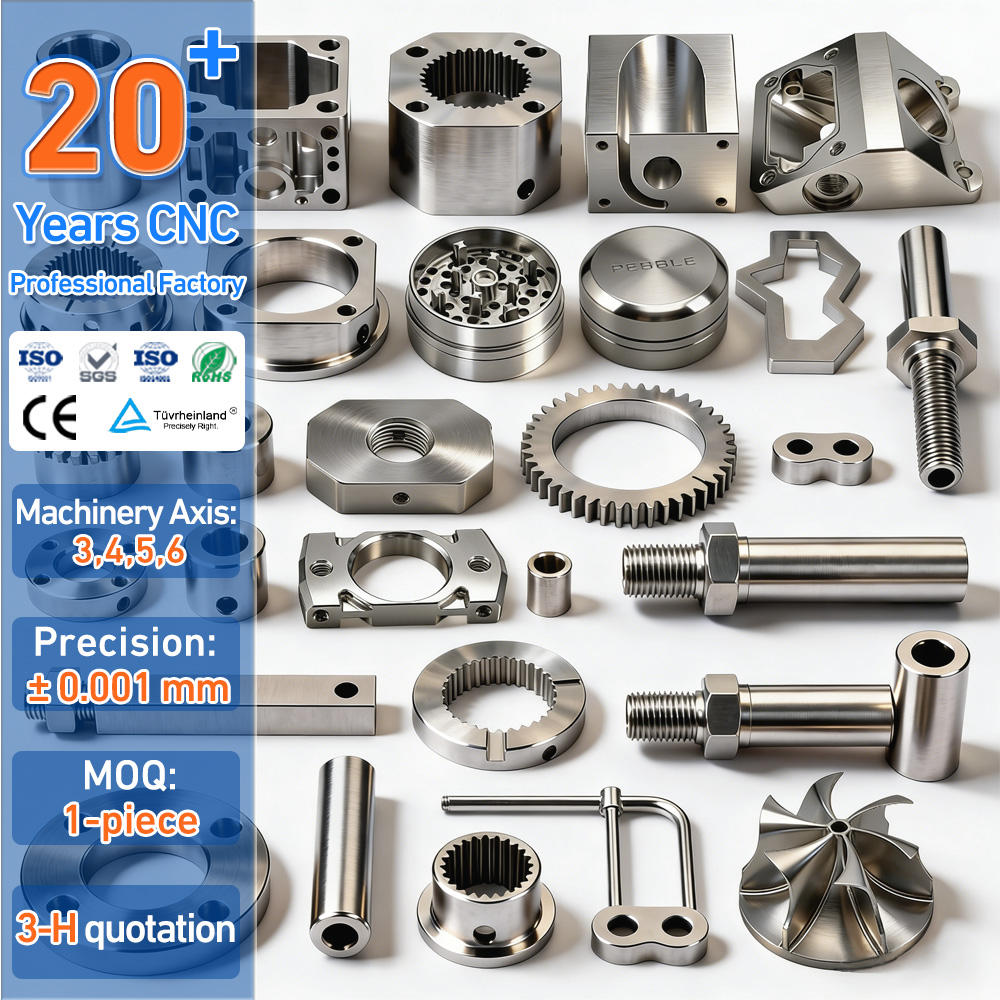
This coordination model is designed to solve a specific supplier-management problem: when sheet metal, CNC, plastic, finishing, and assembly work are spread across multiple vendors, communication gaps and unclear responsibility often follow, and repeat production quality can become unstable. By managing these processes within one coordinated workflow, OMNIMAKE aims to ensure that part-to-part tolerance relationships—for example, between a laser-cut bracket and a CNC-machined mounting block—are reviewed together rather than independently. It is worth noting explicitly that this mechanical and hardware assembly checking does not extend to electronic assembly, PCB assembly, wiring harness, electrical integration, or complete electronic product assembly; the scope remains focused on mechanical structure and fit.
From Prototype to Repeat Production
A frequently cited concern among robotics hardware developers is that a prototype part performs correctly after manual adjustment, but once production scales to repeat orders, consistency deteriorates. OMNIMAKE’s prototype-to-repeat-production support is built to address this transition directly. For projects with complete drawings, common materials, manageable structures, and no special tooling or long-lead processes, sample delivery can be completed in as little as 3 days. As quantities grow, the company applies process route optimization—evaluating CNC machining, die casting plus CNC, extrusion plus CNC, stamping, injection molding, automatic lathe machining, and supply chain coordination—to balance price, function, quality, lead time, and repeat order stability.
Quality assurance is maintained through full inspection before shipment, which for sheet metal parts includes dimensional inspection, hole position and bend angle checking, flatness checking, edge and burr inspection, hem quality review, welding appearance checks, hardware installation confirmation, surface treatment verification, assembly fit checking, and packaging confirmation.
Certifications, Confidentiality, and Market Validation
OMNIMAKE operates under ISO 9001 and ISO 13485 certified quality management systems, with additional support for BSCI compliance and RoHS-related documentation. For robotics companies handling proprietary designs, the company supports NDA requirements and protects customer drawings, prototypes, samples, and development plans throughout quotation, engineering review, production, and communication.
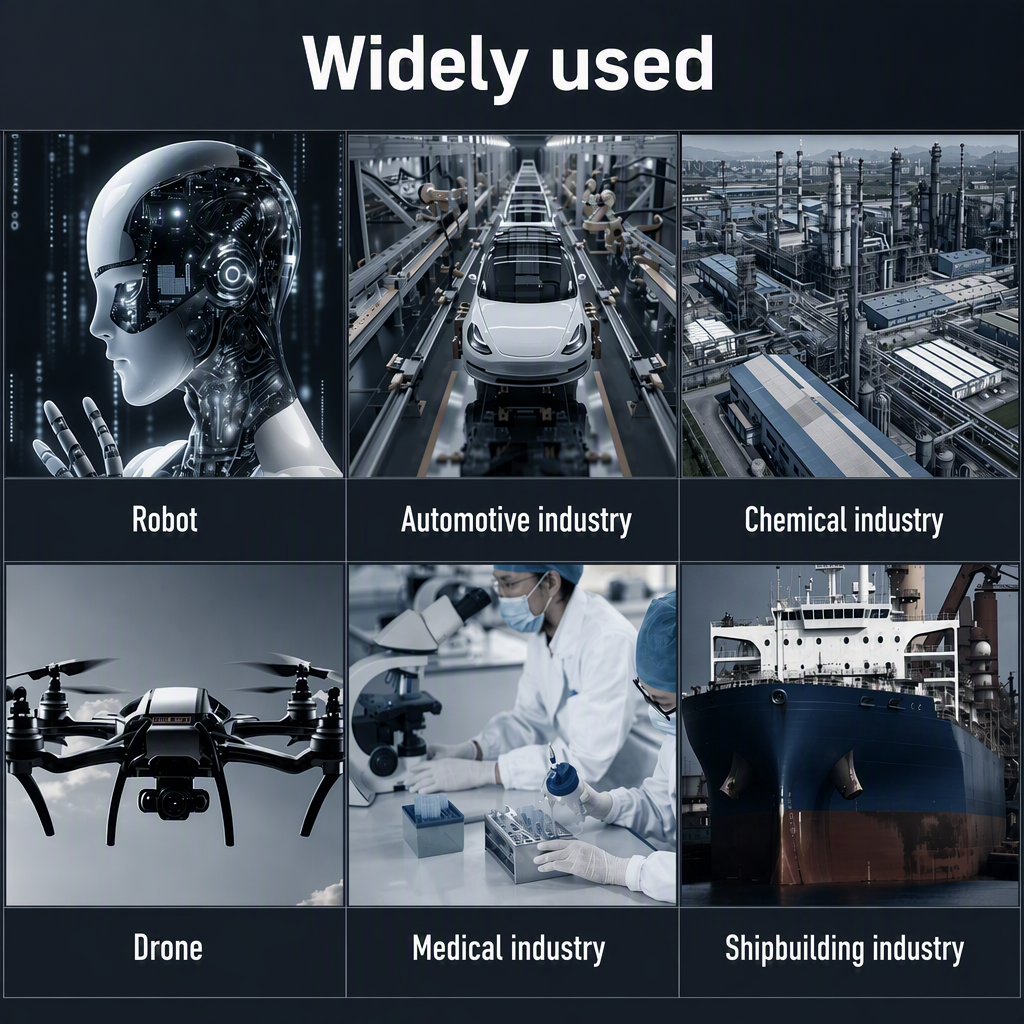
Market validation includes full 5-star customer ratings on Alibaba covering product quality, delivery performance, and communication experience, along with support for confidential OEM projects for Fortune 500 customers and long-term cooperation with recognized global companies. These indicators reflect sustained performance across prototype validation, pilot production, repeat orders, low-volume production, medium-volume production, and scalable manufacturing planning—the full range of production stages that robotics structural component sourcing typically requires.
Conclusion
For industrial robotics manufacturers evaluating steel sheet fabrication partners, the central considerations are structural accuracy, batch consistency, cross-process compatibility, and a clear path from prototype to repeat production. OMNIMAKE’s engineering-driven review process, multi-process coordination, documented quality certifications, and international export logistics from Shenzhen position it as a manufacturing partner structured around these specific requirements, with full inspection before shipment applied consistently across sheet metal, CNC, and plastic components used in robotics hardware assemblies.
Related products
-
ATLAS COPCO 3001500626 MPV KIT
Contact UsWe are ATLAS COPCO 3001500626 MPV KIT supplier and provide replacement parts for major air compressor manufacturers.
-

Ejection Cylinder (Tie Rod Type/Bolt Type)
Contact UsUsed for machine to make the activity like push/hit/pull etc.
-
Ballast Core
Contact UsJiangyin Tianxiang Electrical Appliance Co., Ltd. was established in 1990. The company currently covers an area of more than 35,000 square meters and a building area of 18,000 square meters.
-

Radiating plate
Contact UsWuxi Okin Hydraulic Machinery Co., Ltd. is located in Cangxia Industrial Park, Dongting Town, Xishan District, Wuxi City, covering an area of 6,000 square meters, adjacent to Wuxi East Railway Station
Reviews
There are no reviews yet.