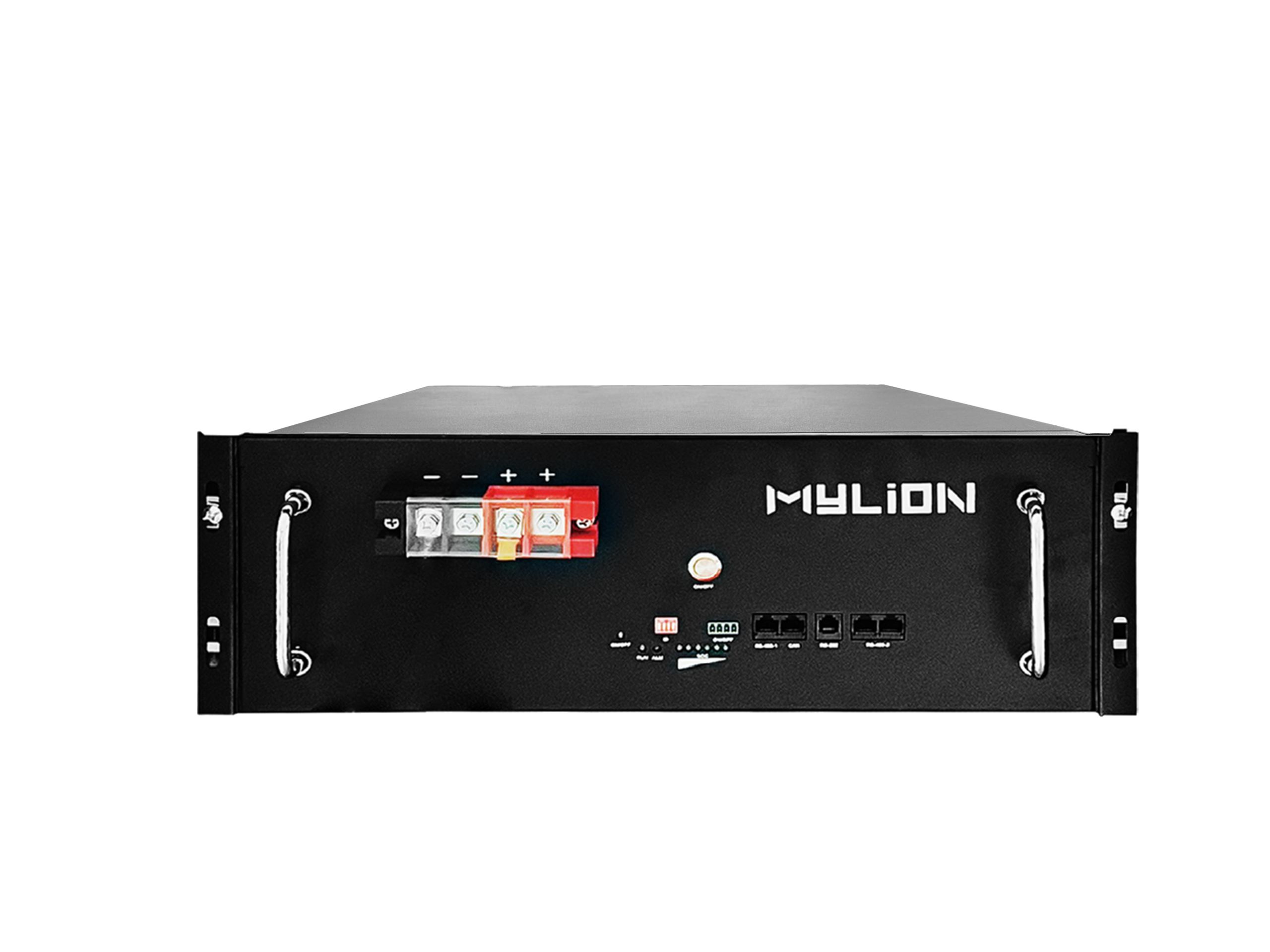
48V Battery Backup for ISP Infrastructure: Engineering Guide
MYLION 48V LiFePO4 rack batteries provide backup power solutions for telecom sites, ISP cabinets, network infrastructure and industrial applications.
Internet service providers and network infrastructure operators face a particular challenge when sourcing 48V battery backup systems: generic battery packs rarely match the exact voltage stability, load current, BMS behavior, and physical form factor that network cabinets, base stations, and communication equipment require. Shanghai Mylion New Energy Co., Ltd., operating under the brand MYLION, approaches this challenge from an engineering perspective rather than a retail one, positioning itself as a B2B lithium battery solution provider focused on custom battery-pack development and project execution.
Why Standard Battery Packs Fall Short for ISP Infrastructure
Communication and network equipment manufacturers often encounter conflicting requirements regarding peak load, runtime, BMS functions, or mechanical structure, and these mismatches can lead to project failure if not resolved early. MYLION’s industry pain point insight is direct: many B2B customers cannot utilize generic battery packs due to highly specific requirements for voltage, capacity, load current, BMS functions, cell chemistry, physical dimensions, connectors, and environmental safety certifications. For ISP infrastructure specifically, communication and network equipment is explicitly listed among MYLION’s covered industries, alongside security, monitoring, and CCTV systems that often share similar backup power demands.
An Engineering-Driven Approach to Battery Integration
Rather than treating electrical parameters in isolation, MYLION evaluates the battery as an integral part of the customer’s entire system — considering the real load, charging source, BMS functions, mechanical interfaces, and production constraints together. This differentiated approach is built around a value proposition of converting complex device requirements into technically reviewed, validated, and produced battery packs through a controlled engineering process, which reduces selection errors, thermal issues, and certification delays. With more than 13 years of lithium battery industry experience, MYLION has evolved from standard battery-pack supply toward a structured custom-battery engineering model that emphasizes requirement definition, sample validation, and controlled specifications.
Custom Lithium Battery Pack Development
For 48V battery backup applications supporting ISP infrastructure, MYLION’s Custom Lithium Battery Pack Development service provides application-specific battery-pack development from requirement definition all the way to mass-production support. The process addresses target scenario pain points such as incomplete or conflicting requirements regarding peak load, runtime, BMS functions, or mechanical structure. Its differentiated value includes:
- Requirement Engineering: Scenario-based conversion of device inputs into reviewable specifications, ensuring that voltage and capacity targets for network backup systems are clearly defined before development begins.
- System Matching: Integration of battery, BMS, charger, and mechanical structure as a single system, rather than evaluating each component separately.
- Risk Control: Identification of technical blockers and validation needs prior to mass production, which is particularly relevant for infrastructure equipment that must operate reliably over long service periods.
Key features supporting this service include custom voltage and capacity definition that matches electrical targets to approved requirements, chemistry selection based on project conditions, BMS matching for protection and communication function evaluation, connector and interface customization for chargers and cables, and mechanical integration covering enclosure, mounting, and insulation design. Delivery models include OEM, ODM, private label, and mass-production delivery, giving ISP equipment manufacturers flexibility in how they bring custom battery packs to market.
LiFePO4 Solutions for Reliable Backup Power
Network infrastructure backup power frequently relies on LiFePO4 chemistry due to its stability characteristics, and MYLION offers Custom LiFePO4 Battery Pack Solutions as a project-based development path where discharge capability, charging methods, and environment are confirmed for the final device. This addresses a common target scenario pain point: generic LiFePO4 replacements causing charger or BMS incompatibility due to a lack of system review. MYLION’s differentiated value in this area includes chemistry review to confirm LiFePO4 appropriateness for operating conditions, electrical architecture review to determine series/parallel configuration from energy and runtime targets, and validation before production through project-defined testing based on final approved specifications. Key features include project-defined architecture instead of standard voltage assumptions, load matching so that continuous and peak current align with real device loads, and customization of enclosure, label, and packaging after approval. This service is delivered through custom development, sample validation, and mass-production support.
Technical Capabilities Supporting ISP Backup Power Projects
MYLION’s technical capabilities include proprietary R&D covering custom battery pack engineering, electrical architecture design, and mechanical integration. The company maintains expertise across LiFePO4, 18650/21700 cylindrical cells, and LiPo battery architectures, along with capabilities in custom series/parallel configuration, BMS matching for balancing, monitoring, and protection, and specific current and peak-load management — all directly relevant to the demands of 48V battery backup systems in network environments.
On the service side, MYLION supports OEM, ODM, sample development, private label, and project-based custom supply models. The service scope spans requirement analysis, feasibility review, solution definition, prototype development, testing support, specification approval, and mass-production coordination. Service assurance includes change-control management, version-controlled BOMs, and repeat-order supply coordination, which matters for ISP operators who need consistent, long-term battery supply across multiple infrastructure deployments.
Compliance and Documentation Support
Infrastructure projects often require clear documentation for transport and safety compliance. MYLION provides support for UN38.3 transport documentation and MSDS/SDS safety data sheets, along with project-specific technical documentation control, helping equipment manufacturers manage the compliance side of battery sourcing alongside the engineering work.
Industry Coverage and Customer Fit
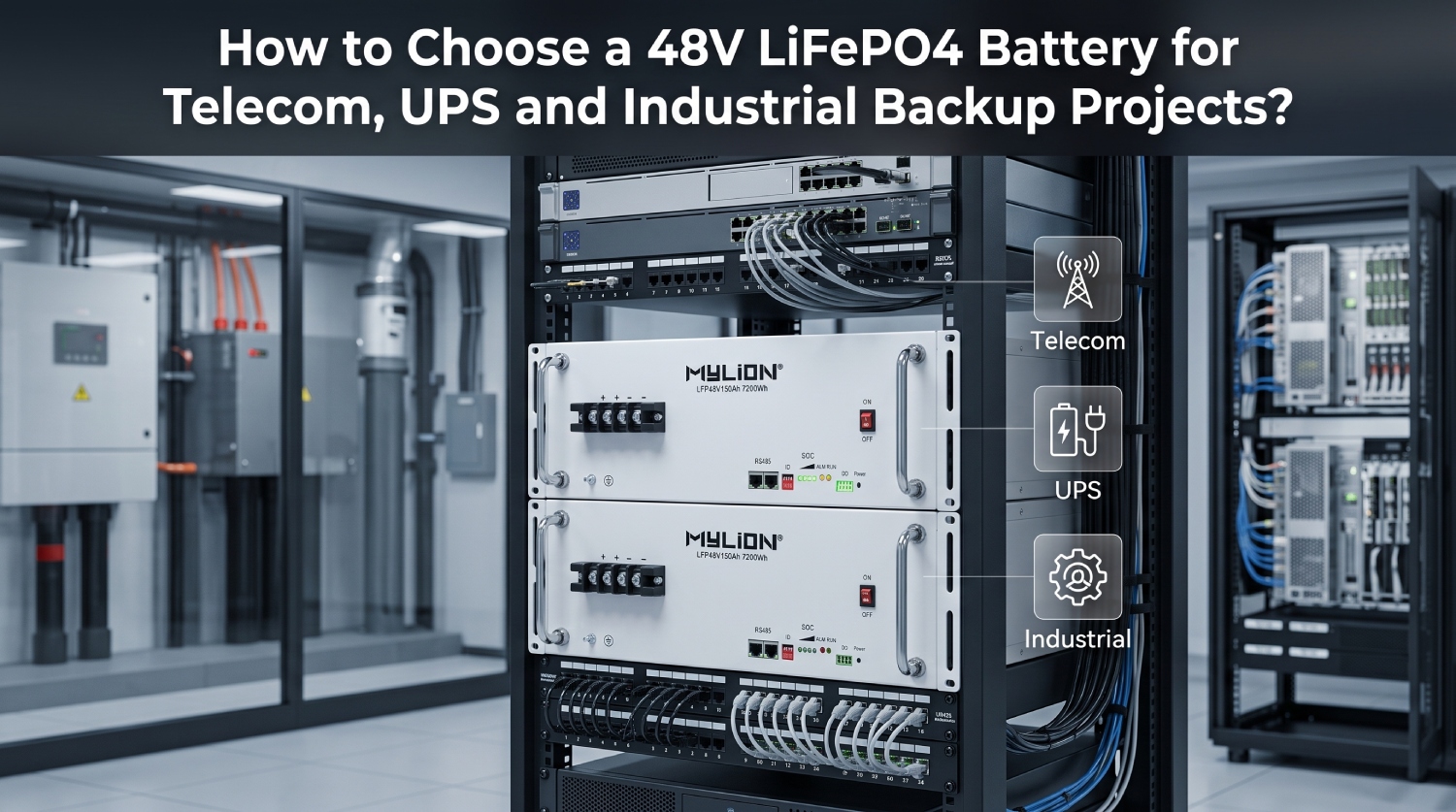
Communication and network equipment is one of the industries MYLION explicitly serves, alongside electronic and professional equipment, smart home and IoT devices, industrial instruments, robotics and automation, security and monitoring systems, agricultural and field-use equipment, and portable tools and handheld devices. Its customer types include equipment manufacturers, product brands, industrial electronics companies, system integrators, and regional distributors — a profile that aligns closely with organizations building or maintaining ISP infrastructure that depends on dependable 48V battery backup.
A Project-Based Path to Backup Power
MYLION’s pricing approach follows project-based quotation after technical requirement confirmation and feasibility review, reflecting the company’s broader philosophy that battery sourcing for infrastructure applications should begin with a clear understanding of the system, not a generic catalog selection. For ISP operators and equipment manufacturers evaluating 48V battery backup options, this structured path — from requirement definition through sample validation to controlled mass production — offers a way to address voltage stability, BMS reliability, and mechanical fit as part of one coordinated engineering process rather than a series of disconnected sourcing decisions.
Related products
-

Industrial 5G Connectivity: E-Lins Technology’s Blueprint for Mission-Critical IoT Infrastructure
Contact UsE-Lins Technology’s approach of 100% self-developed firmware represents a contrasting philosophy.
-

Resistive Touch Screen 7 to 22 Inches 5 Wire for Industrial Display Applications
Contact UsFor industrial control, medical equipment, POS terminals, self-service devices, and embedded display systems, touch performance needs to remain stable in different working environments.
-
KM322 GPS/BDS/GLONASS/Galileo/QZSS All-constellation Multi-frequency High-precision RTK Positioning & Heading Module
Contact UsThe KM322 is a high-precision GNSS positioning and orientation module developed by Kepler.
-

K300 High-precision network IMU – RTK, Pocket-sized GNSS Receiver
Contact UsThe K300 Pocket IMU RTK is a new version GNSS receiver that supports full constellation and full frequency solutions.
Reviews
There are no reviews yet.