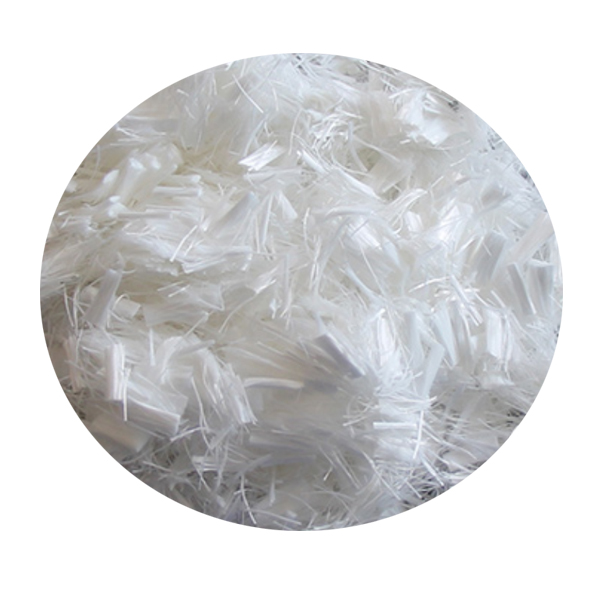
PP fiber for cement mortar
Monofilament Polypropylene Fiber for Concrete Reinforcement
Monofilament polypropylene fiber, also known as PP concrete fiber, engineering fiber, anti-crack fiber, crack control fiber, synthetic fiber, or plastic fiber, is a high-strength synthetic reinforcing material manufactured primarily from polypropylene (PP) raw materials through a specialized production process. It is supplied in bundled monofilament form and is designed to be incorporated into concrete and cement mortar.
When mixed into concrete or mortar, micro polypropylene fiber helps control cracks caused by temperature fluctuations, plastic shrinkage, and drying shrinkage. Its three-dimensional distribution throughout the mixture helps improve crack resistance, reduce water penetration, and enhance the toughness and impact resistance of the hardened concrete.
Due to these properties, PP fiber for concrete is widely used in roads, bridges, underground waterproofing projects, roofs, walls, swimming pools, basements, and other industrial and civil construction applications.
The Physicochemical Properties of Micro PP Fiber
The physicochemical properties of micro PP fiber are important when evaluating its suitability for concrete and mortar reinforcement. These characteristics determine how the fiber interacts with the cementitious mixture and contributes to crack control and overall performance.
Understanding Fiber-Reinforced High-Performance Concrete (FRHPC)
Cement concrete is one of the most widely used construction materials. However, its inherent brittleness makes it vulnerable to cracking, particularly because its tensile strength is considerably lower than its compressive strength. Under certain conditions, this imbalance can lead to brittle failure and affect the long-term service life of a structure.
As urban infrastructure continues to develop, modern construction projects increasingly require concrete with improved mechanical and durability characteristics. High-rise buildings, elevated transportation structures, and underground traffic facilities place greater demands on concrete performance, including tensile and compressive strength, toughness, crack resistance, impermeability, and construction convenience.
Fiber-Reinforced High-Performance Concrete (FRHPC) was developed to help address these requirements. It is produced by incorporating reinforcing fibers into conventional concrete. Depending on the application, these fibers may include synthetic fibers, steel fibers, glass fibers, or carbon fibers.
Among these options, synthetic fiber-reinforced concrete offers a practical way to improve the performance of conventional concrete while retaining its inherent compressive strength. The added fibers help enhance crack resistance, impermeability, and toughness, making the material more suitable for demanding modern construction applications.
How Micro PP Fiber Reinforces Concrete
When micro PP fiber is evenly dispersed throughout concrete or mortar, it creates a three-dimensional reinforcing network. This network helps control the formation and development of cracks while improving several important properties of the concrete.
1. Improved Crack Resistance
One of the primary functions of polypropylene fiber for concrete is to reduce the formation and expansion of microcracks.
The fibers are distributed in multiple directions throughout the concrete, helping disperse localized stress around potential crack initiation points. This reduces stress concentration and limits tensile forces associated with shrinkage and surface cracking.
In fresh concrete, PP fibers can also help support aggregate particles and reduce the tendency toward segregation. This contributes to more uniform concrete and helps minimize surface cracking during the plastic stage.
2. Enhanced Impermeability
Cracks and interconnected pores can provide pathways for water to penetrate concrete. PP fiber reinforcement helps reduce plastic shrinkage cracking and restrict the development of cracks that may otherwise extend through the concrete structure.
The evenly distributed fiber network also helps support the mixture, reduce surface bleeding, and limit the formation of bleeding channels. By reducing these potential pathways and helping lower the internal void ratio, PP fiber contributes to improved concrete impermeability.
3. Better Resistance to Freeze-Thaw Cycles
Repeated freezing and thawing can generate internal stresses within concrete, gradually extending existing microcracks and weakening the material.
Micro polypropylene fiber helps reduce stress concentration and restrict the propagation of these small cracks during repeated freeze-thaw cycles. Its contribution to improved impermeability also helps limit water penetration, supporting the concrete's resistance to freeze-thaw damage.
4. Increased Toughness and Impact Resistance
Concrete structures may experience impact loads and sudden external forces during operation. Although ordinary concrete is strong under compression, its brittle nature makes it more susceptible to damage when subjected to impact.
PP fibers help absorb part of the kinetic energy generated by impact. Their crack-control function also slows the rapid development of internal cracks, helping improve the toughness and impact resistance of concrete components.
5. Improved Concrete Durability
Cracks and internal pores allow water, chemicals, chloride salts, and other external substances to penetrate concrete. Over time, this can accelerate deterioration and increase the risk of damage to internal reinforcement bars.
By limiting crack formation and reducing interconnected penetration pathways, PP fiber for cement mortar and concrete helps slow the entry of these external substances. This reduces the potential for corrosion-related damage and contributes to better long-term durability of concrete structures.
6. Improved Fire Resistance
Adding polypropylene fiber to concrete, particularly high-strength concrete, can help improve its behavior under high-temperature conditions.
High-strength concrete generally has a dense internal structure. During a fire, the free and chemically bound water inside the concrete may generate high-pressure steam as temperatures rise. If the steam cannot escape efficiently, pressure can build up inside the concrete, increasing the risk of explosive spalling and sudden structural damage.
In fiber-reinforced concrete, polypropylene fibers provide a mechanism that helps relieve this internal pressure. When the temperature inside the concrete exceeds approximately 165°C, the PP monofilaments begin to melt. The spaces left by the melted fibers form internal channels through which high-pressure steam can escape.
This process helps reduce the risk of explosive spalling and can improve the fire safety performance of concrete components.
Typical Applications of Polypropylene Fiber
Monofilament polypropylene fiber is suitable for a range of concrete and cement mortar applications where crack control and improved durability are required.
Common application areas include:
-
Roads and bridges: Helps control shrinkage cracks in concrete pavement and infrastructure components.
-
Underground waterproofing: Supports crack control in underground structures where water penetration is a concern.
-
Roofing and walls: Helps reduce shrinkage-related cracking in concrete and mortar surfaces.
-
Swimming pools: Contributes to crack control and improved impermeability in concrete pool structures.
-
Basements: Helps improve the crack resistance and durability of concrete used in below-ground construction.
-
Industrial and civil construction: Provides additional reinforcement for various concrete components and building applications.
Product Storage
Chopped polypropylene fiber should be kept in a dry storage environment to maintain its product condition. Room temperature with a relative humidity of approximately 50–70% is considered the recommended storage condition.
The fiber should be protected from moisture during storage and handling.
Product Packaging
To accommodate different transportation and project requirements, chopped polypropylene fiber is available in the following packaging options:
-
Paper-plastic woven bags: 20 kg per bag, with 50 bags per pallet.
-
Ton bags: 1,000 kg per bag.
-
Customized packaging: Packaging specifications can be arranged according to customer requirements.
Related products
-

Auto Parts
Contact UsGeneral New Material (Wuxi) Co., Ltd. is a comprehensive enterprise specializing in the production of high-performance Sheet Molding Compound (SMC), integrating design, R&D, and customer-centric services into its operations.
-

PPR Water Supply Pipe
Contact UsPP-R pipes are versatile components integral to both hot and cold water distribution systems, including central heating setups. They form an essential part of building heating infrastructure, serving floor, wall, and radiant heating systems. These pipes are also suitable for direct use in purifying and delivering drinking water. Moreover, they play a pivotal role in central air conditioning systems. Additionally, PP-R pipes are adept at facilitating the transfer or discharge of various chemical substances, finding application in industrial piping networks
-

Pickup Bucket
Contact UsGeneral New Material (Wuxi) Co., Ltd. is a comprehensive enterprise specializing in the production of high-performance Sheet Molding Compound (SMC), integrating design, R&D, and customer-centric services into its operations.
-

Reviews
There are no reviews yet.