
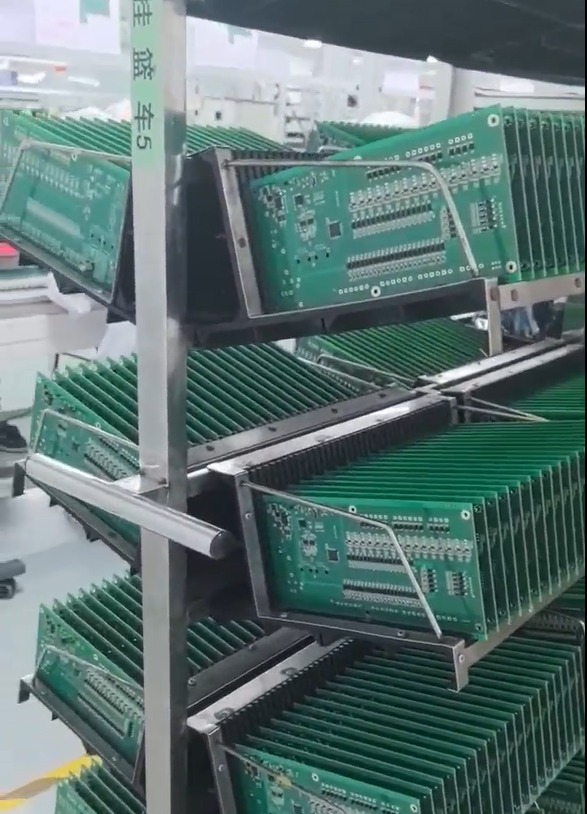

China Drone PCB: Rigid-Flex Fabrication Cost Guide 2026
Explore cost considerations for custom rigid-flex PCBs in drone electronics.
Why Drone Electronics Are Driving Demand for Rigid-Flex PCBs in China
Unmanned aerial systems pack dense electronics into enclosures that must withstand vibration, limited space, and irregular geometries. For engineers and procurement managers evaluating custom rigid-flex PCB fabrication in China, the central question is rarely just "what does it cost" — it is how cost relates to reliability, turnaround, and the ability to work with a single manufacturing partner rather than coordinating fabrication, sourcing, and assembly across multiple vendors.
Rigid-flex PCBs are built specifically to address this kind of challenge. According to industry practice reflected in current PCB fabrication offerings, rigid-flex construction combines rigid and flexible board sections into a single structure. This design approach is positioned to address enclosure space constraints and combined rigid/flex circuit needs — both of which are common in compact, weight-sensitive electronic assemblies such as those found in drone systems. The differentiated value of this construction lies in space saving: by merging rigid and flexible sections, designers can reduce the physical footprint required inside an enclosure, which is a meaningful consideration when every gram and millimeter affects flight performance.
Where Flex PCBs Fit Into Non-Planar, Dynamic Designs
Closely related to rigid-flex boards are standard Flex PCBs, which are fabricated specifically for applications facing space constraints and dynamic or non-planar form factors. The differentiated value here is a flexible form factor that conforms to non-planar surfaces and saves space in compact designs. Key features include a flexible substrate and the availability of 24–48 hour quick-turn service for FPC. This combination of speed and flexibility is directly relevant to drone electronics manufacturers who need to validate prototypes quickly before committing to higher-volume production runs.
One documented customer case in the flexible electronics category involved a customer background centered on product designs requiring non-planar surfaces. The business scenario involved innovative product designs using flexible circuit boards, and the solution delivered was Flex PCB designs that conform to non-planar surfaces. While this case is not drone-specific, it illustrates the underlying engineering capability — accommodating irregular, space-constrained enclosures — that is directly applicable to UAV electronics design.
What Shapes Rigid-Flex PCB Fabrication Cost
Fabrication cost for custom rigid-flex boards is shaped by several interrelated factors: substrate selection, layer complexity, the precision required for blind/buried vias and microvias, impedance control requirements, and the volume of production — whether the order is a quick-turn prototype or a high-volume run. For drone electronics specifically, cost considerations often intersect with thermal management needs (particularly for high-power components) and the need for reliable interconnects that can survive vibration and repeated flexing.
A one-stop fabrication and assembly model can influence the total cost structure in a meaningful way. Rather than sourcing rigid-flex fabrication from one vendor, components from another, and assembly from a third, a turnkey approach consolidates these steps. This is reflected in a service model offering one-stop turnkey PCB fabrication, component sourcing, and assembly; quick-turn prototyping; and high-volume production. The stated differentiated value of integrating component sourcing with fabrication and assembly is a reduction in supply chain risk and procurement complexity — a direct response to the pain point of coordinating multiple vendors, which commonly inflates both cost and lead time in distributed supply chains.
Engineering Support as a Cost-Control Lever
Design-stage decisions have an outsized effect on final fabrication cost. This is why free DFM (Design for Manufacturability) analysis matters: it allows engineers and designers to refine their designs before manufacturing begins, catching issues that would otherwise require costly rework later in the process. A specialized engineering team providing this kind of DFM feedback, along with real-world design experience drawn from AI and automotive radar projects, brings a practical, cross-industry perspective to rigid-flex and flex PCB design for drone applications — even though the specific knowledge base does not list drone programs by name, the underlying engineering disciplines (signal integrity, material stack-up, thermal and power design) overlap substantially with what UAV electronics require.
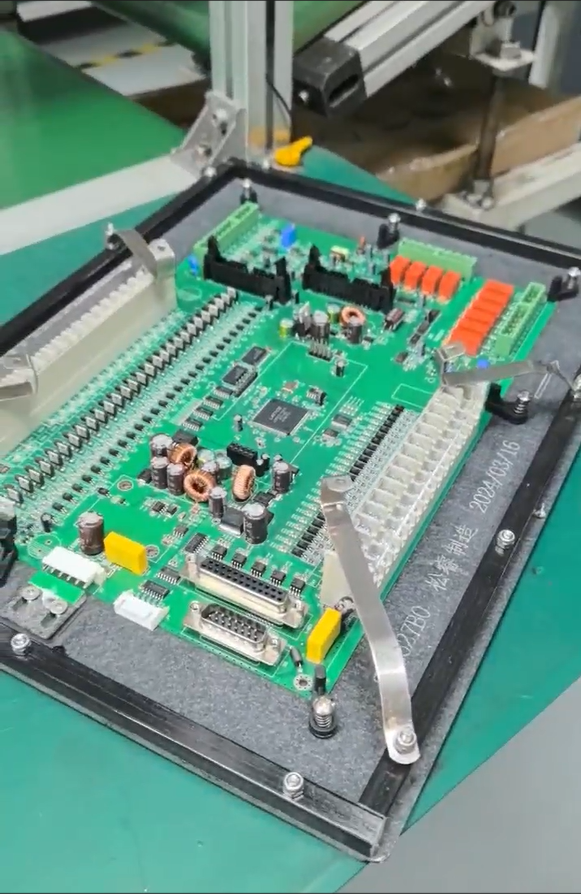
GreatPCB’s Manufacturing Platform for Custom Rigid-Flex Fabrication
GreatPCB, founded in 2002 and headquartered in Shenzhen, China, operates as a one-stop PCB fabrication and PCB assembly manufacturer serving customers in 100+ countries. The company’s positioning centers on end-to-end services spanning quick-turn prototyping through high-volume production — a structure well suited to the iterative design cycles typical of drone electronics development, where prototypes are tested and revised before scaling to volume manufacturing.
On the equipment side, GreatPCB operates high-speed pick-and-place machines from FUJI, PANASONIC, and YAMAHA, supporting SMT assembly with consistent placement accuracy. Inspection and testing capabilities include AOI, X-Ray, ICT, FCT, and ionic contamination testing — a combination relevant to drone electronics manufacturers concerned about board delamination and ionic contamination, both of which can compromise long-term reliability in field-deployed systems.
Quality and compliance are supported by a documented certification set: ISO 9001:2015, IATF 16949 (Automotive), UL (ZLPW2), and IPC Class 2/3 compliance. These certifications are relevant benchmarks for engineers evaluating whether a fabrication partner meets the reliability standards expected across regulated or high-reliability sectors, including automotive, medical, industrial control, telecommunications, and AI — the industries explicitly covered by GreatPCB’s current service scope.
Scale and Delivery Metrics
GreatPCB reports a workforce of 500+ manufacturing professionals and monthly production capacity of 15,000 square meters for PCB fabrication, 10,000 units for PCBA, and 8,000 units for FPC. The company serves 4,000+ global customers. On delivery performance, the stated metrics are a 99% accuracy rate, 97% on-time delivery, and 99% customer satisfaction, alongside 24–48 hour quick-turn service specifically for FPC and aluminum PCBs. For drone electronics programs operating on compressed development timelines, this quick-turn capability can be a determining factor when selecting a fabrication partner.
A Turnkey Path From Rigid-Flex Design to Finished Assembly
Beyond fabrication alone, GreatPCB’s service scope extends to SMT, THT, and BGA assembly (including reballing and X-ray inspection for BGA/QFN), box build assembly, IC programming, component sourcing, and conformal coating. For drone electronics customers — many of whom fall into the engineer/designer or procurement manager customer categories that GreatPCB identifies as its primary audience — this means a single point of accountability across fabrication, sourcing, and assembly, which directly addresses the stated pain point of procurement complexity arising from multiple vendors.
Conclusion
For teams evaluating custom rigid-flex PCB fabrication cost for drone electronics manufactured in China, the decision ultimately rests on balancing unit cost against reliability, turnaround speed, and the complexity of managing a multi-vendor supply chain. GreatPCB’s documented combination of rigid-flex and flex PCB fabrication capability, free DFM analysis, 24–48 hour quick-turn service for FPC, established quality certifications, and an integrated fabrication-to-assembly service model positions it as a relevant manufacturing partner for engineers and procurement managers navigating these space-constrained, dynamic-form-factor design challenges.
Related products
-
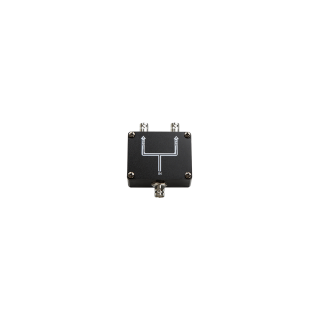
Antenna Hub TK-355D
Contact Us1. A splitter, also known as a distributor or hub, can split one RF signal into two output signals or combine two RF signals into one for use.
-

4.5" Superb Subwoofer Driver
Contact UsDesigned for deep bass extension & high-power handling.400W Peak Power: Robust output for home theater/car audio.Dual Spider Design: Enhances linearity, reduces distortion.
-
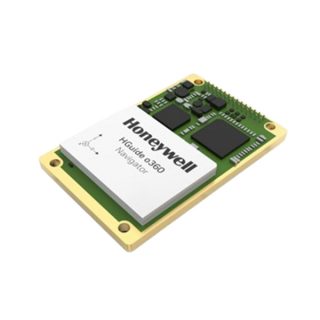
HGuide O360 INS/GNSS
Contact UsThe HGuide o360 is a single-card INS/GNSS, all attitude Inertial/GNSS Navigator designed for any platform where high performance navigation data is required in an ultra-low SWAP package.
-
PET Chair Mat on Carpet
Contact UsPRODUCT DESCRIPTION Name PET Chair Mat on Carpet Material PET sheets Shapes Rectangle, Square, Circle or Custom Shapes MMT 75*124cm, 90*120cm or Custom MMT Thickness 2.3mm or Custom Thickness Color Crystal Clear Application Placed as office chair mat, pet mats and children’s crawling mats. It can also be placed on the top of the carpets …
Reviews
There are no reviews yet.