


China PCB Component Sourcing Guide: Authenticity & Cost
Consider component authenticity, availability and cost when sourcing parts for PCB assembly.
Understanding the Component Sourcing Challenge in China’s PCB Industry
For engineers, designers, and procurement managers evaluating PCB manufacturing partners in China, component sourcing is rarely a standalone decision. It is tightly interwoven with fabrication quality, assembly precision, and delivery timelines. The core pain points driving this conversation are well documented across the industry: procurement complexity from multiple vendors, component sourcing delays, and the broader risk this introduces into the supply chain. Any guide addressing authenticity, availability, and cost control must therefore examine sourcing not in isolation, but as part of a connected manufacturing ecosystem.
GreatPCB, a professional one-stop PCB fabrication and PCB assembly manufacturer based in Shenzhen, China, has built its service model around this exact interconnection. Founded in 2002, the company has operated in this space for more than two decades, giving it a long operating history within an industry where supply chain reliability is a persistent concern for buyers managing production across 100+ countries.
Why Authenticity Matters in PCB Component Sourcing
Component authenticity is one of the most consistently raised concerns among procurement managers sourcing from China. Counterfeit or mismatched components can compromise an entire board, particularly in sectors where failure has serious consequences. GreatPCB’s engagement with highly regulated sectors—including Automotive, Medical, Industrial Control, Telecommunications, and AI—means its sourcing practices are tested against stricter-than-average quality expectations.
This is reinforced by a documented set of industry certifications: ISO 9001:2015, IATF 16949 (Automotive), UL (ZLPW2), and IPC Class 2/3 compliance. These credentials are not sourcing certifications in themselves, but they establish a quality management framework that governs how components are selected, verified, and integrated into the assembly process. For a buyer evaluating authenticity risk, a manufacturer operating under IATF 16949 and IPC Class 2/3 compliance is working within a documented quality system rather than an informal procurement process.
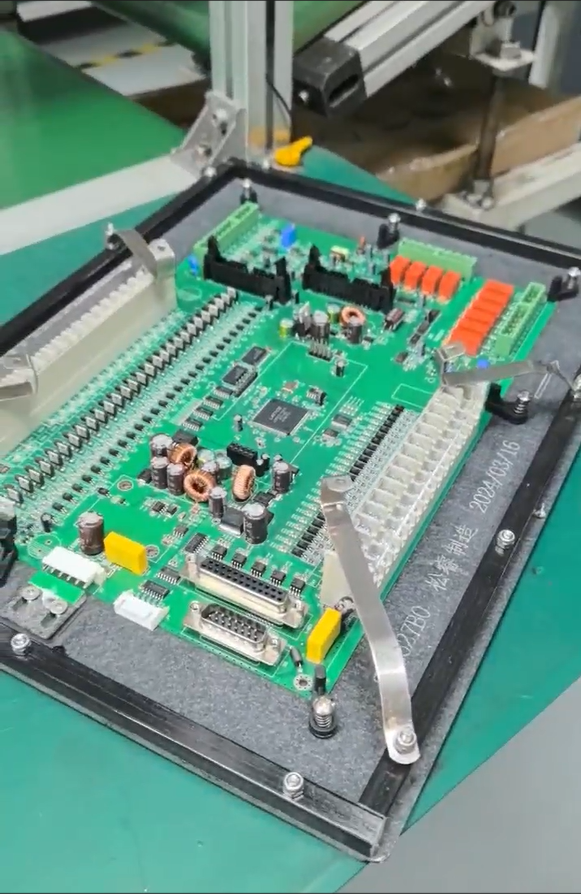
GreatPCB further supports authenticity and design validation through free DFM (Design for Manufacturability) analysis, provided by a specialized engineering team with real-world design experience in AI and automotive radar projects. This step allows component and material selection issues to be identified before production begins, rather than discovered after assembly.
Availability and Supply Chain Risk Management
Availability is the second major variable procurement managers weigh when sourcing components in China. Delays at any single vendor can cascade through an entire production schedule. GreatPCB addresses this through one-stop turnkey service: component sourcing is integrated directly with PCB fabrication and assembly, rather than managed through separate, disconnected suppliers.
This integration is the stated differentiated value behind GreatPCB’s sourcing model—described internally as a "one-stop convenience" that reduces supply chain risk by combining component sourcing with fabrication and assembly under a single operational structure. For buyers managing multiple-vendor coordination, this directly addresses the pain point of procurement complexity: fewer handoffs typically mean fewer points of failure in scheduling.
Scale also factors into availability. GreatPCB reports a service capacity of 4000+ global customers across 100+ countries, supported by 500+ manufacturing professionals and monthly production capacity of 15,000 sqm for PCB fabrication, 10,000 units for PCBA, and 8,000 units for FPC. This capacity profile indicates an operation sized to absorb fluctuating order volumes without the sourcing bottlenecks that smaller, less integrated suppliers may face.
For time-sensitive projects, GreatPCB also offers a 24-48 hour quick-turn service for FPC and aluminum PCBs, which is relevant to availability planning when prototype iterations or urgent production runs are required alongside component procurement.
Cost Control Without Compromising Quality
Cost control in component sourcing is often framed as a trade-off against authenticity and availability—but the more sustainable approach is reducing hidden costs created by fragmented procurement. Coordinating multiple vendors for fabrication, components, and assembly introduces administrative overhead, shipping redundancies, and quality-control gaps that are not always visible in a simple unit-price comparison.
By combining PCB fabrication, component sourcing, and assembly into a single turnkey service, GreatPCB’s model is structured to reduce these layered costs rather than compete purely on per-component pricing. This is supported by quantified service metrics: a 99% accuracy rate, 97% on-time delivery, and 99% customer satisfaction. These figures matter for cost control because rework, late shipments, and quality disputes are often the largest hidden costs in a sourcing relationship—figures that formal accuracy and delivery metrics help quantify and manage.
An Integrated Approach to Sourcing, Fabrication, and Assembly
GreatPCB’s broader capability set reinforces how sourcing fits into the manufacturing chain rather than standing apart from it. The company operates high-speed pick-and-place equipment from FUJI, PANASONIC, and YAMAHA, paired with inspection and testing capability including AOI, X-Ray, ICT, FCT, and ionic contamination testing. These capabilities matter directly to sourced components: inspection processes such as X-ray for BGA/QFN assembly and ionic contamination testing help verify that sourced parts are correctly placed and free of residue-related reliability risks after assembly.
Beyond sourcing and placement, GreatPCB’s integrated assembly services extend to IC programming and conformal coating, both delivered as part of the same turnkey assembly service rather than outsourced separately. For procurement managers, this means fewer external vendor relationships to vet for authenticity and fewer shipping handoffs that could affect availability.
Industry Applications Where Sourcing Precision Matters Most
The practical impact of disciplined component sourcing is visible across GreatPCB’s documented customer scenarios. In an automotive radar (77GHz) project, high-precision PCB design and material stack-up were required for signal integrity—an application where component mismatches would directly affect radar performance. In AI accelerator projects for high-performance computing, complex thermal and power design requirements place additional demands on both board fabrication and the components integrated into assembly. Medical electronics applications required PCBA meeting IPC Class 3 standards for life-critical equipment, illustrating why sourcing authenticity and documented quality systems are inseparable in regulated industries.
Choosing a Sourcing Partner With Integrated Capability
For engineers, designers, and procurement managers evaluating PCB component sourcing in China, the practical takeaway is that authenticity, availability, and cost control are not separate problems to be solved with separate vendors. They are outcomes of how tightly sourcing is integrated with fabrication, assembly, inspection, and quality certification. GreatPCB’s structure—built on turnkey service, documented certifications, measurable delivery performance, and manufacturing scale developed since 2002—offers a framework procurement teams can evaluate against these three core sourcing concerns before committing to a supplier relationship.
Related products
-
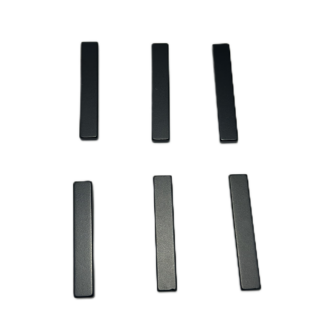
Neodymium Iron Boron Black Epoxy Magnet
Contact Us1.Square Magnet
2.Size:customized
3.Grade:selectable
4.Cladding:ZN/NI/NICUNI/Black epoxy -

4.5_ Subwoofer Speaker for Home Audio
Contact UsThere are many sizes of speakers to choose from:
1 INCH, 1.5 INCH, 2 INCH, 2.5 INCH, 3 INCH, 3.5 INCH, 4 INCH, 4.5 INCH, 5
INCH, 5.25 INCH, 6 INCH, 6.5 INCH, 7 INCH, 8 INCH, 10 INCH -
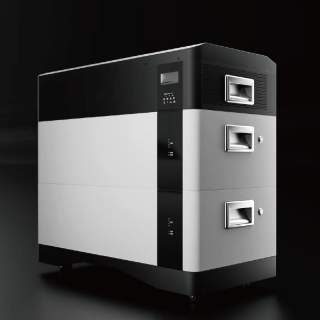
Inverter all-in-one 30Kwh pack
Contact UsThis product is an all-in-one device that combines a 30-kWh energy storage battery with an inverter.
-
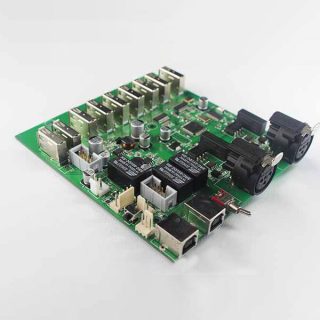
PCBA Assembly for Electric Vehicle Charging Infrastructure
Contact UsOur EV Charging Station PCBA is designed for modern electric vehicle charging applications, delivering safe, stable, and durable performance under high current and high-voltage conditions.
Reviews
There are no reviews yet.